
• Home
  • News
  • Entertainment
  • Tech
  • Fashion & Lifestyle
  • Food & Nutrition
  • Health
Federal Character
No Result
View All Result
Federal Character
  • Home
  • News
  • Entertainment
  • Tech
  • Fashion & Lifestyle
  • Food & Nutrition
  • Health
No Result
View All Result
Federal Character
No Result
View All Result
Brain-Controlled Bionic Legs: Prosthetic Legs That Can More With Your Mind

Brain-Controlled Bionic Legs: Prosthetic Legs That Can More With Your Mind

Christabel EgbeamabyChristabel Egbeama
2 years ago
in Health
Reading Time: 3 mins read
A A
0
Facebook ShareWhatsapp ShareX Share

Have you heard about the latest bionic legs that an amputee can control with their mind? Bionic legs are advanced prosthetic legs that move like real legs.

They use sensors and small motors to help people who have lost their legs in walking and running more organically.

Fortunately, some of these devices can be controlled with the user’s brain. This means that if someone thinks about moving their leg, the bionic leg will move in the same way that their natural leg would. These brain-controlled prosthetics have the potential to transform amputees’ lives.
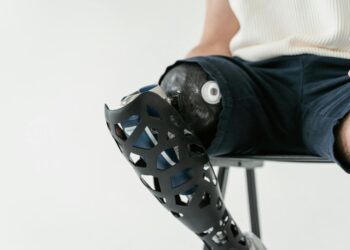
Photo by MART PRODUCTION

Table of Contents

Toggle
  • How it Works
  • Benefits of Brain-Controlled Bionic Legs
  • Current Stage of Development
  • Bottom Line

How it Works

The primary concept of brain-controlled bionic legs is to translate brain signals into prosthetic leg movements. Basically, when the user thinks about moving their bionic leg, their brain sends messages to their muscles telling them what to do. For bionic legs, these impulses are recorded and used to move the artificial leg.

This raises the question of how the bionic limb can detect these brain signals if they are not physically part of the body.

One option is to install sensors on the remaining portion of the leg. These sensors detect nerve signals from the brain. The bionic leg then decodes these impulses and moves as the user directs.

However, that’s not the only way for bionic legs to pick up signals. There’s another way but this method is a little extreme and that’s by using special devices that can read brain activity directly, either from the outside of the head or from implants. Sensors, called electrodes, are placed on the user’s scalp. These electrodes detect the electrical signals their brain sends when they think about moving their leg.

Lastly, if placing sensors on the user’s scalp isn’t an option for a reason, tiny electrodes can be surgically placed inside their brains. These implants read brain signals more directly and precisely.

Benefits of Brain-Controlled Bionic Legs

  • They move in a way that looks and feels more like a real leg, giving users a smoother walk.
  • These prosthetics help the user keep a better balance, making it easier to do things like climb stairs and walk on uneven surfaces.
  • They let the user walk faster, almost like someone with natural legs, so they can get around more quickly.
  • They can make the user feel more connected to their prosthetic leg, which can boost their confidence and make them feel better overall.

Current Stage of Development

Brain-controlled bionic legs are an exciting and developing technology, but they’re not fully available for everyone yet. Tests have shown that they can help people move almost like they have real legs, but there are still some issues.

One of the issues is putting in the sensors or electrodes needed for these legs. Implanting these sensors or electrodes can be a difficult surgery.

Secondly, these advanced prosthetics are really expensive, so not everyone can afford them. However, scientists are working on fixing these problems so that more people can use brain-controlled bionic legs in the future.

Scientists are not just thinking about legs either; they’re also exploring the idea of brain-controlled arms and other body parts. This could change how people with limb loss live their lives, giving them more freedom and making things easier.

As technology keeps improving, brain-controlled bionic limbs could become a big part of the future.

Bottom Line

Bionic legs are a significant advancement in mechanical limbs, which allows users to move more freely and independently. The brain-controlled artificial legs appear promising since they replicate the movement of real legs, making life easier for amputees.

Scientists are still researching on ways to make them more accessible and useful. In the future, we could see even better prosthetics that feel more like natural limbs. This has the potential to improve the lives of persons with limb loss by making things more equal and allowing them to do more.


Tags: BionicBrain-Controlled Bionic Legs: Prosthetic Legs That Can More With Your Mindfederal characterhealthLimbsProsthetic legs
Share234SendTweet146
Christabel Egbeama

Christabel Egbeama

Christabel Egbeama is a health writer and aspiring consultant engineer who recently completed her bachelor's degree in civil engineering. Her passion for safety in the construction industry led her to delve into public health writing. Having undergone training in health, safety, and environment, Christabel has established a foundation rich in comprehending the broader spectrum of health and its benefits for individuals across various ages and professions. She now produces compelling holistic health articles aimed at guiding individuals towards informed decisions for a healthier tomorrow, encouraging lifestyle modifications.

Related Stories

Detroit-Bound Flight Diverted to Canada Over Ebola Travel Error

Detroit-Bound Flight Diverted to Canada Over Ebola Travel Error

bySomto Nwanolue
0

An Air France flight bound for Detroit was redirected to Canada on Wednesday after a passenger from the Democratic Republic of Congo boarded "in error" amid a worsening...

Supreme Court Keeps Abortion Pill Available by Telehealth

Supreme Court Keeps Abortion Pill Available by Telehealth

bySomto Nwanolue
0

The Supreme Court ruled on Thursday that the abortion pill Mifepristone can continue to be prescribed online or over the phone and sent through the mail, dealing a...

Ebola Outbreak Kills 65 in Eastern DR Congo

Ebola Outbreak Kills 65 in Eastern DR Congo

bySomto Nwanolue
0

A new outbreak of the deadly Ebola virus has struck the Democratic Republic of Congo's eastern Ituri province, killing at least 65 people. Africa's top health agency has...

Hantavirus Exposure Triggers Isolation Of US Passenger On Remote Pitcairn Island

Hantavirus Exposure Triggers Isolation Of US Passenger On Remote Pitcairn Island

byAyobami Owolabi
0

A passenger who had been exposed to hantavirus aboard the MV Hondius cruise ship is currently in quarantine on Pitcairn Island, one of the world’s most isolated inhabited...

Next Post
Rapamycin: The Drug That Has The Potential To Slow Down Aging

Rapamycin: The Drug That Has The Potential To Slow Down Aging

Leave a Reply Cancel reply

Your email address will not be published. Required fields are marked *

We bring to you precise and factual news

Recent Posts

  • Africa’s Richest City, Johannesburg, Faces Massive $300M Power Shutoff
  • Putin Unleashes Oreshnik Superweapon to Flatten Ukrainian Capital
  • Rigging Maryland: Wes Moore Demands 8-0 Democratic Sweep Before Elections

Categories

  • Beauty
  • Business & Finance
  • Entertainment
  • Fashion & Lifestyle
  • Food & Nutrition
  • Government
  • Health
  • News
  • Politics
  • Sports
  • Tech

Weekly Newsletter

  • About
  • Advertise With Us
  • Cookie Policy

Copyright © FederalCharacter.com 2026 .

Welcome Back!

Login to your account below

Forgotten Password?

Retrieve your password

Please enter your username or email address to reset your password.

Log In
No Result
View All Result
  • Home
  • News
  • Entertainment
  • Tech
  • Fashion & Lifestyle
  • Food & Nutrition
  • Health

Copyright © FederalCharacter.com 2026 .