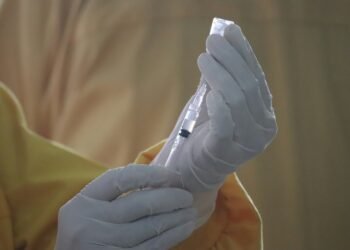

A fresh wave of HIV infections among children in Pakistan has renewed concerns over unsafe medical practices, particularly the reuse of syringes and inadequate infection-control measures in healthcare facilities.
In August 2025, Ayesha Aftab took three of her four children to Kulsoom Bai Valika Hospital in Karachi after they developed symptoms she believed could be typhoid or malaria, illnesses that are common during Pakistan’s monsoon season.
Her youngest child, Muhammad Rehan, was with her at the hospital when he developed a fever while sitting on her lap as his siblings received treatment. A doctor recommended an antibiotic injection, saying it would work faster than medication taken orally.
“I thought, okay, the doctor knows better,” Aftab said.
While waiting in the crowded ward, Aftab noticed hospital workers administering injections to several children. She said staff told her the practice was routine and also used in other established hospitals in Karachi.
“We had never been to these hospitals,” she said, “so we thought maybe things happened this way.”
However, Rehan did not recover after receiving the injection, while his siblings continued to suffer from illness despite undergoing weeks of treatment.
Subsequent laboratory tests revealed that all three children had HIV, the virus that can cause AIDS and become life-threatening without appropriate treatment.
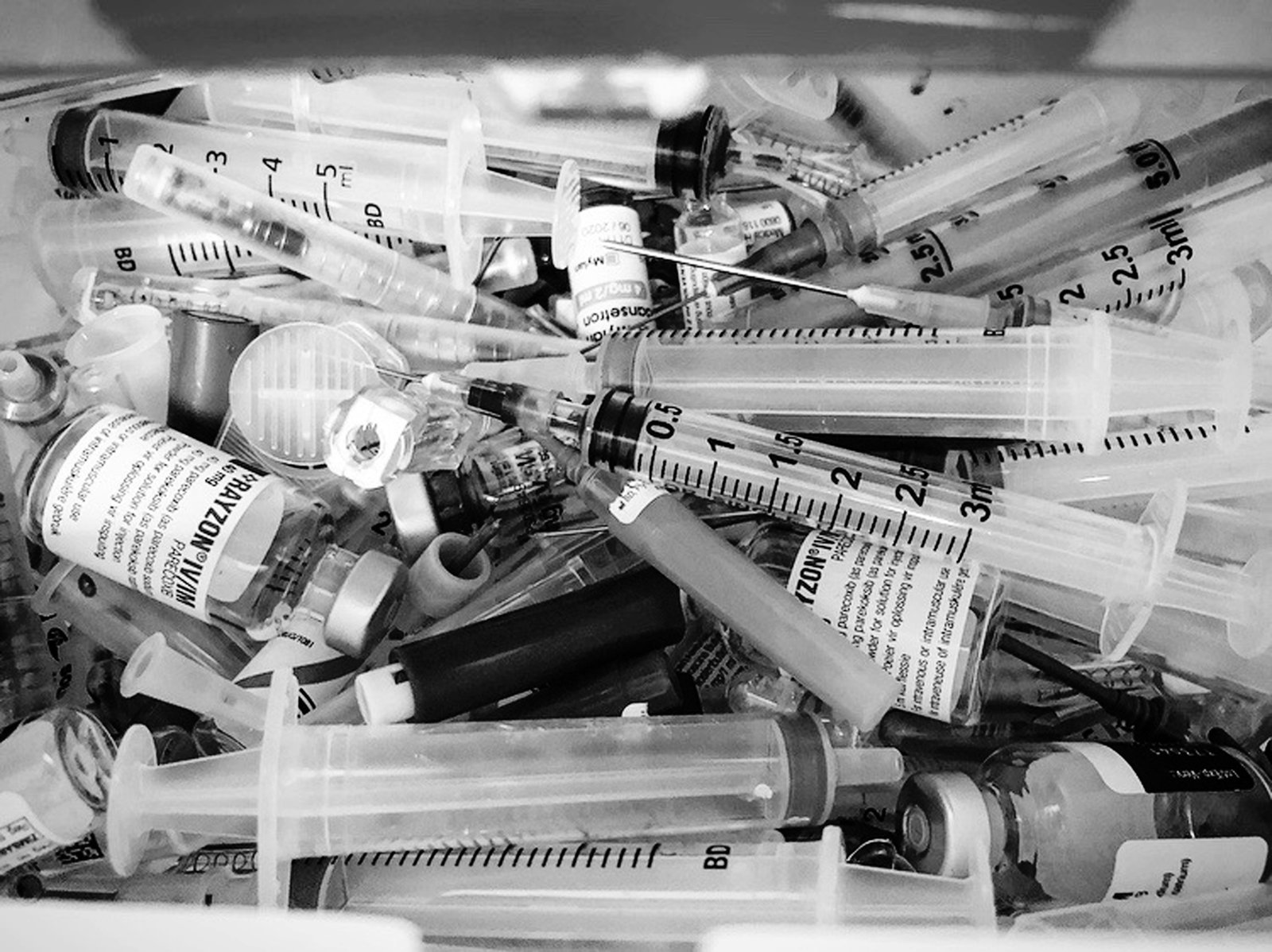
Aftab is among dozens of parents who say their children contracted HIV after receiving treatment at the government-run Valika Hospital. At least six of the affected children later died, according to the families, who have blamed the infections on the reuse of syringes and intravenous needles.
The concerns mirror findings from a major HIV outbreak in Pakistan in 2019.
Several government-ordered investigations conducted since November have identified safety problems at Valika Hospital, including improper syringe handling. Some hospital employees were suspended by the department responsible for managing the facility, while the provincial government promised financial assistance to affected families.
The Valika infections emerged after another significant outbreak in Taunsa, a district in Punjab province roughly 600 miles from Karachi. Between November 2024 and October 2025, 331 children in the district were reported to have contracted HIV, prompting further government commitments to tackle the spread.
Why Are The Outbreaks Continuing?
Health experts say repeated outbreaks linked to healthcare facilities point to deeper weaknesses in Pakistan’s medical system rather than isolated incidents.
Doctors who spoke about the issue said previous government responses have largely focused on immediate measures, such as shutting down unregistered clinics in Taunsa and suspending a hospital superintendent. However, they argue that broader problems affecting medical safety remain unresolved.
Fatima Mir, a paediatric infectious disease specialist at Aga Khan University Hospital in Karachi, said Pakistan’s healthcare system still has significant “chinks in the armor” that allow HIV transmission among children to occur.
Among the concerns are unsafe injection practices, poorly regulated blood donation services and the use of informally trained healthcare providers, particularly in rural communities where access to qualified medical professionals can be limited.
Mir described the recurring infections among children as “bridging events”, in which HIV moves from higher-risk populations, including injectable drug users, sex workers, transgender people and men who have sex with men, into groups considered to be at lower risk.
She said healthcare facilities can become the link between these populations when infection-control standards are not properly followed.
“Infection prevention and control is actually the emergency right now,” Mir said.
Pakistan also faces wider challenges in its healthcare system, including relatively low per-capita health spending and staff shortages in many public hospitals. Experts say inadequate staffing can increase dependence on workers without sufficient training, while weak supervision can allow unsafe practices to continue.
Syed Faisal Mahmood, another infection-prevention specialist at Aga Khan University Hospital, said cases of paediatric HIV have previously been associated with both public and private healthcare providers.
He said standards vary significantly between facilities and government oversight remains inconsistent.
“Healthcare in general is now driven not by quality but by convenience and by cost,” Mahmood said, describing the situation as a “perfect storm” for unsafe medical practices.
Pakistan’s health minister, Mustafa Kamal, also acknowledged the problem during a parliamentary speech in June, identifying “the wrong use of syringes” and IV drips as factors contributing to HIV infections.
Experts, however, warn that the officially identified paediatric outbreaks may represent only part of the country’s wider HIV problem.
Zafar Mirza, Pakistan’s former special assistant to the prime minister on health, said weaknesses in disease surveillance make it difficult to determine the true scale of HIV transmission.
“Since our disease surveillance system is also very weak, we will never know what exactly the prevalence is,” he said.
According to Mirza, the spread of HIV is therefore “much larger than what we know.”
Children Face Lifelong Treatment And Stigma
For children who acquire HIV, the consequences extend far beyond medical treatment. They may face lifelong medication as well as discrimination because of misconceptions surrounding the virus.
Zulfikar Ali Bhutto Jr., an activist who launched an HIV awareness campaign in Pakistan this year, said the disease remains associated with severe social shame.
In many communities, HIV and AIDS carry “back-breaking shame”, he said, partly because people associate the virus with sex and drug use.
His campaign aims to challenge those misconceptions and educate the public about HIV transmission, including the fact that the virus cannot be spread through ordinary physical contact or sharing food.
Families of children living with HIV say stigma has already affected their children’s education and access to healthcare.
Muhammad Asif, a factory worker in Karachi, said his daughter Manahil was refused admission to school after her HIV diagnosis. Three of her sisters, despite testing negative for the virus, were also denied admission.
With Asif earning about $140 a month, he said the family must also deal with the additional costs of medical treatment, transportation and education.
“We have to spend money on our sick children and take them to hospitals far away. We either have to pay for transport or spend money on their schooling,” Asif said.
Umaima Ansari, a teacher in Hyderabad, said her three-year-old son, Hussain, has also experienced discrimination since testing positive for HIV.
The family suspects he may have contracted the virus during an operation shortly after birth to treat hydrocephalus, a condition involving swelling of the brain, or through a blood transfusion more than a year later.
After his diagnosis, Ansari said both public and private hospitals began refusing to treat Hussain for other health problems, citing concerns about the risks involved.
His physiotherapists also became cautious because of his cerebral palsy, which was diagnosed shortly after birth.
Ansari said other healthcare providers advised her to conceal his HIV status.
“Don’t tell anyone he has HIV. People will stop meeting you. People will stop coming over to your house,” she recalled being told.
Government Introduces New Measures
The government is now attempting to reduce the possibility of HIV transmission through medical procedures.
Among the measures are nationwide HIV screening before surgeries, intended to identify previously undiagnosed infections, and a planned ban on certain conventional syringes from January.
The syringe restrictions follow efforts that began after the HIV outbreak in Larkana seven years ago. The new approach is intended to replace conventional syringes with locking versions that are more difficult to reuse.
For children already living with HIV, however, activists say improving medical safety is only part of the solution. They also want society to change the way it treats people living with the virus.
Bhutto said children diagnosed with HIV deserve understanding rather than discrimination.
“These children will have to live with this disease for the rest of their life as far as we know. So they need to live in a world that is kind to them.”