
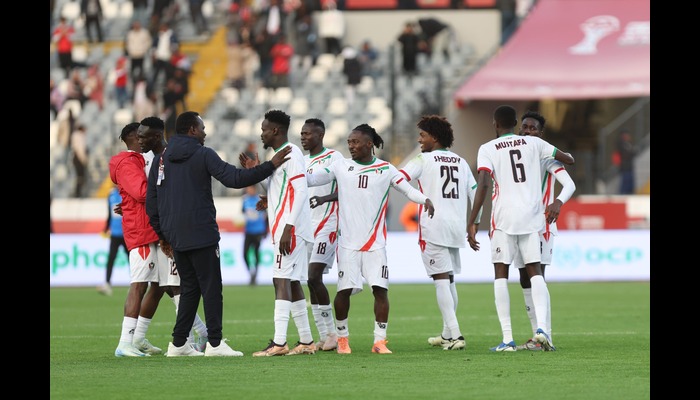
From the first whistle, it is clear that Sudan’s national team carries more than hopes of victory; they carry the weight of a country at war, and the idea that football could influence peace is as confident as it is desperate.
Football as a Fragile Bridge
Sudan’s team is playing far from home because the civil war has made stadiums and cities unsafe. For decades, the country has been torn by conflict, and the current fighting between the Sudanese army and the paramilitary forces that split from the Janjaweed militia has killed tens of thousands and displaced millions.
Coach James Kwesi Appiah openly admits that the emotional burden is heavy. He hopes that a strong performance, especially against a team like Senegal, might calm tensions, if only temporarily. There are examples of sports softening conflict, even briefly, but the question is whether a single match can do what decades of diplomacy have struggled to achieve.
The Realities on the Ground
While Sudan’s footballers train and compete abroad, ordinary citizens remain caught in violence and famine. Football cannot stop bullets or rebuild destroyed infrastructure. Yet, for those displaced or trapped at home, victories provide fleeting hope. There is symbolic power in this: rival armies once stopped fighting to celebrate a game, showing that even in chaos, sports can reach people in ways politics sometimes cannot.
Challenges Beyond the Pitch
The team’s logistics alone highlight the difficulties. Clubs from Khartoum now play in Rwanda, and the national side faces travel, security, and psychological challenges just to compete. Players are away from families and familiar surroundings, carrying not just personal pressure but the expectations of a nation. This makes their task uniquely difficult and highlights that football can only complement, not replace, real political solutions.
Fans hope the team’s performance might inspire peace talks or calm hostilities, but the risk is that the excitement fades once the game ends. True change requires negotiation, ceasefires, and infrastructure rebuilding, efforts far beyond the scope of sport. Still, the team’s presence on the international stage reminds the world that Sudan exists beyond headlines of war and famine.
A Fragile Hope
Ultimately, Sudan’s players are doing more than playing football; they are holding up a mirror to a divided nation, showing that even in conflict, people crave normalcy and pride. Whether a game can truly stop a civil war is unlikely, but it can unite hearts, inspire hope, and push a weary population to imagine peace, even for a few hours.
This moment may not end the conflict, but it demonstrates the potential of sport to remind humanity of what is worth fighting for: unity, identity, and the belief that life can still be better.