
The United States has officially kicked off its semiquincentennial, the historic 250th anniversary of the nation’s founding, but the milestone is unfolding under an oppressive environmental crisis. A brutal, record-breaking summer weather pattern has gripped the country, forcing public safety officials to alter or entirely scrap major holiday events. As millions of citizens attempt to gather for parades, concerts, and historic pageantry, dangerous heat threatens America’s 250th July 4th celebrations from coast to coast, turning a day of national reverence into a logistical battle against weather.
Extreme Weather Collides with Historic Milestones
According to the National Weather Service, an estimated 150 million Americans are currently under active heat alerts. In the Mid-Atlantic region alone, heat index values are skyrocketing between 105 and 111 degrees Fahrenheit, making prolonged outdoor exposure a severe health hazard.
The heat has fundamentally altered the holiday landscape, forcing high-profile cancellations and challenging the endurance of attendees. In the Washington, D.C., metro area, extreme morning temperatures forced the complete cancellation of America’s Independence Day Parade. Neighboring communities like Fairfax, Leesburg, Takoma Park, and Laurel similarly called off their parades to protect spectators, marching bands, and emergency personnel. Despite sweltering conditions on the New York coast, crowds still packed Coney Island for the annual Nathan’s Famous Hot Dog Eating Contest. Joey “Jaws” Chestnut defended his title under the blazing sun, eating 66 hot dogs in 10 minutes to claim his 18th Mustard Belt, while Miki Sudo dominated the women’s division with 38.75 dogs.
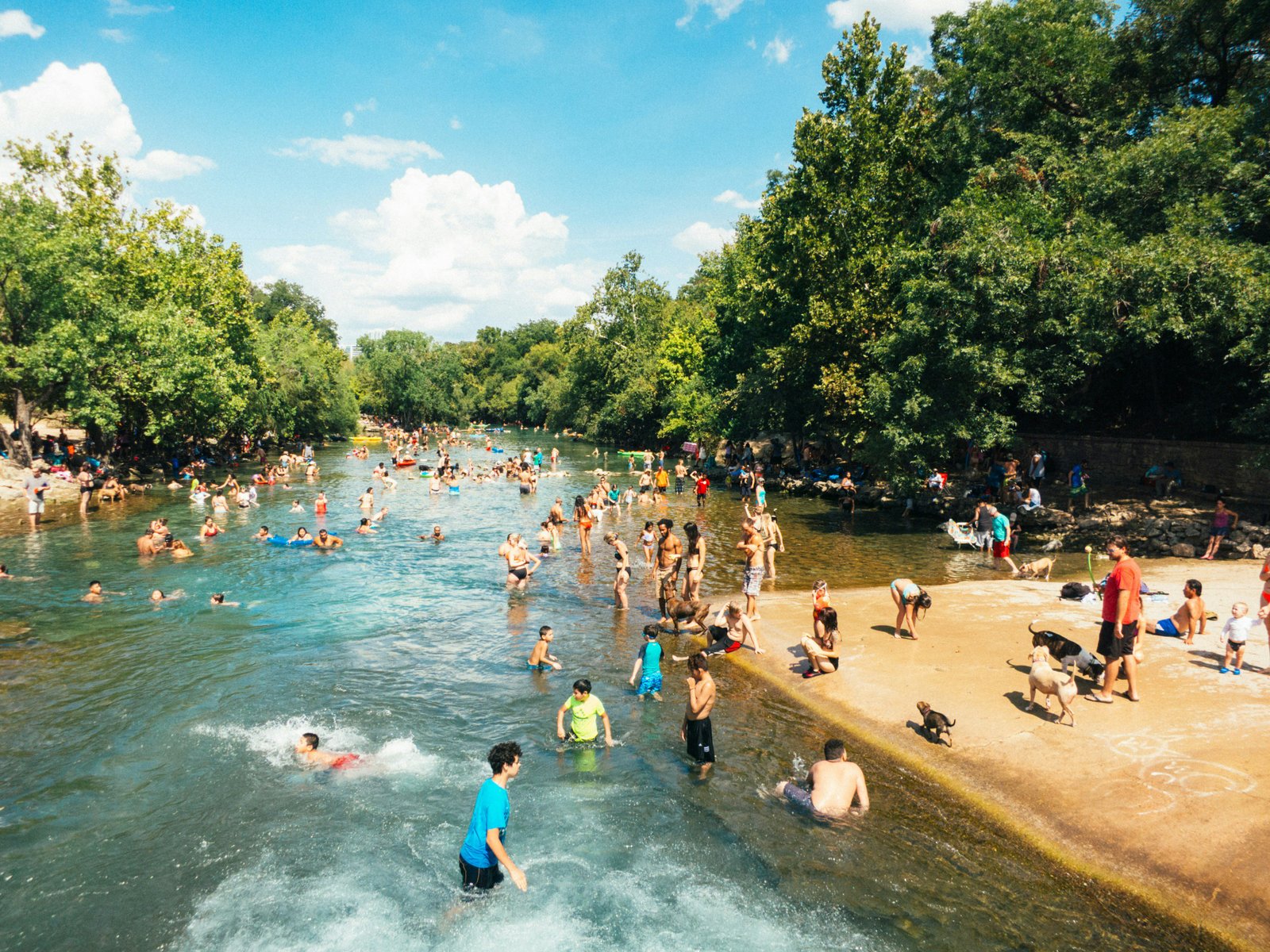
To complicate matters, meteorologists have issued severe thunderstorm watches extending from the Plains to the Northeast. The forecast warns of damaging winds, lightning, and torrential downpours that threaten to disrupt signature evening fireworks displays, including the “Salute to America 250” show on the National Mall.
Political Contrasts on a Historic Stage
The 250th anniversary has also served as a major backdrop for deeply contrasting political visions across the nation. In New York Harbor, Vice President JD Vance delivered an address from the deck of the USS Kearsarge as part of the “Sail4th 250” international parade of sail. Vance praised America’s history of “carving a great civilization out of the wilderness” and urged citizens to reject zero-sum thinking that focuses strictly on the nation’s historical flaws.
Meanwhile, alternative political viewpoints were broadcast along the East Coast. Maryland Governor Wes Moore delivered a speech from Annapolis, explicitly criticizing the ongoing Iran war without naming it directly, stating that starting a conflict without a clear purpose is not patriotic. New York City Mayor Zohran Mamdani delivered a semiquincentennial address using George Washington’s historical desk, offering a sharp rebuke to isolationist rhetoric by emphasizing that America’s true exceptionalism lies in its history of welcoming immigrants.
My Opinion
There is a profound, unavoidable irony in celebrating 250 years of American resilience while watching the capital city completely shut down its marquee parade because it is simply too hot for human beings to march down the street.
For months, the hype surrounding the semiquincentennial promised a flawless, grand display of national pride—tall ships in the Hudson, stealth bombers piercing the sky, and massive crowds flooding our historic plazas. Instead, the images defining this historic day are of military personnel chugging water bottles in the shade, municipal governments scrambling to issue health warnings, and citizens retreating indoors to escape a suffocating climate. We are trying to celebrate our past, but our immediate present is forcing us to confront an unstable environment.
What makes this backdrop even more jarring is the political theater surrounding it. As leaders use this milestone to argue over the definition of patriotism or debate foreign policy, the literal ground beneath them is baking. It is hard to focus on lofty speeches about “carving civilization out of the wilderness” when modern infrastructure is buckling under triple-digit heat index values. If America wants to ensure it sees another century of prosperity, the political establishment needs to realize that true patriotism in 2026 requires protecting the literal habitability of the nation, rather than just treating Independence Day as a focus-grouped branding exercise.
Conclusion
As the evening approaches, organizers remain hopeful that cooling atmospheric conditions will allow the historic fireworks displays in New York, Boston, and Chicago to proceed safely. Ultimately, the fact that Dangerous Heat Threatens America’s 250th July 4th serves as a memorable, if uncomfortable, reminder of the shifting realities facing the country. As the yearlong countdown to the true semiquincentennial continues, balancing national celebration with environmental adaptation will remain the ultimate test for communities across the United States.