

A diplomatic crisis has erupted after the United States publicly accused South Africa’s military and defense ministry of defying direct orders from President Cyril Ramaphosa, refusing to send home Iranian warships participating in controversial naval exercises.
The extraordinary allegation paints a picture of a rogue military establishment and has forced the South African government to launch an urgent internal investigation, with fallout that threatens to rupture its foreign policy and shatter its moral standing on the world stage.
In a blistering statement on social media, the U.S. Embassy in South Africa said it noted with “concern and alarm” reports that Defense Minister Angie Motshekga and the armed forces had ignored government directives to ask the Iranian fleet to depart. “South Africa can’t lecture the world on ‘justice’ while cozying up to Iran,” the embassy declared, framing the incident not as a diplomatic misstep but as a conscious “choice to stand with Iran” amid its violent crackdown on domestic protesters.
The Alleged Mutiny: A President’s Orders ‘Defied’
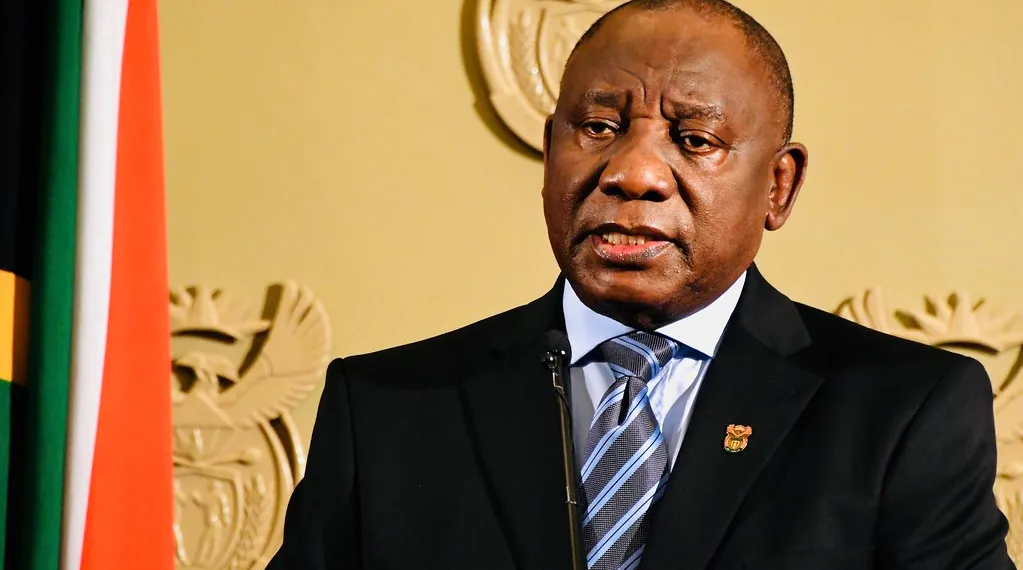
At the heart of the scandal is a direct conflict between the president’s office and his own military. The U.S. claims that after Iranian warships had already docked in Cape Town for the “Peace Resolve” naval drills—an exercise led by China and including Russia—President Ramaphosa ordered them turned away. According to Washington, South Africa’s defense establishment refused to comply.
The office of Defense Minister Motshekga issued a cryptic response on Friday, stating the president’s instructions had been “clearly communicated to all parties concerned, agreed upon, and to be implemented.” However, the ministry simultaneously announced it was launching a formal Board of Inquiry to investigate the “serious allegations,” a move that confirms the existence of a major internal rift and suggests the orders may have been “misrepresented and/or ignored.”
The Hypocrisy Charge: A ‘Democratic’ Nation’s ‘Unconscionable’ Choice
The U.S. accusation carries a devastating moral charge. Washington labeled Iran’s participation “unconscionable,” directly linking the naval drills to the regime’s violent suppression of protests—a struggle the statement compared to “peaceful political activity South Africans fought so hard to gain for themselves.”
This hypocrisy has been seized upon by critics within South Africa. “We have not heard a whimper from the ANC,” said William Gumede, an associate professor at the University of Witwatersrand, referring to the ruling party. “That is the irony and hypocrisy, it’s been criticising other regimes but it’s been silent on what’s happening in Iran.”
The Huge Fallout: Alignments Exposed and Alliances Tested
The fallout is immediate and multi-layered. Domestically, the government faces a crisis of authority, with its military’s loyalty and chain of command under a cloud. Internationally, the incident brutally exposes the tensions within South Africa’s much-vaunted “non-aligned” foreign policy.
By hosting Iran, Russia, and China for the BRICS+ exercise while allegedly defying its own president to do so, South Africa’s defense establishment appears to have made a de facto strategic alignment against Western democracies. The U.S. statement explicitly rejected the notion that this was neutral, calling it a clear “choice.” This forces a stark reckoning: Is South Africa’s military operating a foreign policy independent of its civilian government, and if so, who is truly in charge?
The inquiry launched by Minister Motshekga will now determine not just what happened in Cape Town, but where South Africa’s true allegiances lie—and whether its president commands the loyalty of his own armed forces. The fallout, as predicted, is indeed huge.