The Department of Justice has caused a fierce national debate by taking capital punishment off the table for Vance Boelter, the man accused of carrying out a shocking series of politically motivated assassinations. In a letter submitted to a Minneapolis federal judge on Wednesday, June 10, 2026, prosecutors confirmed they reached a plea agreement with the 58-year-old suspect. Under the terms of the arrangement, Boelter will avoid the death penalty ahead of his formal change-of-plea hearing.
The decision has provoked intense public and political outrage due to the sheer brutality of the June 14, 2025 attacks. Operating under the cover of darkness, Boelter allegedly wore a police disguise and drove a mocked-up squad car to ambush Democratic lawmakers at their homes. The rampage resulted in the deaths of former Minnesota House Speaker Melissa Hortman and her husband, Mark Hortman, and left State Senator John A. Hoffman and his wife, Yvette, with catastrophic, permanent firearm injuries.
Legal Hurdle Over Stalking Precedent
According to Justice Department officials, the decision to drop the pursuit of a death sentence was driven by structural legal barriers rather than leniency.
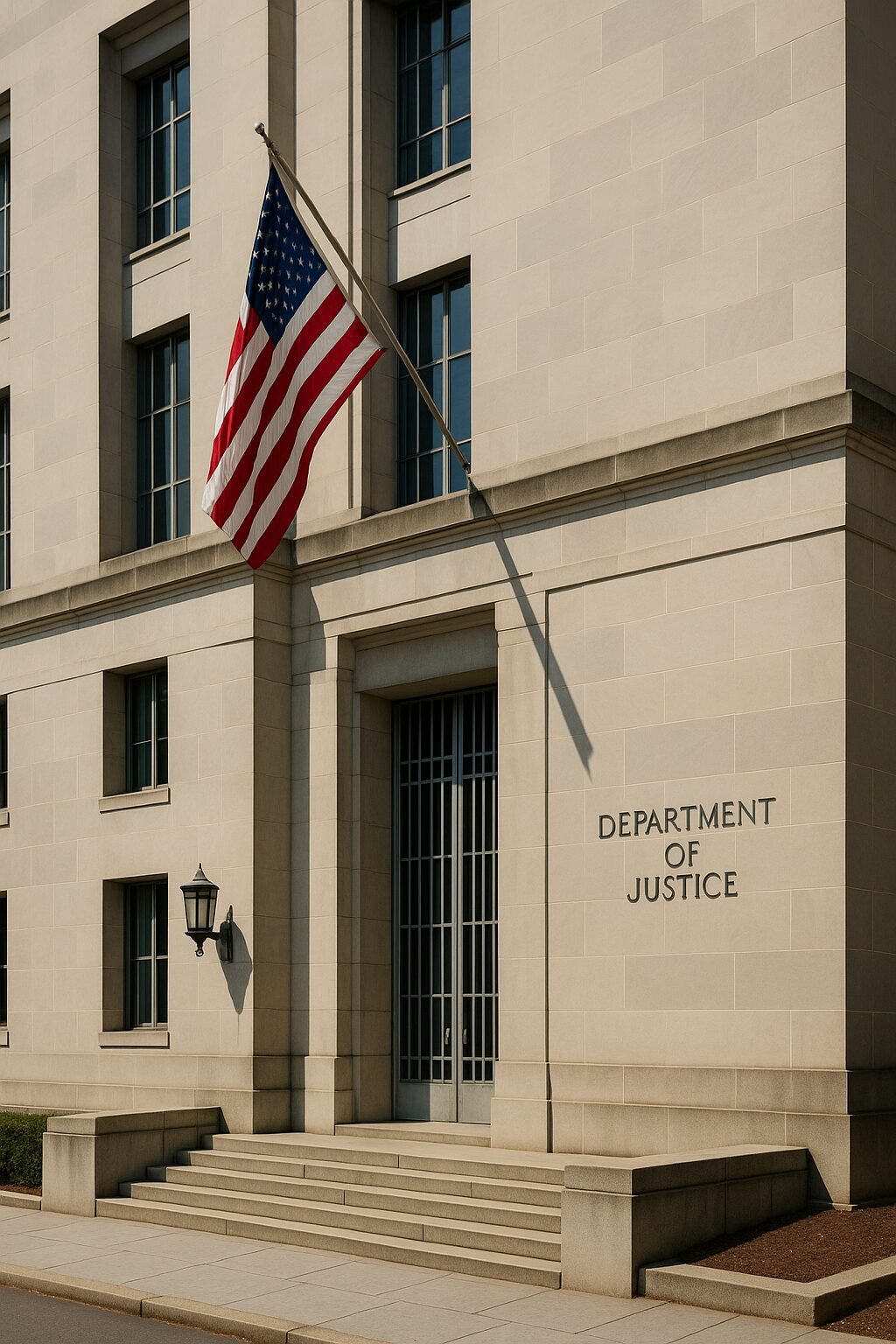
For federal prosecutors to seek capital punishment, a homicide must occur in tandem with a qualifying federal felony. The underlying framework of the government’s case against Boelter relied heavily on interstate stalking charges.
Modern federal court precedent remains highly divided over whether stalking meets the strict legal definition of a “violent crime” required to trigger the death penalty. Fearing that a future appellate court could overturn a death sentence on these technical grounds, prosecutors opted to secure a guaranteed life conviction through a plea instead.
Minnesota independently abolished state-level capital punishment in 1911. While the Hennepin County Attorney’s Office is aggressively pursuing state-level first-degree premeditated murder charges against Boelter, the maximum allowable penalty under state law is life imprisonment without the possibility of parole.
Strategic Plea or Capitulation?
The Department of Justice’s decision to spare a literal assassin from the ultimate penalty feels like a massive, deeply disappointing capitulation in the face of absolute horror. Vance Boelter didn’t just commit a double murder; he staged a calculated, coordinated execution of elected public servants in their own homes while disguised as a law enforcement officer. He possessed a hit list filled with dozens of other political targets. This was a textbook act of domestic terrorism designed to undermine democratic governance through bloodshed, and if any case in modern American history screams for the absolute maximum retribution the federal government can muster, it is this one.
The DOJ’s defense that “stalking might not qualify as a violent crime” reads like bureaucratic cowardice. Posing as a cop, hunting down lawmakers, shooting a state senator nine times, and killing a husband and wife in their entryway is an explicitly violent act. Hiding behind technical ambiguities in statutory language avoids a tough courtroom battle, but it sends a dangerously weak message to the public at a time when political violence is at an all-time high.
While securing a guaranteed plea ensures Boelter will spend the rest of his natural life behind bars without risking an elongated appeal process, it strips the justice system of its strongest deterrent. When an extremist can execute a top state official and walk away with a guaranteed life sentence because prosecutors were afraid of a precedent loophole, the system has prioritized administrative convenience over righteous accountability.
Severe Lasting Damage and Ongoing Prosecution
The political and social scars left by the June 2025 ambush remain raw throughout the state. Beyond the deaths of the Hortmans and their beloved golden retriever, Gilbert, who was critically wounded and had to be euthanized, the surviving victims continue to experience severe physical and psychological trauma.
The ongoing fallout from the tragedy highlights the depth of the violence.
According to a civil lawsuit filed in April, Senator John Hoffman suffered severe, lasting damage to his left arm, hand, digestive system, and urinary tract after surviving nine gunshot wounds. His wife, Yvette, who was shot eight times, also faces long-term physical disabilities.
Federal investigators discovered that Boelter’s black SUV contained a handwritten confession letter addressed to the FBI, alongside a meticulous list detailing the home addresses of dozens of other local Democratic political figures.
A spokesperson for local Minnesota prosecutors confirmed that the federal plea arrangement will have zero impact on the state-level indictment. The state case, which includes first-degree premeditated murder and felony animal cruelty, will resume immediately following the formal conclusion of the federal proceedings.
A Bitter Resolution for an Unprecedented Crime
While the Justice Department insists that prosecutors worked exhaustively to hold Boelter accountable to the “fullest extent possible under the law,” the elimination of the death penalty leaves a bitter taste for a state still mourning its legislative leaders. By resolving the federal trial through a swift plea deal, the court avoids a highly charged public trial, but it leaves the public to grapple with a legal system that couldn’t or wouldn’t apply its ultimate punishment to an explicit act of political terror.