Republicans in the US House are reassessing their campaign strategy with four weeks left before Election Day, as some lawmakers and party officials become increasingly concerned about the possibility of losing their narrow majority.
The growing anxiety follows a decline in President Donald Trump’s approval ratings in internal Republican polling, including in traditionally Republican areas, according to people familiar with discussions within the party.
With the political environment becoming more difficult, some House Republicans are considering moving campaign resources away from races they now regard as particularly challenging and concentrating them on contests where they believe the party has stronger prospects.
Among the races reportedly being discussed are those involving Rep. Mariannette Miller-Meeks in Iowa, Rep. Tom Kean in New Jersey and an open seat in Nebraska.
Despite the concerns, Republican leaders have not conceded the House.
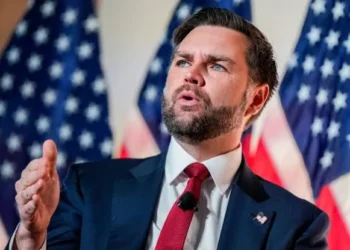
A political aide said Speaker Mike Johnson remains “absolutely still convinced” that Republicans can retain the chamber and has not removed any seats from his campaign target list.
Johnson recently returned from New Jersey and is scheduled to campaign alongside Miller-Meeks in Iowa next week.
The House GOP’s campaign organisation has also strongly rejected the idea that Republicans have accepted defeat.
The uncertainty comes as Republicans face difficult contests across the country, including Senate races in traditionally Republican states. Control of both chambers of Congress is at stake.
Republicans have pointed to rising diesel prices, persistent inflation and growing opposition to the war in Iran as factors contributing to the difficult political climate.
Retiring Republican Rep. Dan Newhouse said the closeness of the races made the outcome difficult to assess.
“There’s a lot of close races, and it’s hard to make a prediction,” he said.
Newhouse also identified affordability as a major concern for voters.
“Affordability is a big deal. People see the gas prices every single day.”
He added that rural communities were facing particular challenges.
“There’s just a lot of things making it tough right now for rural America – which I can speak to specifically – but for Americans all over the country.”
Some Republicans are now preparing for the possibility that Democrats could take control of the House and are discussing how to limit the size of their majority.
Several Republicans have said privately that keeping any potential Democratic advantage below 10 seats would be an important objective.
One Republican strategist summed up the thinking by asking: “What the f**k are you going to get done over there?”
Republicans are not expecting a complete electoral wipeout, with few believing Democrats will gain more than 30 seats.
Some party members also maintain that Republicans could still retain their majority, particularly if gas prices fall significantly before voting begins.
Republican leaders remain confident about the prospects of incumbents Brian Fitzpatrick of Pennsylvania and Mike Lawler of New York, whose districts were won by Kamala Harris in 2024.
At the same time, the GOP is preparing to deploy its substantial financial resources to protect vulnerable incumbents and challenge Democratic-held seats.
Republicans are targeting Democratic Reps. Marcy Kaptur in Ohio’s 9th District and Marie Gluesenkamp Perez in Washington’s 3rd District, among others.
Trump-linked super PACs are also spending money in districts that had previously been considered difficult Republican targets, including Colorado’s 5th, Kentucky’s 6th and Montana’s 1st.
“The environment is bad but Democrats still have to win on GOP terrain,” one Republican operative said.
Campaign spending has become a major part of the Republican strategy. Data from AdImpact showed Republicans outspending Democrats in each of the 10 most expensive House races in advertising scheduled between early October and Election Day.
That spending includes Democratic-held seats such as North Carolina’s 1st District, represented by Don Davis, and an open seat in Maine’s 2nd District.
Republicans are also relying heavily on newly redrawn congressional districts in Texas and Florida.
One GOP leadership aide described redistricting as potentially decisive in determining the scale of the party’s losses or its ability to retain the majority.
“At the end of the day, redistricting could be the lifesaver either way – either minimizing the losses or the reason we potentially hold onto the majority,” the aide said.
Republicans are also encouraged by several races where Democratic primary battles produced candidates they believe could be more vulnerable in November. Those include California’s 22nd District, Michigan’s 7th District and Maine’s open 2nd District.
With Election Day approaching, Republican campaigns are continuing to emphasise taxes, immigration and law enforcement.
Tax policy has been particularly prominent, with the party highlighting provisions of the “One Big Beautiful Bill Act” covering tips, overtime and Social Security.
AdImpact data showed that about one-third of Republican advertisements in House races during September focused on taxes.
Immigration and crime have also featured prominently in GOP advertising, while transgender-related policies remain another issue Republicans are using to attack Democratic candidates.
Democrats, meanwhile, have responded with their own advertisements defending their records and positions on those issues.
In one advertisement, Kaptur said: “Here’s the truth: I voted with Republicans to keep transgender ideology out of our schools because parents know what’s best for their kids, and boys should not play in girls’ sports.”