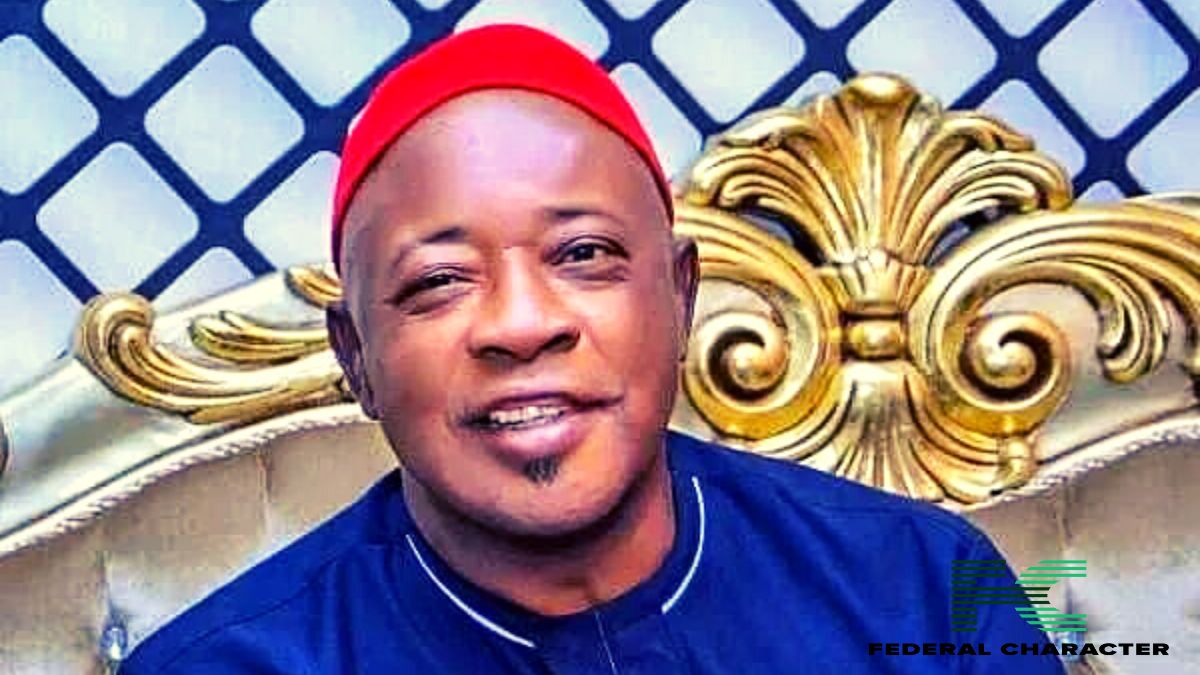

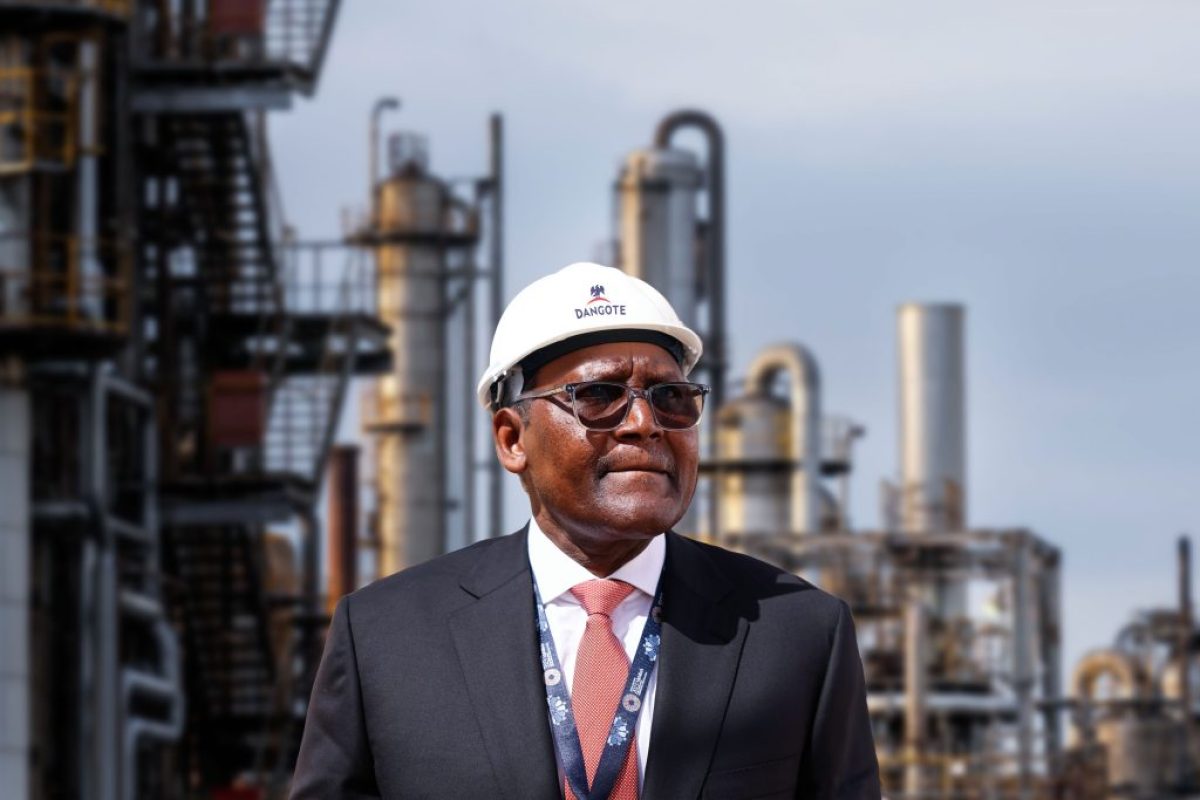
In a stunning counterpunch that threatens to unravel the origin story of Africa’s richest man, Nigerian petroleum expert Engr. Kailani Mohammed has publicly challenged billionaire Aliko Dangote to reveal the source of his fortune, turning a $5 million school fees scandal into a brutal, high-stakes war over who holds the real power—and the real dirt—in Nigeria.
The fiery exchange erupted after Dangote, in a widely circulated video, accused Farouk Ahmed, the CEO of Nigeria’s oil regulator (NMDPRA), of spending $5 million on his children’s Swiss secondary education, demanding he deny the allegations and claiming to have “incontrovertible evidence.” Mohammed, in a blistering interview on Trust TV, responded by aiming directly at Dangote’s most protected legacy: the foundation of his wealth.
The Port Harcourt Gambit: A Challenge to Dangote’s Origin Story
Mohammed’s counterattack was personal and historical. “Can Dangote tell us the source of his money in the 1980s when he was in Port Harcourt? Who is clean?” he demanded. “In the 1980s, we were aware of what happened in Port Harcourt, how he got his money, yet nobody came out to say all these things.”
The challenge is explosive. It drags the conversation from a specific corruption allegation into the murky waters of how fortunes were made during Nigeria’s military era, a period rife with patronage and opaque deals. By invoking Port Harcourt, the heart of Nigeria’s oil industry, Mohammed implies Dangote’s own rise may not withstand similar scrutiny.
A Business War Masquerading as a Corruption Fight
Mohammed framed Dangote’s attack on the regulator as a tactical move in a larger commercial war. “Every time you want to monopolize, you bring up issues and allegations against people,” he said, accusing Dangote of “touching people personally” in his quest to dominate the petroleum sector.
The conflict stems from Dangote’s $20 billion refinery, which he has accused the NMDPRA of sabotaging by issuing fuel import licenses to competitors. Mohammed also backed the regulator’s previous technical critiques, stating, “The FCC in his refinery, the Fuel Catalytic Cracker, which would make it about 80 or 90 per cent, is not working. Farouk said it before, and we reiterated it.”
Why This Matters
This is more than a spat between a billionaire and a bureaucrat. Kailani Mohammed has done what few in Nigeria’s business or political elite have dared: publicly question the sanctity of Aliko Dangote’s wealth and motives. He has reframed the narrative from “Dangote the anti-corruption crusader” to “Dangote the monopolist using old tactics.”
The challenge strikes at the core of Dangote’s public image as a self-made industrialist. If the question of “how he made his money in Port Harcourt” gains traction, it could ignite a long-overdue public debate about the origins of Nigeria’s elite wealth and the true cost of building a corporate empire in one of the world’s most difficult business environments.
For now, the $5 million school fees allegation is just the opening shot. The real battle is over who controls Nigeria’s economic narrative—and who gets to ask the questions that have remained unanswered for decades.