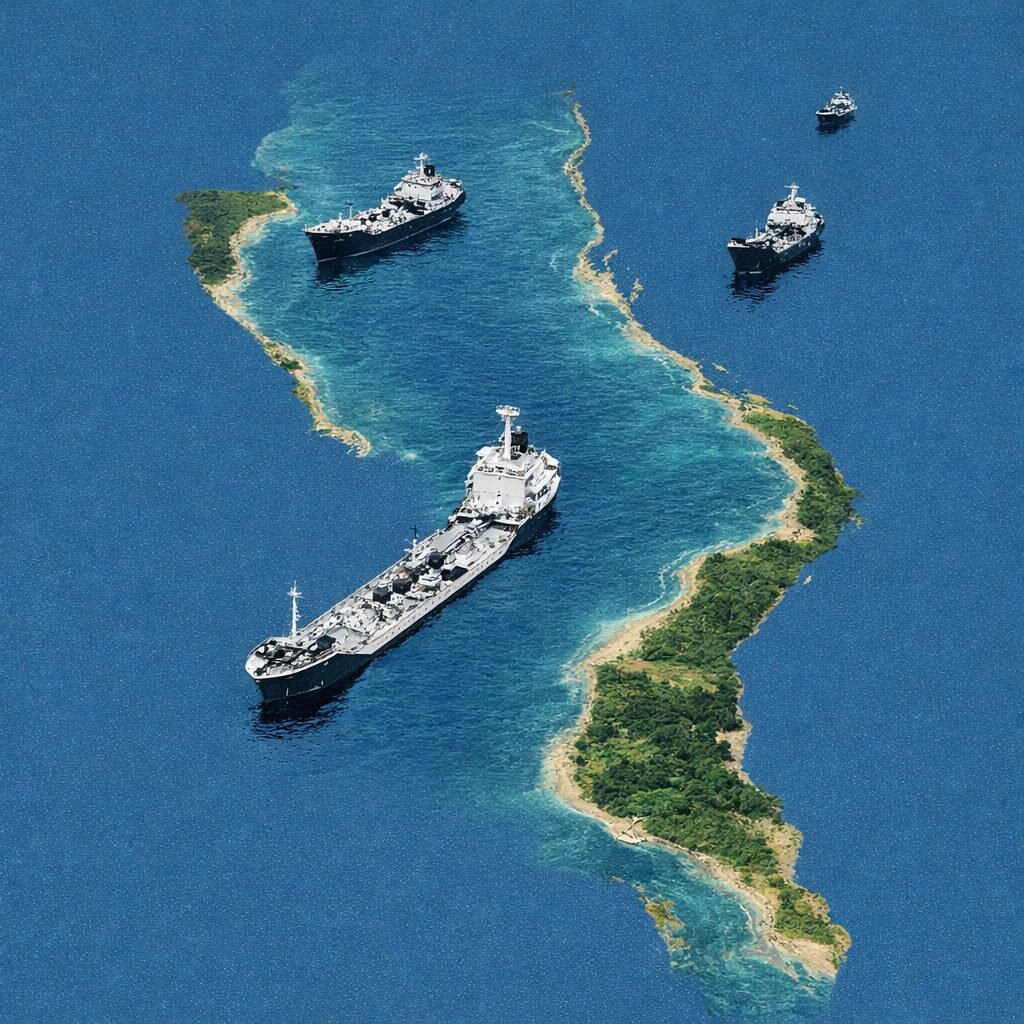

While President Trump maintains a public posture of strength, the reality on the water suggests that Iran is currently dictating the terms of the engagement. By weaponizing the Strait of Hormuz, Iran has successfully countered the U.S. naval blockade, proving that even a superpower can be outmaneuvered when the world’s oil supply is on the line.
The Flip-Flop Strategy
Tehran’s decision to briefly open and then abruptly re-close the Strait on Sunday has exposed a major vulnerability in Trump’s “Economic Fury” campaign. By opening the Strait on Friday, Iran teased global markets with a massive oil price plunge, only to snatch it away Saturday when Trump refused to lift the U.S. blockade. Parliament Speaker Mohammad Bagher Ghalibaf made it clear: if the U.S. doesn’t stop blocking Iranian ports, the world doesn’t get its oil. This “tit-for-tat” strategy has left Washington reacting to Tehran’s moves rather than setting the pace.
The “Excavator” Delusion?
A significant gap has emerged between Trump’s statement and the reality of the negotiations in Pakistan. Trump told supporters on Friday that Iran had agreed to surrender 440kg of enriched uranium, stating the U.S. would go in with “lots of excavators” to dig it up. Iran’s Foreign Ministry hit back immediately, stating that surrendering the stockpile “has never been raised in negotiations” and that the material, buried under rubble from previous bombings, is staying exactly where it is.
Escalation in the Waterway
Iran is no longer just using words; the Revolutionary Guards (IRGC) have moved to “targeted” violence to enforce their control. Two Indian-flagged ships were involved in a “shooting incident” with the IRGC, leading to a formal protest from New Delhi. Reports indicate the IRGC threatened to “destroy” an empty cruise ship attempting to flee the Gulf, viewing any unauthorized movement as “cooperation with the enemy. At least one vessel was hit by an “unknown projectile,” causing container damage and proving that the 2100 GMT ceasefire is essentially non-existent in the Gulf.
The Shadow of the Leader
Adding to the tension is the first written message from Supreme Leader Mojtaba Khamenei. Having taken power after his father was killed in the war’s opening strikes, his message that the Iranian Navy “stands ready” to defeat the U.S. suggests that the next generation of Iranian leadership is even more committed to the standoff than the last.
As the Tuesday deadline for the current ceasefire approaches, the “tough stand” Trump claims to be taking is being tested by an adversary that is willing to burn the global energy market to the ground to keep its nuclear program alive.