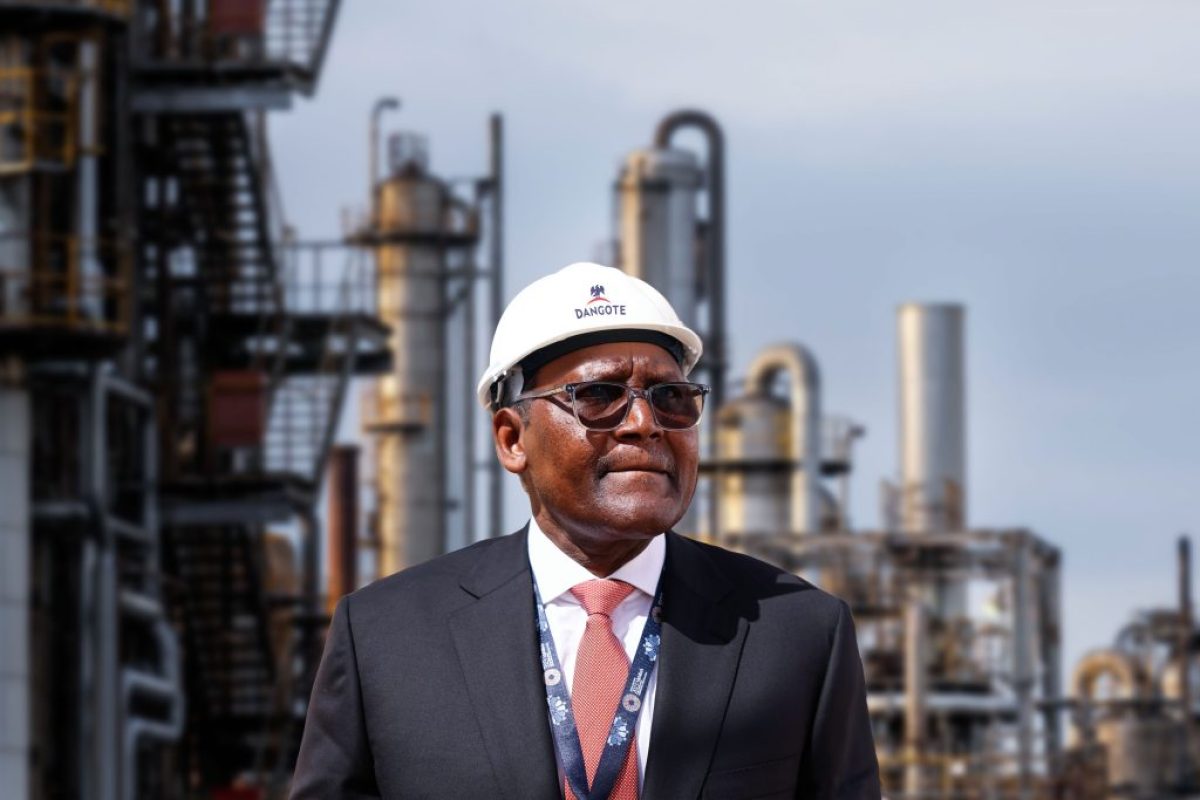

While the Iran war has sent shockwaves through global energy markets, one Nigerian billionaire has emerged as an unlikely winner. Aliko Dangote, Africa’s richest man, has seen his fortune swell by over $5 billion as his refinery becomes the world’s largest single exporter of jet fuel.
The Dangote Petroleum Refinery, a $20 billion facility near Lagos processing about 700,000 barrels of crude daily, has become a major beneficiary of supply disruptions linked to the conflict. With the Strait of Hormuz effectively blockaded and Ukrainian strikes reducing Russian fuel exports to Africa, buyers across the continent and beyond have scrambled for alternatives.
The War That Changed Everything
The timing was fortuitous. The refinery reached full operational capacity just as the US-Israeli attacks on Iran began in late February. The closure of the Strait of Hormuz — through which a significant share of global oil trade passes — created a supply vacuum that Dangote was uniquely positioned to fill.
The refinery has sold 12 cargoes amounting to 456,000 tons of refined products delivered to Côte d’Ivoire, Cameroon, Tanzania, Ghana, and Togo. Shipments to other African countries almost tripled to about 90,000 barrels per day from 38,000 previously. Tanzania’s inclusion was particularly significant, marking the first time Dangote fuel reached East Africa — a region previously entirely dependent on Gulf suppliers.
South Africa is now seeking a 12-month supply contract, while Ghana and Kenya have also expressed interest.
The Price of Success
But Dangote’s windfall has come at a cost for ordinary Nigerians. While the refinery exports jet fuel to the US and Europe, domestic petrol prices have surged by more than 50% since the war began. Pump prices rose from about ₦870 pre-war to as high as ₦1,500 in May.
The refinery supplies over half of locally consumed petrol, yet prices have not fallen in line with global crude declines. This has sparked accusations of monopolistic practices. Human rights lawyer Deji Adeyanju told the New York Times that Dangote has “too much influence” on the government.
The Irony of Importing Crude
Perhaps the most striking contradiction: Nigeria’s largest refinery is forced to import crude oil. Despite sitting on vast reserves, domestic crude supply has been inconsistent. Under a crude-for-naira deal, the refinery was to be supplied 15 cargoes a month, but officials barely meet five. This has forced Dangote to import feedstock from the US, Brazil, and Middle Eastern suppliers at dollar-denominated costs, exposing the refinery to foreign exchange pressures.
A $5 Billion IPO on the Horizon
The refinery’s success has sparked widespread investor interest. The facility has submitted an application for a $5 billion initial public offering to Nigeria’s Securities and Exchange Commission — potentially Africa’s largest IPO. Two advisers have already announced a $1 billion underwriting program, comprising a completed and funded $600 million private placement and a $400 million underwriting commitment.
The Bottom Line
The Iran war has transformed the Dangote Refinery into a global energy player, making Aliko Dangote $5 billion richer and turning Africa’s largest refinery into the world’s largest single exporter of jet fuel. But the success has been double-edged: while Dangote exports to the US and Europe, Nigerians face surging petrol prices and accusations of monopolistic practices. The refinery’s IPO could be Africa’s largest.