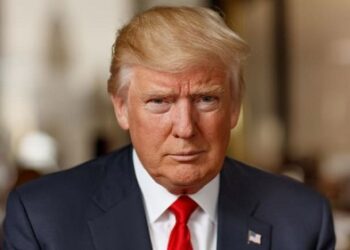

The White House’s grand plan to force historic interest rate cuts has hit an immediate roadblock, and the resistance is coming from inside the building. Kevin Warsh was officially sworn in as the new chair of the Federal Reserve during an elaborate East Room ceremony. While President Donald Trump used the stage to signal a tight political embrace of the central bank, economic realities and sudden internal dissent from the board have exposed a brewing mutiny, showcasing exactly how Trump’s new Fed Appointees are already defying the White House on monetary policy.
A Scripted Swearing-In
The arrangement of the event was meticulously designed to project presidential influence, but the underlying data immediately shattered the narrative.
Warsh was sworn in by Supreme Court Justice Clarence Thomas in the East Room, a highly political venue choice last used for a Fed chair by Ronald Reagan for Alan Greenspan in 1987. Both Janet Yellen and Jerome Powell were sworn in at the Fed’s low-key headquarters to protect the bank’s non-partisan image.
Trump has spent months demanding rock-bottom interest rates, explicitly stating to the press in February that Warsh “would not have gotten the job” if he didn’t want to aggressively cut rates.
Moments after the ceremony, Fed Governor Christopher Waller, a staunch Trump appointee, publicly broke ranks. Waller announced that due to stubborn economic pressures, he can “no longer rule out rate hikes” and insisted that future Fed statements must make it clear that a rate cut is entirely off the table for the foreseeable future.
The Illusion of Control is Crushing Trump’s Agenda
President Trump is learning a brutal lesson in basic economics: you can bully politicians, but you cannot bully inflation. For years, Trump treated the Federal Reserve like a personal piggy bank, repeatedly attacking Jerome Powell and openly declaring that he should dictate interest rates because he knows the economy “better than almost anybody.” He explicitly picked Kevin Warsh because he expected total obedience on cheap borrowing costs.
But watching his own hand-picked appointees instantly defy his rate-cut agenda is poetic justice. Trump wants artificially low interest rates to juice the stock market, yet his own reckless geopolitical decisions have made that completely impossible.
You cannot launch a war with Iran, choke off 20% of the world’s oil supply through the Strait of Hormuz, send gas prices skyrocketing by 50%, and then scratch your head wondering why inflation is spiking at 3.8%. Warsh and Waller aren’t defying Trump out of malice; they are doing it because they actually understand that lowering interest rates right now would completely hyper-inflate the American economy. Trump tried to stack the deck, but his own economic fires have forced his appointees to choose sanity over loyalty.
The Iran Shockwave
The administration’s own Treasury Secretary, Scott Bessent, threw in the towel on CNBC, admitting that the administration entirely “understands” why the Fed needs to halt its planned rate cuts until the chaos from the Iran war clears.
Realizing he has been boxed in by global markets, Trump attempted to save face when questioned by the Washington Examiner, shifting his aggressive stance to a hands-off approach: “I’m going to let him do what he wants to do… he’s going to be fine.”
Beyond interest rates, Warsh is planning a total structural “regime change” at the central bank, aiming to fundamentally overhaul how the Fed communicates with the public, rapidly shrink its massive balance sheet, and completely scrap its current economic forecasting models.
Independence by Force Majeure
Kevin Warsh will helm his very first Federal Open Market Committee meeting in just three weeks. While he was brought in to dismantle the cautious legacy of the Powell era and deliver the cheap money the White House campaigned on, the hard math of a wartime economy has stripped him of that choice. By signaling a willingness to raise rates rather than lower them, Trump’s appointees are proving that the Federal Reserve’s institutional independence isn’t maintained by tradition, it is enforced by reality.