
The 2026 World Cup was supposed to be a moment of global unity, a shared celebration across the North American continent. Instead, it has become the latest battlefield in a war of nerves between U.S and Iran. The Iranian Football Federation has made its position clear: they are coming to play, but they aren’t coming as beggars. For the tournament to retain any shred of sporting integrity, the State Department faces a logistical and moral nightmare.
The IRGC Clause: Sport or Security?
The crux of the controversy lies in Iran’s mandatory military service. Many of their top-tier athletes and technical staff have served their time in the Islamic Revolutionary Guard Corps (IRGC). Because the US and Canada have designated the IRGC as a terrorist organization, these players are technically inadmissible under current security protocols.
Mehdi Taj, the head of Iran’s football federation, isn’t backing down. He’s demanding guarantees. From a purely objective standpoint, you can’t invite a nation to the world’s biggest party and then arrest their center-back at JFK because he spent two years doing drills in a uniform the US doesn’t like. It makes the “Beautiful Game” look like a trap.
The Hypocrisy of the Blockade
The current situation is a mess of the U.S.’s own making. They want the prestige of hosting the World Cup, but they want to hand-pick the participants based on political purity tests. If we start banning players based on their mandatory military service, we aren’t protecting the homeland; we’re just sabotaging a tournament.
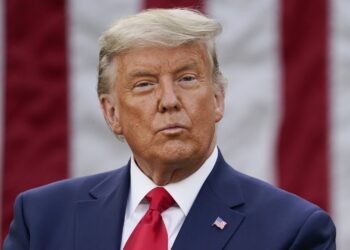
Trump’s recent antics, posting AI-generated videos of drones being blasted like butterflies while 70% of Iran’s missiles remain intact, show a leadership more interested in “likes” than actual diplomacy. If you can’t even let 23 guys in shorts play a game without calling it a security breach, then you shouldn’t be hosting a global event.
The “Butterflies” and the Blockade
Trump mocks the drone threats, yet JP Morgan is warning of $5 gas prices. The contrast is jarring. On one hand, you have the threat of a total regional war, on the other, you have a football team demanding to be treated with dignity.
The Iranian President, Masoud Pezeshkian, has been firm: negotiation is not surrender. He is protecting national interests while the US uses the World Cup as a “pressure tool” much like the blockade in the Gulf.
A Test of Character
Ultimately, 2026 will be a test of whether the United States can actually lead on the world stage or if it will retreat into isolationist paranoia. Refusing entry to athletes based on designations that ignore the reality of Iranian life is a losing move. If the US wants to prove it is better than the “lunatics” it claims to be fighting, it has to play fair, even when the optics are tough. The entire universe is watching, and the ball is firmly in the White House’s court.