
Iran has ruled out making concessions on its nuclear programme even if the United States agrees to Tehran’s proposal for reopening the Strait of Hormuz, a senior Iranian official told Reuters on Friday.
The official, who spoke on condition of anonymity, said the strategically important waterway would remain closed until Washington fulfilled all of Iran’s demands.
The comments came after a US official said Washington was engaged in positive and constructive discussions with Tehran through mediators, with nuclear issues also being discussed.
Under Iran’s proposal, the Strait of Hormuz would be reopened as part of a broader seven-day plan to end hostilities. Iranian Foreign Minister Abbas Araghchi said the proposal requires the United States to lift its naval blockade of Iranian ports, release frozen Iranian funds and waive oil sanctions.
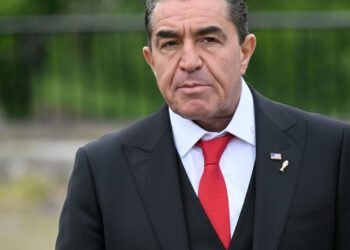
Araghchi, speaking to reporters at the United Nations on Friday, said the decision now rested with Washington to accept and implement the proposal.
He said the conditions were not new, noting that they had already been outlined in a June memorandum of understanding. He also maintained that Iran would not reopen the Strait of Hormuz until the terms were fulfilled.
“Iran will not surrender its sovereign rights under pressure,” Araghchi said.
The proposal comes amid heightened tensions in the Middle East following months of conflict between Iran and the United States, with Iran-backed Houthi fighters in Yemen also launching missiles and drones at Saudi Arabia.
The Strait of Hormuz has emerged as a key point in negotiations aimed at ending the conflict. Tehran wants relief from measures it says are hurting its economy, while Washington is seeking the restoration of shipping through the major global oil route.
Iran Rules Out Nuclear Concessions
Iran has indicated that it would only enter detailed negotiations over its nuclear programme after the United States meets its conditions.
The senior Iranian official said Tehran would not compromise on what it considers its sovereign rights, including uranium enrichment or the removal of highly enriched uranium from the country.
Iran has faced longstanding accusations from Israel, the United States and other Western countries that its nuclear activities are aimed at developing nuclear weapons. Tehran has consistently rejected the allegations.
The concerns have intensified over Iran’s enrichment of uranium to 60 per cent, a level significantly above what is generally required for civilian nuclear purposes but below the roughly 90 per cent level associated with weapons-grade material.
The International Atomic Energy Agency estimated that Iran possessed 440.9kg of uranium enriched to 60 per cent when Israel and the United States attacked Iranian nuclear facilities in June 2025.
However, the amount of that material that remains is currently unclear.
Iranian officials have previously indicated that Tehran could consider diluting its most highly enriched uranium.
Meanwhile, Iranian President Masoud Pezeshkian said on Thursday that he hoped an agreement with Washington to end the hostilities could be reached before the US midterm elections on November 3.
Reuters also reported in May that Iran’s Supreme Leader Mojtaba Khamenei had directed that the country’s highly enriched uranium should not be transferred abroad, according to two senior Iranian sources.