
In a 48-hour period that exposed profound vulnerabilities, Iran’s clerical regime faced a dual crisis: its strategy of total information blackout began to publicly unravel as officials hinted at
internet access, while its most trusted propaganda outlet, state television, was dramatically hacked to broadcast calls for revolution. The twin failures signal a regime struggling to maintain its decades-old monopoly on truth in the face of digital dissent and internal carnage.The potential lifting of the internet blackout, announced by a senior parliament member, comes after weeks of a near-total communications shutdown that masked what an Iranian official told Reuters was a death toll exceeding 5,000 people, including 500 security force members, in the regime’s crackdown on nationwide protests. Ebrahim Azizi, head of parliament’s security committee, stated that service would resume “as soon as security conditions are appropriate,” a tacit admission that the blackout was a blunt instrument of control that may have outlived its usefulness.
The Propaganda Breach: A ‘Revolution’ Broadcast on State TV
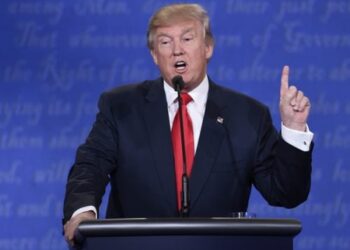
The regime’s loss of narrative control was made spectacularly clear late Sunday when hackers infiltrated the broadcast signal of state television—the bedrock of its domestic propaganda. For several minutes, viewers across Iran saw a segment titled “the real news of the Iranian national revolution,” which featured speeches by U.S. President Donald Trump and Reza Pahlavi, the exiled son of Iran’s last shah, calling for the public to revolt and overthrow the clerical establishment.
This breach was more than a technical glitch; it was a symbolic occupation of the regime’s most sacred media space. By hijacking the channel that routinely labels protesters as “terrorists” and “foreign agents,” the hackers delivered the opposition’s message directly into living rooms with the state’s own imprimatur, creating a moment of surreal and powerful cognitive dissonance for viewers.
From Electricity Blackouts to ‘Filternet’
The internet blackout, a key component of the regime’s strategy to isolate and crush dissent, is now shifting. The monitoring group Netblocks reports that while national connectivity remains minimal, authorities are testing a “filternet”—a heavily managed and censored version of the internet that allows some communication while blocking dissent. This move from total blackout to controlled filtration suggests the regime recognizes the economic and social costs of a disconnected nation but is desperate to maintain a curated, sanitized digital space.
Hardline parliament member Hamid Rasaei underscored the internal criticism, stating authorities should have heeded Supreme Leader Ali Khamenei’s earlier warnings about “lax cyberspace.” The regime’s internet strategy is not being relaxed out of goodwill, but is “unraveling” under the combined weight of its own brutality, external pressure, and the undeniable need for some form of controlled connectivity.
Why It Matters
Together, these events reveal a state exhibiting glaring weaknesses. The hack proves its core propaganda organs are penetrable. The hinted end of the blackout is an admission that its most extreme tool of social control is unsustainable. The staggering, unofficially confirmed death toll—dwarfing the crackdowns of 2009 and 2022—reveals the scale of violence required to achieve a week of “quiet” streets.
For a regime built on the image of unshakeable control, the image of its own television channel broadcasting calls for its downfall is a humiliation. The decision to potentially lift the internet ban is not a victory for the people, but a tactical retreat by a leadership that knows it cannot hermetically seal a nation forever.