
Israel’s defense minister announced Wednesday that Iranian Intelligence Minister Esmail Khatib has been killed in an overnight strike — the third top Iranian official claimed eliminated in two days, as the three-week-old war shows no signs of de-escalation.
“The night before last, Iran’s Intelligence Minister Khatib was also eliminated,” Israel Katz said in a statement, promising that “significant surprises are expected throughout this day on all the fronts”.
Khatib’s reported death follows Tuesday’s assassinations of security chief Ali Larijani and Basij commander Gholamreza Soleimani, whose funerals are set for later Wednesday in Tehran alongside 84 sailors killed when the U.S. sank the Iranian warship, Iris Dena.
Iran has not commented on Khatib’s fate.
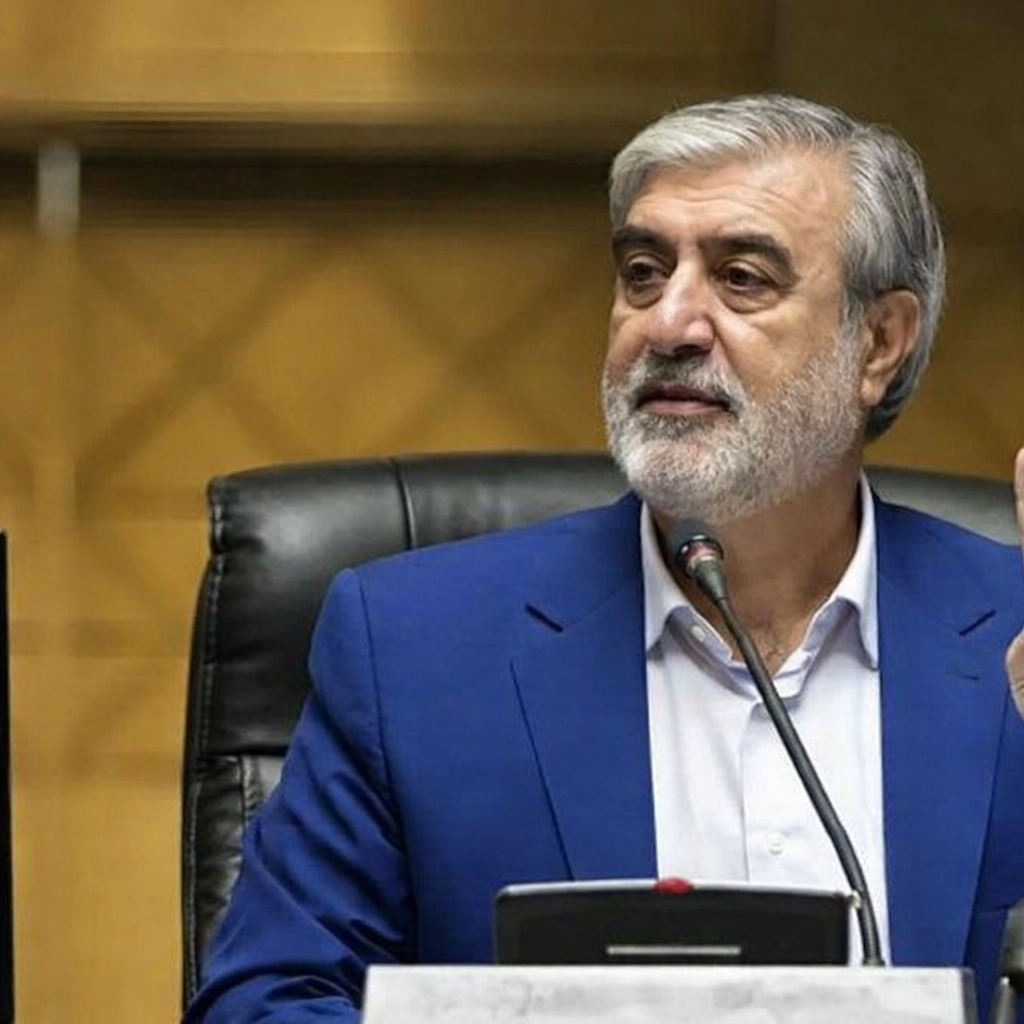
Who Is Esmail Khatib?
Khatib was appointed Iran’s intelligence minister in 2021 by former president Ebrahim Raisi. A cleric who studied Islamic jurisprudence under multiple high-ranking clerics — including the late Supreme Leader Ayatollah Ali Khamenei — he has held senior posts in the Ministry of Intelligence and the Office of the Supreme Leader.
The U.S. Treasury sanctioned Khatib in 2022 for his ministry’s role in “engaging in cyber-enabled activities against the United States and its allies”. He reportedly joined the Islamic Revolutionary Guard Corps in 1980, shortly after the Islamic Revolution.
If confirmed, his death would represent the latest blow to Iran’s leadership structure, already reeling from the killing of its supreme leader on the war’s first day.
The Assassination Campaign
Katz said he and Prime Minister Benjamin Netanyahu have authorized the military to kill any other senior Iranian official being targeted without the need for additional approval. The message is unambiguous: no one in Iran’s leadership is safe.
The campaign has decimated Tehran’s security apparatus. Larijani, killed Monday, was widely seen as one of the most powerful figures in the country — a close associate of both the late supreme leader and his successor, Mojtaba Khamenei. His death represents the loss of the most senior figure since the conflict began 19 days ago.
Soleimani, the Basij commander, led the volunteer militia that plays a major role in domestic security — a key instrument of repression now without its leader.
Iranian Foreign Minister Abbas Araghchi has sought to project stability, insisting the nation’s political infrastructure remains a “very solid structure” that will not suffer a “fatal blow”.
“The presence or absence of a single individual does not affect this structure,” Araghchi said, pointing to the system’s survival after the former supreme leader’s death. “The political system in Iran is a very solid structure”.
But with three top officials killed in 48 hours, that claim is being tested.
The War Widens
While Israel targeted Iran’s leadership, the conflict continued to expand across the region.
In Beirut, Israeli strikes flattened a building in the city center — not the usual Hezbollah heartland in the southern suburbs, but an area surrounded by businesses and hotels. At least 10 people were killed and 27 wounded, according to Lebanon’s health ministry. The IDF said it was targeting Hezbollah’s financial arm, al-Quard al-Hasan, which it claims funds the group’s military and payroll.
In Tel Aviv, two people were killed when an Iranian cluster bomb punched through the roof of an elderly couple’s apartment. Neighbors said the husband had mobility problems and the couple had not entered their safe room when the alarm sounded.
Across the Gulf, explosions and interceptions were reported in Dubai, Qatar, Kuwait, Iraq, Bahrain, and Saudi Arabia. The U.S. embassy compound in Baghdad was targeted by a drone attack, with BBC Verify footage showing a blast near the facility.
The U.S. military said it used 5,000-pound “deep penetrator” bunker-busting bombs to hit hardened Iranian missile sites along the Strait of Hormuz — facilities that housed anti-ship cruise missiles “posing a risk to international shipping”.
The Human Toll
For ordinary Iranians, the war has brought constant dread.
A woman in Tehran told the BBC she’s too scared to go to work — leaving home “is like gambling with my life”.
In Israel, the health ministry says 192 people were injured and taken to the hospital in the past 24 hours alone. Since the war began, 3,727 people have been admitted.
In Lebanon, around one million people have been displaced. In Gaza, 649 have been killed since the ceasefire took effect in October, according to the Hamas-run health ministry.
And in the Gulf, the world’s most important oil shipping lane remains effectively closed. The UN’s International Maritime Organization held an emergency meeting in London on Wednesday, with its head warning that military escorts are not a long-term solution. At least eight seafarers have been killed since the war began.
What Comes Next
Iran has not confirmed Khatib’s death. His fate remains officially unknown.
But the pattern is clear: Israel is systematically targeting Iran’s leadership, and Tehran’s ability to retaliate — while still significant — is being degraded.
The war has now killed more than 2,000 people, most of them Iranians. It has choked off 20% of the world’s oil supply. It has drawn in Lebanon, the Gulf states, and potentially the entire region.
And with three top officials dead in two days, and another possibly added to the list, there is no end in sight.
As one Iranian official put it after the first assassinations: “The United States started this war and is responsible for all the consequences — for Iran, for the region, for the entire world”.