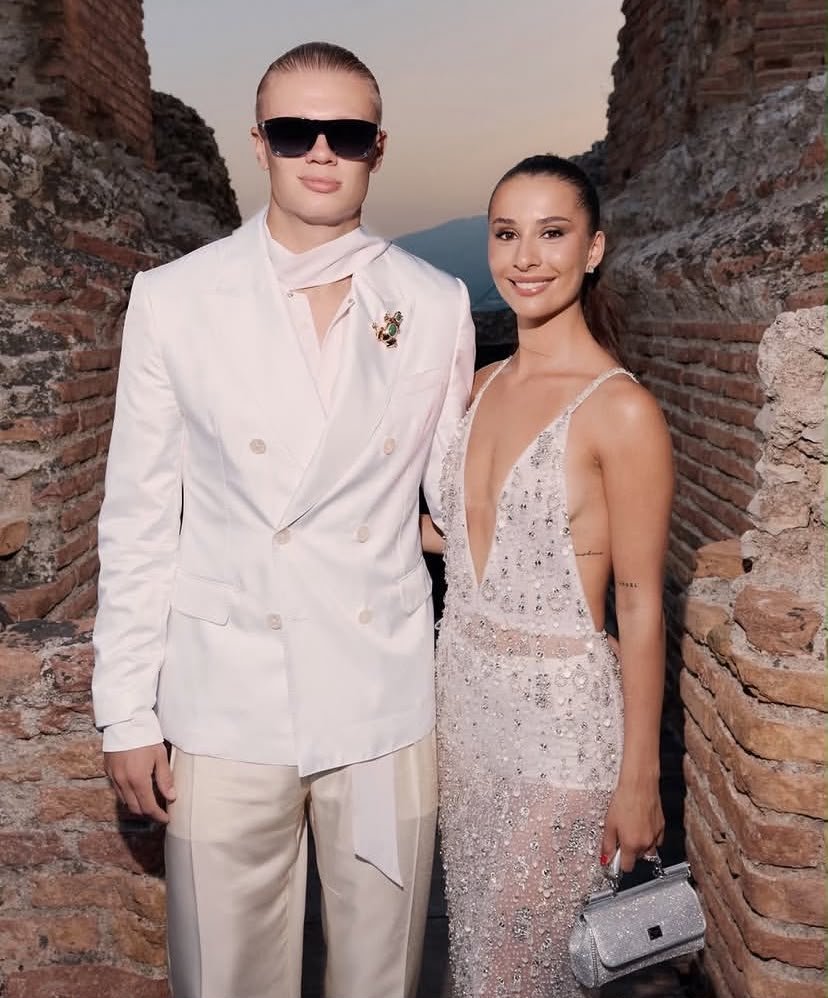

The Manchester City star’s recent Dolce & Gabbana look proves that athlete style has entered a new era—one where sprezzatura meets sport.
What does glamour look like in 2026? On a footballer, apparently. And not just any footballer. Erling Haaland.
The Norwegian striker has been making headlines for years—his goals, his speed, his relentless dominance on the pitch. But lately, something else has been catching people’s attention: his clothes. And more specifically, the way he wears them.
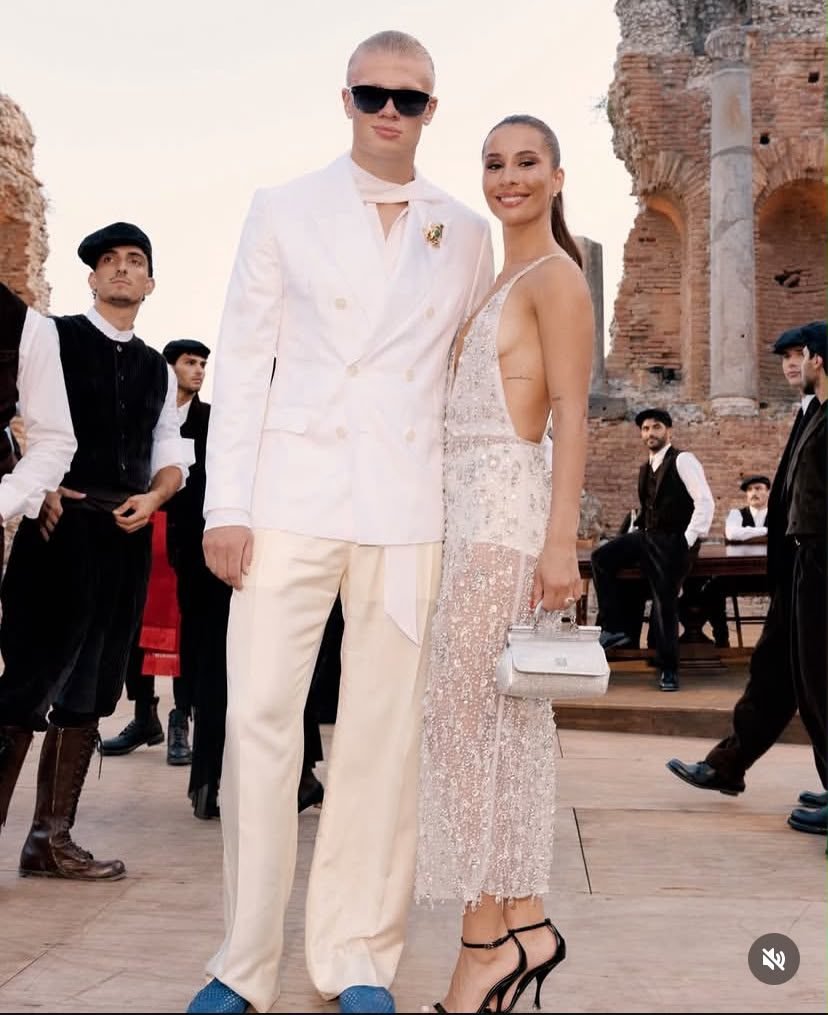
After Norway’s World Cup quarter-final exit, Haaland could have retreated from the spotlight. Instead, he headed to Taormina, Sicily, for the Dolce & Gabbana Alta Sartoria show, stepping out in a look that has fashion critics rethinking what it means to be a stylish athlete.
His ensemble consisted of cream satin pants, a white double-breasted blazer, dark sunglasses, a gold frog-shaped brooch, navy woven leather loafers, and, finally, to complete the look, a thin satin scarf was draped over one shoulder. This was worn with the kind of effortless nonchalance that Italians call sprezzatura.
The Beckham Comparison
The last time a footballer generated this kind of fashion buzz, his name was David Beckham. Three decades ago, Beckham’s off-duty looks—from head-to-toe leather to a Jean Paul Gaultier sarong—sent the UK’s lad culture into a tailspin. England manager Glenn Hoddle even questioned Beckham’s professionalism.
Today, Haaland is navigating similar territory, but the landscape has changed. Athletes are expected to have style now. It is part of the job. The tunnel walk is as important as the warm-up, and the red carpet is as competitive as the pitch.
But what makes Haaland different from the parade of athletes in head-to-toe streetwear is something more intangible. “Rarely do these looks fall into the special category of glamour,” CNN notes. “Instead, they are fashion with a capital F—trend-focused, militantly styled streetwear that can at times come across as a little forced.”
The Details That Matter
Glamour, as the CNN article points out, is often in the details. Lee Radziwill’s slouchy shawls. Jackie Kennedy’s silk headscarves. Diana Vreeland’s red scarf was tied around her waist. These are not fashion trends. They are signatures. Choices that reveal something about the person wearing them.
Haaland’s Dolce & Gabbana look was built on those kinds of details. The satin scarf, draped, not tied. The brooch is whimsical but deliberate. The clash of cream and white is subtle but intentional. Even his hair ties are custom-made and imported from South Korea.
This is not the uniform of a man who just grabbed whatever was in his closet. It is the uniform of someone who has thought about what he wears and enjoys it.
The New Language of Athlete Style
Haaland is not alone in this shift. NBA stars like Tyler Herro, LeBron James, and Jordan Clarkson have turned tunnel walks into runway moments. France’s national football team has long been making headlines for designer outfits—Adrien Rabiot in Louis Vuitton, Michael Olise in Margiela.
But there is a difference between fashion and glamour. Fashion is about what is current. Glamour is about what is enduring. Fashion can be bought. Glamour, as the CNN piece suggests, is “intangible, innate, even aura-based.” It is not about the clothes but about how you wear them.
Haaland seems to understand this. He has been building his style credentials quietly, collecting Hermès bags and accessorising with a flair that feels personal rather than performative. According to The Times, his public Hermès collection includes at least seven large pieces, including the rare HAC 50 Endless Road, valued at approximately 235,000 pounds.
Why It Matters
Football has always been about performance. But the performance now extends beyond the pitch. Players are brands. Their image is an asset. And in the age of social media and 24/7 coverage, how they present themselves matters.
Haaland appears to have understood this earlier than most. He does not just show up. He shows up. His look in Sicily was not a one-off—it was a continuation of a personal style that is still evolving.
The comparison to Beckham is inevitable, but Haaland’s context is different. Beckham was pushing against a culture that saw fashion as frivolous. Haaland is stepping into a world where fashion is expected. The challenge is not to wear clothes but rather to wear them with personality.
The Bottom Line
Is Erling Haaland the most glamorous soccer player of our time? He is certainly making a case for himself. He has the income (reported at $80 million annually), the access, and the willingness to take risks. But more importantly, he has something that cannot be bought: an ease with style that makes his choices look effortless. And in the world of fashion, that is the rarest and most valuable asset of all.