
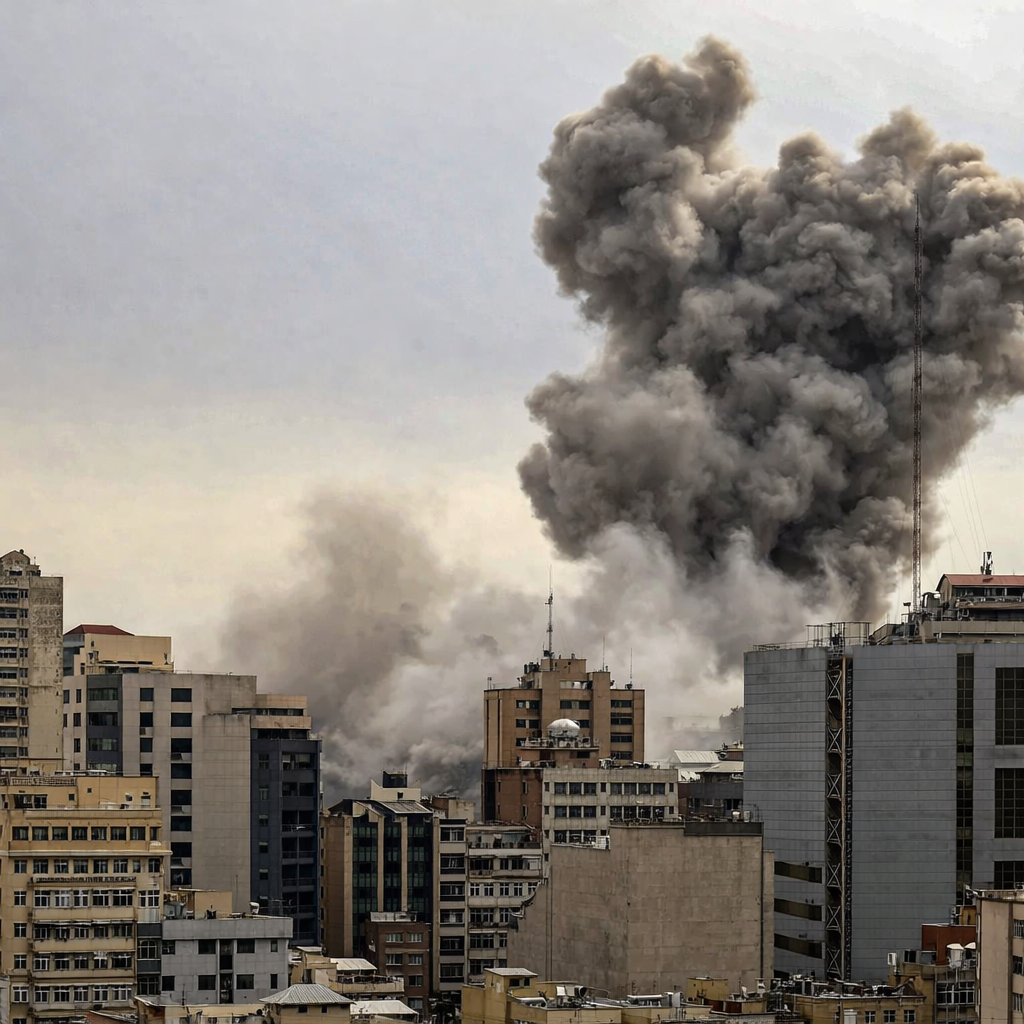
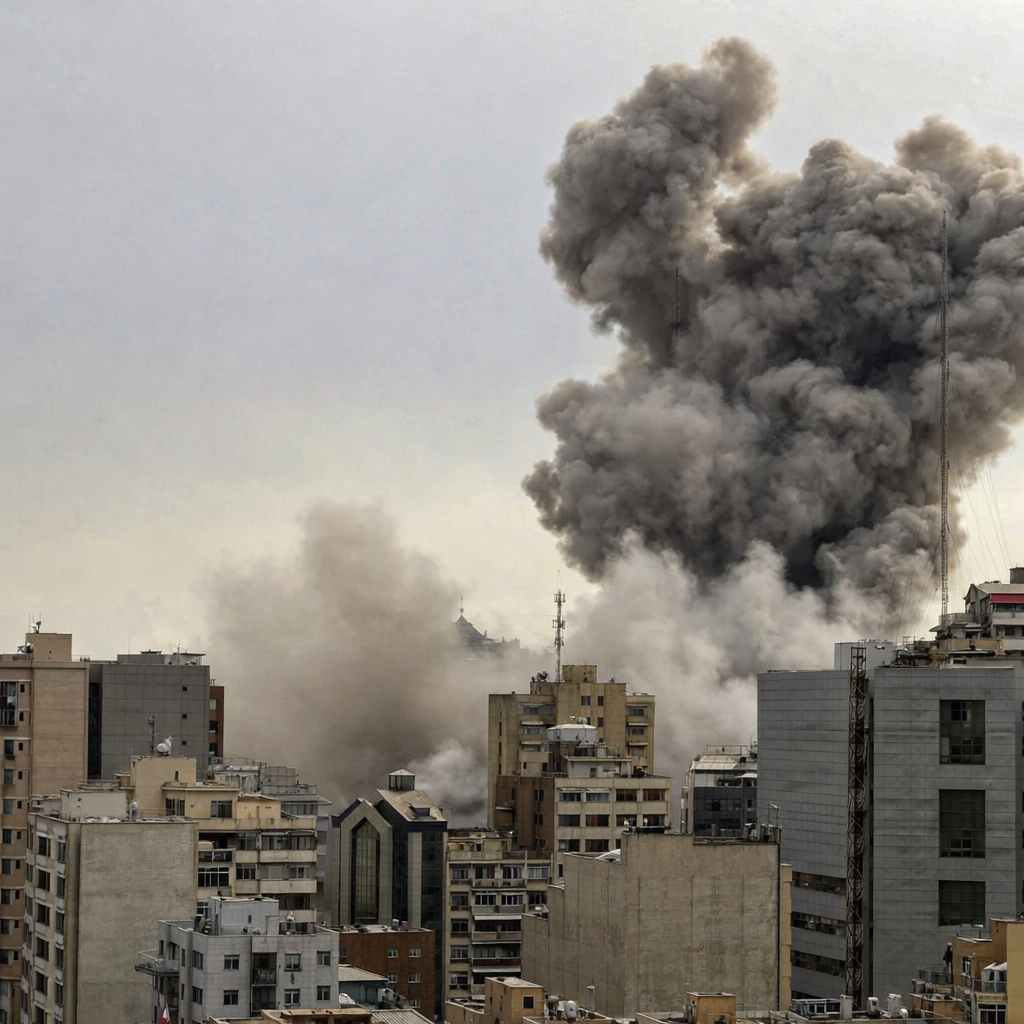
Israel’s military launched a new “large-scale” wave of strikes on Tehran on Wednesday, targeting what it called “the Iranian terror regime’s infrastructure,” just hours after the U.S. Senate rejected a bipartisan bid to limit President Donald Trump’s authority to wage war without congressional approval.
The strikes hit Tehran’s Mehrabad airport and other sites across the capital, with Iranian media reporting that a building used by the Assembly of Experts — the clerical body responsible for selecting Iran’s next supreme leader — was struck in the religious city of Qom. Loud explosions rocked central Tehran as the assault entered its fifth day.
In Washington, senators voted 53-47 against advancing the Iran War Powers Resolution, which would have required Trump to seek congressional authorization for the ongoing military campaign. Republican Sen. Rand Paul crossed party lines to support the measure, while Democratic Sen. John Fetterman voted against it.
“We shouldn’t be at war without a debate and vote,” said Democratic Sen. Tim Kaine, the resolution’s lead sponsor, ahead of the vote.
‘No Evidence of Imminent Threat’
Democrats argued that the Trump administration failed to justify the conflict. Kaine told reporters after a classified briefing that officials “could produce no evidence, none, that the U.S. was under an imminent threat of attack from Iran”.
“Have we learned nothing from 25 years of war in the Middle East?” Kaine asked on the Senate floor. “14,000 American troops and contractors killed in Iran and Afghanistan … hundreds of thousands of civilian deaths … more than 8 trillion spent that could have been spent on American health care, on American housing, on American education”.
Republicans largely defended the president. Sen. Lindsey Graham, a Trump loyalist, argued the strikes were justified, citing Iran’s long history of targeting Americans. “Roadside bombs coming out of Iran have maimed and killed hundreds, if not thousands, of Americans,” he posted on X.
Tehran Under Fire
On the ground in Iran, the war’s toll continues to mount. The Iranian Red Crescent said more than 780 people have been killed nationwide since Saturday. Human Rights Activists (HRANA), a U.S.-based monitoring group, reported that over 1,000 civilians have been killed, including 181 children under 10.
The Israeli military said it struck industrial sites used to produce ballistic missiles, as well as the Iranian president’s office and other infrastructure targets. Iran’s state news agency IRNA reported that a strike on a girls’ elementary school in southern Iran killed dozens of children, though the report could not be independently verified.
Residents of Tehran described a city under siege.
“Tehran feels very empty,” a woman in her twenties told BBC Persian. “Anyone leaving home I think must have an urgent reason, otherwise they’d stay at home”.
Omid, a 26-year-old Tehran resident, said he had been stocking up on essential supplies. “The streets are empty,” he said. “Some stores are closed, especially those near the affected areas”.
Prices are soaring. Rice has jumped from 530 tomans to 625 tomans since the war began, according to one resident. The export of all food and agricultural products has been banned “until further notice”.
The Naval War Expands
Wednesday also brought dramatic new footage of the war at sea. The Pentagon released a video showing a U.S. submarine torpedoing the Iranian warship IRIS Dena in international waters off Sri Lanka.
The ship, one of Iran’s newest frigates, was armed with heavy guns, surface-to-air missiles, anti-ship missiles, and torpedoes, and carried a helicopter. It was returning from a naval exercise in the Bay of Bengal when it was struck.
Sri Lankan authorities have recovered at least 80 bodies from the wreckage, with 32 sailors rescued and dozens more missing.
U.S. Central Command said American forces have now struck or sunk more than 20 Iranian naval vessels since the operation began.
“An American submarine sunk an Iranian warship that thought it was safe in international waters,” Defense Secretary Pete Hegseth said at a Pentagon briefing. “Instead, it was sunk by a torpedo. Quiet death”.
Regional Fallout
The conflict continues to spread. Israeli air strikes hit Beirut’s southern suburbs, a Hezbollah stronghold, causing “extensive damage to buildings”. Lebanon’s health ministry reported 72 dead and 437 injured since Monday.
Hezbollah responded by launching rockets at an Israeli military facility, saying the attack was in retaliation for the killing of Iran’s supreme leader.
In the Gulf, Qatar said it had arrested 10 members of two cells allegedly linked to Iran’s Revolutionary Guards, accused of spying on infrastructure and planning “sabotage operations”. The U.S. embassy in Riyadh was also targeted, according to Iranian media.
The Strait of Hormuz remains effectively closed, with oil prices soaring to $85 a barrel — the highest level since July 2024.
‘We Deserve a Normal Life’
Amir, an Iranian who left the country two weeks ago and is now stranded in the UAE, spoke for many when he described the anguish of watching his homeland burn from afar.
“I would rather be under the bombing myself than sit here knowing it’s happening to my loved ones,” he told BBC Persian. “Our people deserve a normal life”.
Another Iranian, Sajad, said most shops in his city are closed, and streets are quiet. While people are “anxious and stressed,” the death of Khamenei has made him “more hopeful about the future”.
“Almost no one imagined that things would reach this point,” he said.
What Comes Next
The Senate’s rejection of the war powers resolution clears the way for the Trump administration to continue the campaign without immediate congressional interference. A similar resolution is expected to be voted on in the House on Thursday, but even if it passes, Trump would likely veto it.
Pentagon officials have told lawmakers the operation could last weeks and may require additional funding from Congress. Defense officials are expected to seek emergency funds to replenish weapons stockpiles and sustain the campaign.
Meanwhile, in Tehran, the bombs keep falling. The supreme leader is dead. His successor remains unnamed. And a nation that once dreamed of normal life now faces an uncertain future in the crossfire of a war with no end in sight.