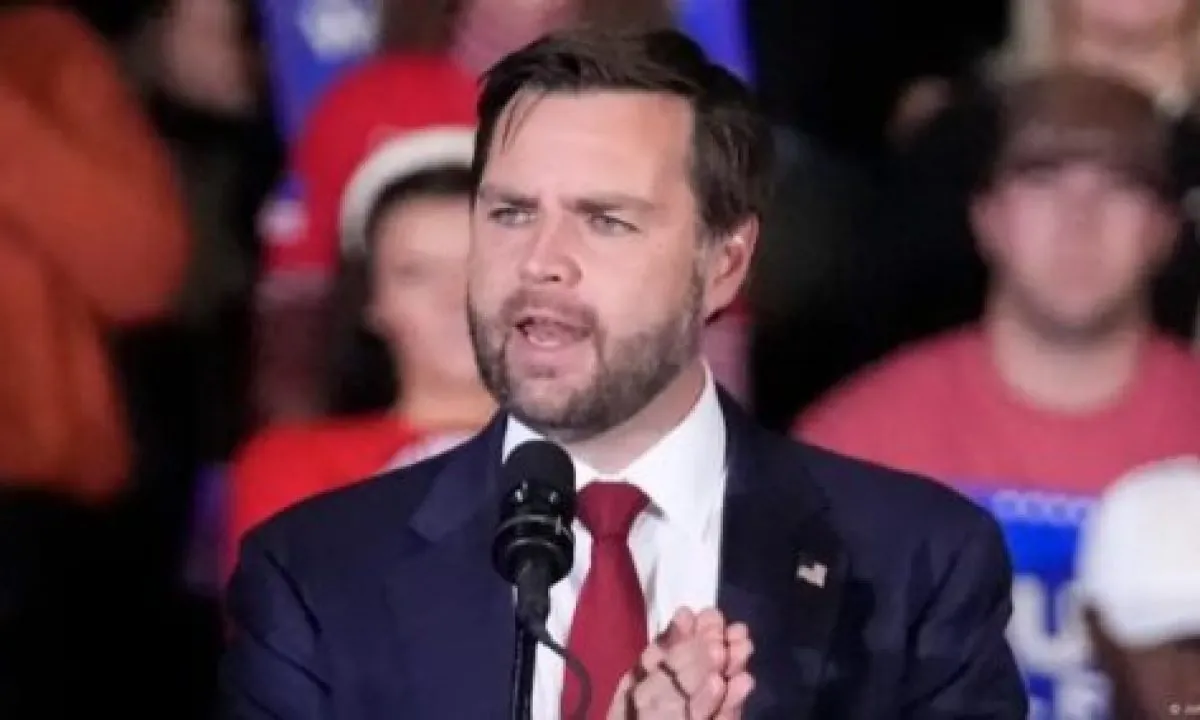
US Vice President JD Vance has endorsed the Trump administration’s proposal to introduce a $103,265 fee on most new H-1B visa petitions, arguing that American companies should focus on employing and training workers in the United States.
Vance reacted on X after sharing a US media report about the proposed charge.
“If an American corporation needs workers, it should hire and train Americans,” he wrote.
The Department of Homeland Security (DHS) unveiled the proposed fee in a filing on Monday. The charge would apply to H-1B petitions subject to the annual visa cap, including applications eligible for the advanced-degree exemption.
Employers would have to pay the proposed fee when filing eligible petitions, and it would come on top of existing H-1B-related charges.
According to the DHS proposal, the new payment would generate dedicated revenue to help cover government expenses associated with administering the legal immigration system. The costs would include activities carried out by the Departments of Homeland Security, Justice, State and Labour.
The proposal is not yet final. Members of the public have 30 days to submit comments, after which the administration would have to consider the feedback before deciding whether to implement the measure. The rule could also face legal challenges.
H-1B visas allow foreign professionals with specialised skills to work for US employers. Applicants generally require at least a bachelor’s degree or an equivalent qualification. The visa is typically granted for three years and can be extended for another three years.
The latest proposal comes after the Trump administration suffered a legal setback over an earlier $100,000 H-1B payment.
In June, US District Judge Leo Sorokin struck down that requirement, ruling that the president did not have the authority to impose it. According to CNN, the judge held that Congress has the power to make such changes to federal immigration policy and viewed the previous payment as a tax.
The $100,000 charge had been introduced through a presidential proclamation in September 2025 and subsequently faced legal challenges.
Unlike that measure, the proposed $103,265 fee relies on a different legal authority and would establish a separate fee structure for H-1B petitions covered by the annual cap.
The new proposal would not apply to H-1B petitions that are exempt from the annual quota.
The US currently allows 85,000 new cap-subject H-1B visas annually, including 20,000 places reserved for applicants with advanced degrees. If approved, the proposed fee would significantly increase the financial burden on employers seeking to sponsor workers through the programme.
Indian professionals could be particularly affected because they account for a substantial proportion of H-1B beneficiaries.
In fiscal year 2025, Indians received about 283,000 H-1B visas, representing roughly 70% of all H-1B visas issued, including extensions. For initial employment, Indian applicants received nearly 58,000 visas, approximately half of the new visas issued, including those exempt from the annual cap.
The proposed $103,265 payment would be separate from the earlier $100,000 measure introduced in September 2025.
While the earlier charge focused on hiring H-1B workers from outside the US and was vacated by a district court in June, the government’s appeal remains pending.
The latest proposal instead bases the fee on whether a petition is subject to the annual H-1B cap, rather than whether the foreign worker is located inside or outside the United States.