
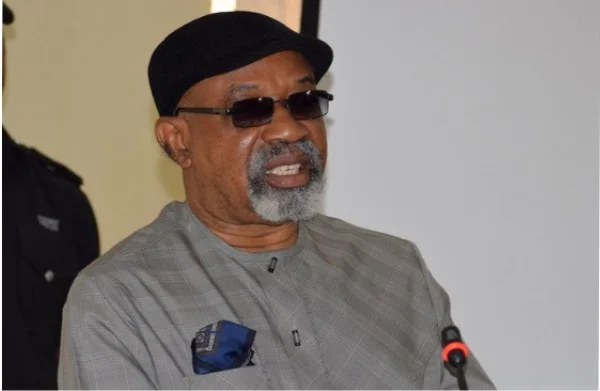
The arraignment of Chris Ngige before an Abuja High Court has stirred intense reactions after facing allegations of N2.2bn contract fraud. The former minister now finds himself remanded at Kuje Correctional Centre, pending his bail application scheduled for December 14. This development signals serious consequences for political figures accused of corruption, and it raises questions about accountability and the rule of law in Nigeria.
The Court Proceedings
Ngige faced eight counts relating to abuse of office and acceptance of gifts from contractors while supervising the Nigeria Social Insurance Trust Fund between 2015 and 2023. Pleading not guilty, he maintained his innocence throughout the arraignment.

The EFCC, represented by Sylvanus Tahir (SAN), pressed for a trial date and asked the court to remand Ngige. The prosecution emphasized that the alleged offences were significant and not minor infractions. They argued that the nature of the allegations justified remand rather than immediate bail.
Defence Pushes for Bail
The defence, led by Patrick Ikwueto (SAN), opposed the prosecution’s demand for remand, highlighting Ngige’s health concerns and the fact that he had spent three days in EFCC custody before the arraignment. Ikwueto described the charges as non-terrorism offences and urged the court to grant bail, stressing that the legal system must balance justice with the rights of the accused.
He also questioned the fairness of the proceedings, noting the defence had limited time to respond to the charges and file counter-affidavits. These arguments reflect broader concerns about procedural fairness in high-profile cases in Nigeria.
Implications for Governance and Corruption
Ngige’s remand underscores a growing willingness to hold public officials accountable. Observers note that corruption allegations against political figures often ignite debates about the effectiveness of the justice system and the influence of powerful individuals.
The case also shows the tension between prosecutorial authority and the rights of defendants. By remanding Ngige, the court sends a message about the seriousness of contract fraud allegations, while his defence seeks to protect his constitutional rights and health.
Reactions from Stakeholders
Public opinion is divided. Some citizens welcome strict action against corruption, seeing remand as a sign that accountability is taking shape.
The EFCC’s approach signals determination to pursue high-value cases without delay, which may deter future misconduct. However, questions remain about the balance between enforcement and fair trial guarantees.
Next Steps
The court has scheduled the hearing of Ngige’s bail application for December 14. Until then, he remains in Kuje Correctional Centre.