
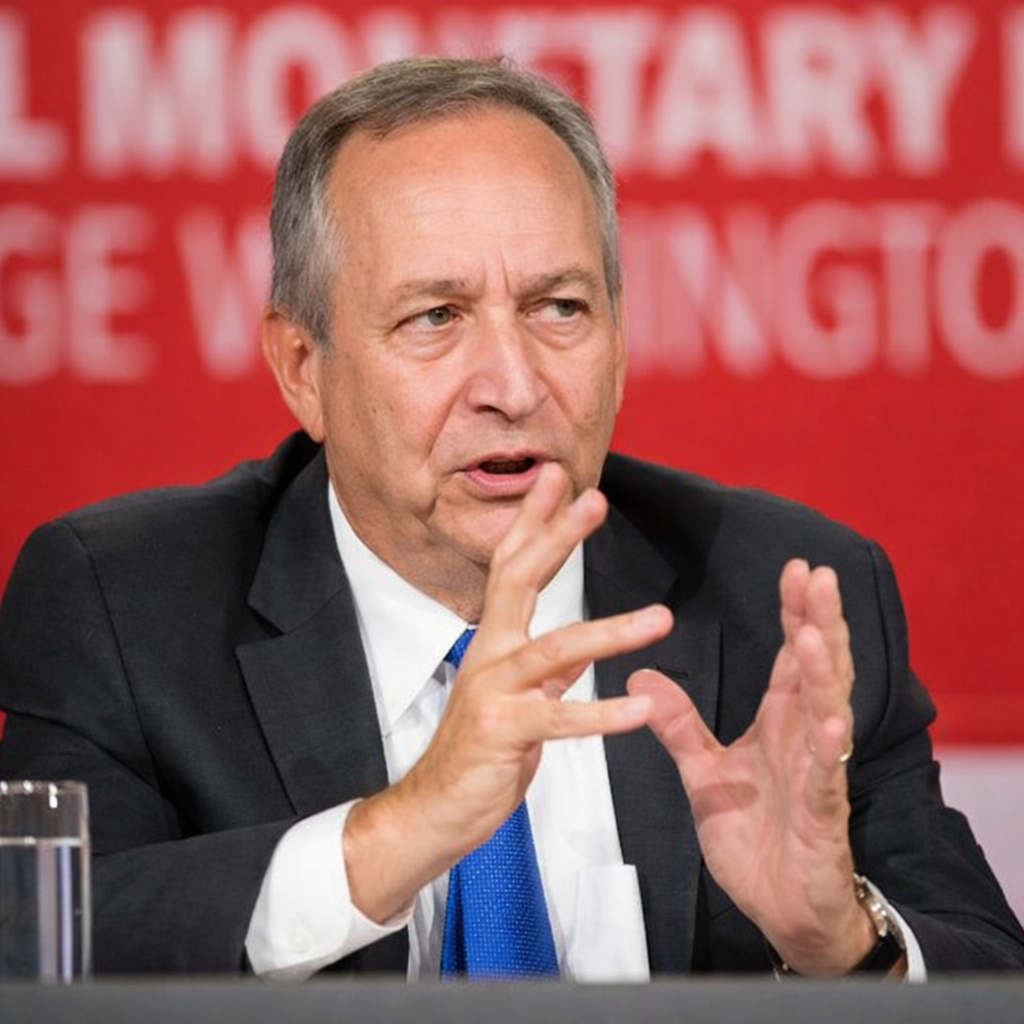
Former Treasury Secretary and onetime Harvard President Larry Summers is resigning from his faculty positions at the end of the academic year, the university confirmed Wednesday, as a sweeping review of his ties to convicted sex offender Jeffrey Epstein finally caught up with a career that spanned five decades.
Summers will step down from his role as co-director of the Mossavar-Rahmani Center for Business and Government and retire from his other academic and faculty posts, Harvard spokesperson Jason Newton said in a statement. He will remain on leave until his resignation takes effect.
“Professor Summers has announced that he will retire from his academic and faculty appointments at Harvard at the end of this academic year,” Newton said. The exit comes “in connection with the ongoing review by the University of documents related to Jeffrey Epstein that were recently released by the government”.
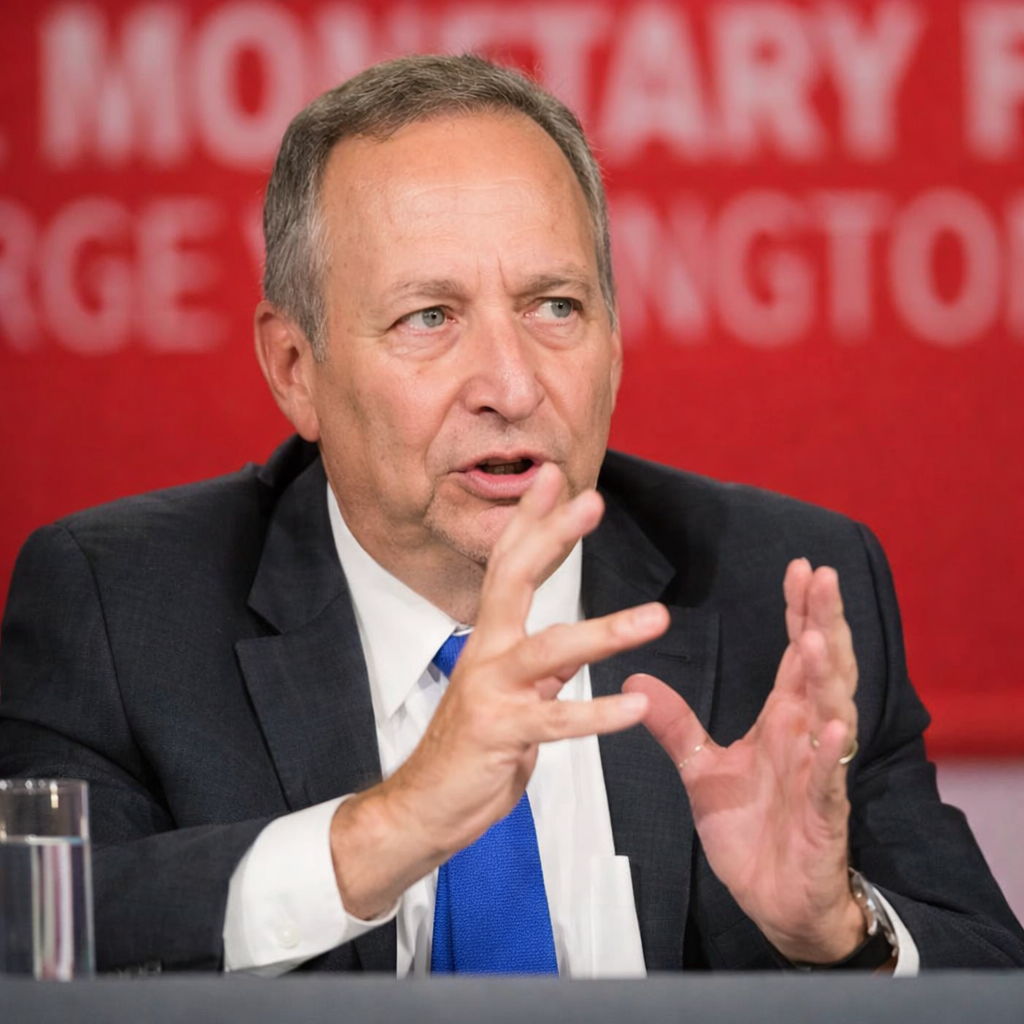
‘A Difficult Decision’
Summers, who served as Treasury secretary under President Bill Clinton and later as director of the National Economic Council under President Barack Obama, has been a towering figure in American economics for decades. He was Harvard’s president from 2001 to 2006 before being named a “University Professor,” the school’s highest faculty distinction.
In a statement to the Harvard Crimson, the student newspaper, Summers described his decision as “difficult.”
“Free of formal responsibility, as President Emeritus and a retired professor, I look forward in time to engaging in research, analysis, and commentary on a range of global economic issues,” he said.
The Emails That Changed Everything
Summers has faced mounting scrutiny since November, when the House Oversight Committee released more than 20,000 pages of Epstein-related documents that included extensive email correspondence between the two men. The messages revealed a relationship far closer than previously known, with exchanges continuing until July 5, 2019 — the day before Epstein’s arrest on federal sex trafficking charges.
The correspondence spanned years and blended professional dealings with deeply personal exchanges. In one 2018 thread, Summers asked Epstein for romantic advice about a woman he described as viewing him as an “economics mentor”.
“Think for now I’m going nowhere with her except economics mentor,” Summers wrote.
Epstein responded by referring to himself as Summers’ “wing man”.
In another exchange, Summers recounted a tense conversation with the woman, telling Epstein she had brushed him off with the phrase “I’m busy”. Epstein offered counsel: “shes smart. Making you pay for past errors. Ignore the daddy im going to go out with the motorcycle guy. You reacted well. Annoyed shows caring. No whining showed strength”.
The emails also showed the two men dining together frequently, with Epstein often trying to connect Summers to prominent global figures. In one 2018 exchange, Epstein invited Summers to meet the president of the U.N. General Assembly.
‘I Am Deeply Ashamed’
After the emails became public, Summers issued a statement taking responsibility.
“I am deeply ashamed of my actions and recognize the pain they have caused,” he said in November. “I take full responsibility for my misguided decision to continue communicating with Mr. Epstein”.
He stepped back from numerous public roles, resigning from the board of OpenAI, stepping down from an advisory board at Spanish bank Santander, and withdrawing from positions at Bloomberg News, The New York Times, and the Center for American Progress. The American Economic Association banned him for life.
But he initially held on to his teaching positions at Harvard, taking leave while the university conducted its review. Wednesday’s announcement makes his departure final.
The Honeymoon Detail
The scrutiny also revealed a previously undisclosed detail: Summers and his wife, Harvard English professor Elisa New, visited Epstein’s private island in the Caribbean during their honeymoon in 2005, according to a statement from Summers’s spokesman. The visit was described as “brief — of less than a day.”
At the time, Epstein had already pleaded guilty in Florida to soliciting prostitution from a minor, though the full scope of his crimes was not yet public.
No Accusations of Criminality
No Epstein survivor has accused Summers of misconduct, and there is no publicly available evidence indicating that he was involved in any of Epstein’s crimes. The scrutiny has focused instead on his judgment — on why a man of his stature maintained a close friendship with a convicted sex offender for years, seeking personal advice and accepting introductions.
Senator Elizabeth Warren, D-Mass., who once taught at Harvard, argued that the relationship alone disqualified Summers from public trust.
“If he had so little ability to distance himself from Jeffrey Epstein even after all that was publicly known about Epstein’s sex offenses involving underage girls, then Summers cannot be trusted to advise our nation’s politicians, policymakers, and institutions — or teach a generation of students at Harvard or anywhere else,” Warren said last year.
The End of an Era
Summers’ resignation closes a chapter with an institution where he spent 50 years — arriving as a graduate student in 1976, becoming one of the youngest-ever tenured professors at 28 in 1983, and serving as president from 2001 to 2006. His tenure at Harvard’s helm was marked by controversy, including his 2005 remarks suggesting women may lack an “intrinsic aptitude” for science and engineering — comments that sparked a faculty revolt and ultimately led to his resignation as president.
He was reappointed as a University Professor months later, a position he held for nearly two decades.
Now, at 71, Summers will leave the classroom for good — not because of what he taught, but because of who he kept as a friend.