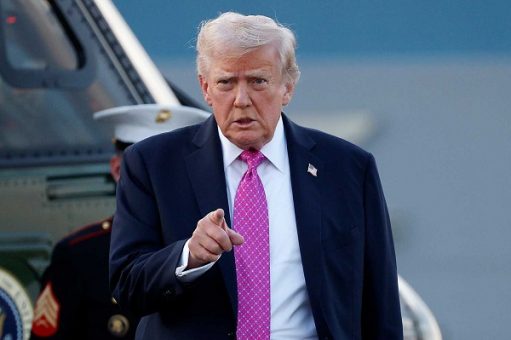

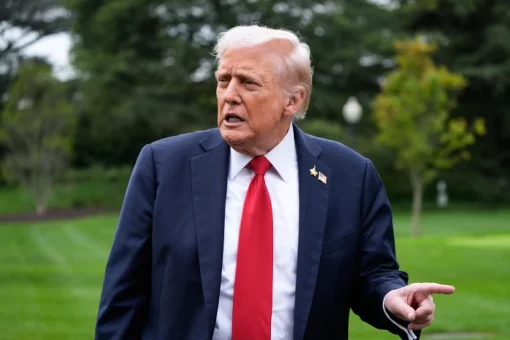
President Donald Trump has signed an executive order that reclassifies approximately 8,000 federal employees, making it possible for them to be dismissed without the government providing a specific reason.
The order advances a long-standing effort by Trump to reduce civil service protections for certain government workers, a policy he first pursued during his initial term in office.
Most of the affected employees occupy senior civil service positions at the GS-15 level, the highest rank within the federal workforce. These roles include policy advisers, chiefs of staff, regional directors, programme managers, communications officials, and personnel responsible for overseeing grants and government spending.
The move follows the administration’s creation of a new employment category known as Schedule Policy/Career, previously referred to as Schedule F during Trump’s first term. Workers placed under this category can be removed more easily than traditional civil servants.
Initially, the Office of Personnel Management had suggested that as many as 50,000 federal positions could eventually be affected. However, the latest order applies to roughly 8,000 workers, though officials have not ruled out expanding the number later.
Unlike political appointees, who traditionally serve at the discretion of the president, most federal employees have long enjoyed protections that require agencies to follow formal disciplinary procedures before termination. These protections typically include opportunities for workers to challenge or appeal dismissal decisions.
Critics argue that weakening those safeguards could expose government workers to political pressure and undermine the independence of public institutions.
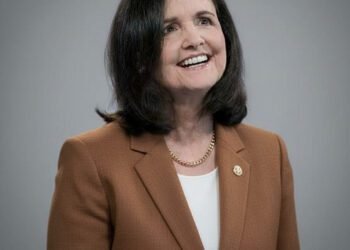
Skye Perryman, president of Democracy Forward, one of the groups challenging the policy in court, said federal workers should be able to carry out their duties without fear of political retaliation.
“The people responsible for protecting our public health, safeguarding our environment, delivering our mail, managing our airports, protecting our public lands, and enforcing our laws should be allowed to do their jobs, not targeted by the same government they serve,” Perryman said.
“When government experts can be fired without cause, it’s not just federal workers who are harmed — it’s the people across the country who rely on these essential services every day.”
Supporters of the policy, however, argue that it strengthens accountability within government agencies.
Office of Personnel Management Director Scott Kupor defended the decision, saying the changes are intended to ensure that government employees carry out the policies of elected leaders.
“This is very much about accountability,” Kupor said. “It’s also about a restoration, in our mind, of the democratic process.”
He added that employees in the new category would still retain whistleblower protections and could not legally be dismissed because of political affiliation, although they would no longer have access to certain appeal processes.
The policy has already sparked multiple legal challenges, and observers believe the dispute could eventually reach the Supreme Court of the United States.
Some experts warn that allowing easier dismissals could discourage career officials from providing candid advice to political leaders, especially when that advice conflicts with government priorities.
Despite the controversy, the Trump administration insists the measure is necessary to improve responsiveness and ensure that federal agencies implement the agenda of the elected president.