
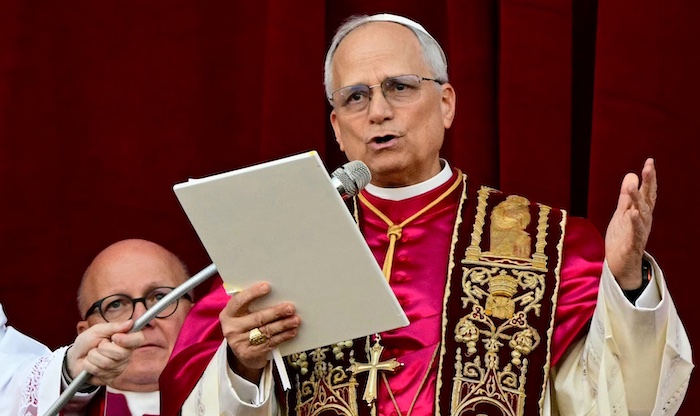
In an extraordinary private audience on Monday, Pope Leo XIV met for more than 40 minutes with investigative journalist Gareth Gore, who urged the pontiff to launch a formal inquiry into Opus Dei — a powerful Catholic organization the author accuses of covering up sexual and financial crimes.
The meeting was highly unusual. While the pope meets with a range of people daily, private audiences with journalists are rare. The Vatican press office said Leo wanted to listen firsthand to Gore’s allegations.
Afterward, Gore wrote on his Substack that the pope praised his 2024 book “Opus” as a “rigorous piece of work” — an extraordinary endorsement of a text the organization has denounced as “littered with twisted facts, errors, conspiracy theories, and outright lies”.
Gore said he had previously concluded the Vatican did not want to seriously address accusations of abuse within Opus Dei, but the meeting “forces me to reassess those conclusions”.
The Book and Its Accusations
Gore’s “Opus: The Cult of Dark Money, Human Trafficking and Right-Wing Conspiracy inside the Catholic Church” paints a devastating portrait of the organization.
A significant portion of the book focuses on Spanish banker Luis Valls Taberner, an Opus Dei member who led Banco Popular from 1972 to 2004. Gore alleges that Valls and other bank executives who belonged to Opus Dei placed the prelature’s interests ahead of the bank’s, contributing to its eventual collapse in 2017.
The book also details allegations made publicly by former members, particularly women in the “assistant numerary” branch who claimed they were forced to serve as unpaid domestic workers in Opus Dei centers.
Opus Dei’s Fierce Denial
The organization has mounted an aggressive defense, releasing multiple detailed statements fact-checking Gore’s book.
Opus Dei says Gore initially approached them in 2022, claiming to write a biography of Valls Taberner. Over 18 months, they granted him access to correspondence and arranged numerous interviews across multiple countries.
“We regret that the publicity now being put out by the publisher is more typical of a book of conspiracy theories and forced speculation than of the rigorous research we understood the author intended to carry out,” the organization said in a statement.
Opus Dei’s detailed rebuttal accuses Gore of telling one part of the truth while hiding the other, distorting the essence of stories; stating as fact things that did not occur by citing false or manipulated sources; ignoring or omitting context that would undermine his narrative; sing anonymous sources extensively, including “a numerary,” “a person,” and “an interview by the author of someone with direct knowledge of the incident”
On the Banco Popular allegations, Opus Dei insists the organization “does not get involved in commercial activities” and notes that Valls left the bank in 2004, 13 years before its collapse. They point to a website dedicated to defending Valls’s legacy (luisvallstaberner.com).
Regarding claims of abuse, Opus Dei acknowledges “there have been cases of abuse that relate to members of Opus Dei in the last few years” and says it has established mechanisms for reporting to its safeguarding office and the police.
The Organization
Opus Dei (Latin for “Work of God”) was founded in 1928 by Spanish priest St. Josemaría Escrivá, canonized in 2002. It is a personal prelature of the Catholic Church, a unique canonical structure comprised of both laity and clergy — the only group in the church with such a designation.
It counts about 85,000 members across 70 countries. About 57% are women and 43% men, with approximately 2,100 priests. Most members are not clerics but laypeople who maintain strict spiritual practices and often choose celibacy.
The group teaches Catholics to strive for holiness through ordinary work. Its members run numerous schools, universities, student residences, and cultural centers worldwide.
Opus Dei has close ties with the Vatican, where many employees are members, including at least two former directors of the Vatican press office.
It also has a strong presence in Peru, where Leo served as a missionary for decades before becoming pope. As Bishop of Chiclayo, he worked in a region that had been run for 30 years by Opus Dei bishops, giving him firsthand experience with the organization’s influence.
The Vatican Context
The meeting comes as Opus Dei’s future within the Church hangs in the balance.
Pope Francis moved the prelature’s Vatican oversight from the office for bishops to the Dicastery for the Clergy in 2022, triggering an ongoing review and rewrite of its governing norms. The proposed statutes were submitted to the Holy See on June 11, 2025, and remain under review.
Leo received Opus Dei’s prelate, Monsignor Fernando Ocáriz, in audience at the Vatican on February 16 — just one month before meeting with Gore.
Vatican expert Austen Ivereigh said Leo’s years dealing with Opus Dei in Peru likely shaped his understanding. “When Pope Francis chose Robert Prevost as bishop of Chiclayo, it had previously been run for 30 years by bishops who were members of Opus Dei. It had many priests formed by Opus Dei. He was on the front line of Opus influence”.
What Comes Next
Gore said he presented the pope with testimonies from alleged victims of the organization. He has called for a formal inquiry, a request the pope has not publicly addressed.
Opus Dei declined to comment on the meeting or Gore’s statement, pointing to prior statements about his book.
The Vatican has not responded to requests for comment.
For an organization that has weathered decades of controversy — from Dan Brown’s “The Da Vinci Code” to accusations of secrecy and cult-like practices — the pope’s private meeting with its fiercest critic marks an unprecedented moment. Whether it leads to a formal investigation remains to be seen. But the signal from Leo is unmistakable: he is listening.