
The claim by the Presidency that Nigeria is not a poor country feels disconnected from the daily reality that many citizens are facing across the country.
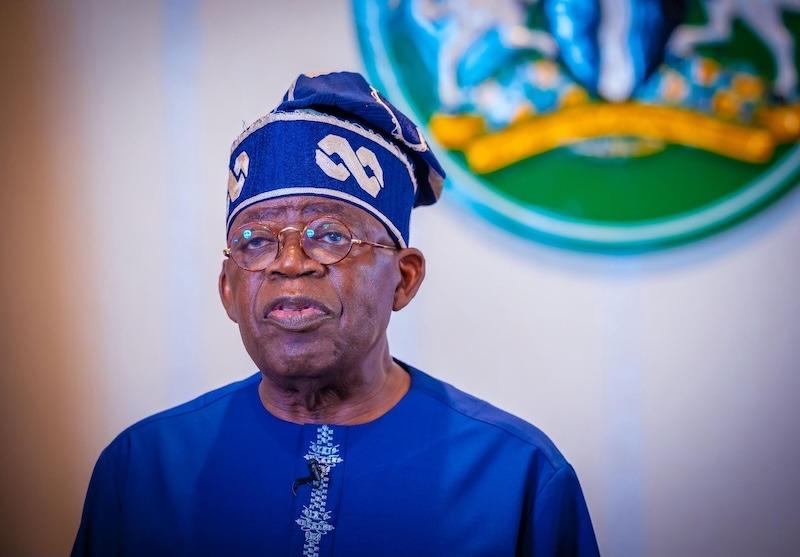
Speaking on Channels Television, the Special Adviser to the President on Economic Affairs, Tope Fasua, insisted that Nigeria’s real problem is inequality, not poverty.
“Nigeria is not a poor country, but we have inequality challenges. We must focus on bridging that gap,” he said.
He also argued that the conversation should shift away from repeatedly calling the country poor.
“The real question is how to solve poverty,” he added, noting that constant focus on poverty “will not allow us to focus on what matters.”
But from where many Nigerians stand, the issue goes beyond economic theory or classification. The lived experience tells a different story—one of rising hardship, shrinking incomes, and increasing struggle to afford basic necessities.

Yes, there may be money in the system, as Fasua pointed out.
“About N4.6 trillion was raised by banks in this country recently for recapitalisation, with about 80 percent of it from this country,” he said.
He also noted that “MTN has consistently generated about 40 percent of its profits from Nigeria,” using it as proof that wealth exists within the economy.
However, the presence of money in certain sectors does not automatically translate to improved living conditions for the average citizen. For many Nigerians, economic activity at the top does not trickle down to the bottom.
Food prices have surged. Transportation costs continue to rise. Rent and basic utilities are becoming increasingly unaffordable. Salaries, for those who even have stable jobs, are struggling to keep up with inflation.
Fasua acknowledged the imbalance, stating, “We may have a scenario where many people are making money, many people are poor, so we need to bridge the gap.”
That gap is not just statistical—it is visible in everyday life. It is seen in overcrowded markets where buyers can no longer afford what they used to. It is felt by small business owners dealing with declining patronage. It is experienced by families forced to make difficult choices just to get through the month.
The adviser also pointed to the size of Nigeria’s informal sector, which he estimates accounts for about 70 percent of the economy.
“We also have a problem with informality,” he said, adding that tax reforms are aimed at capturing more revenue.
“Let people pay their taxes… so that we can even out the income inequality in this country.”
But for many operating in that informal space, taxation is not the immediate concern—survival is. When income is uncertain and daily earnings are barely enough to cover essentials, the idea of expanding the tax net can feel like added pressure rather than a solution.
Fasua further defended the Federal Government’s 2026 budget, describing it as ambitious and forward-looking.
“We should commend Mr. President for thinking big for the people of this country,” he said, highlighting that about 50 percent of the ₦68.32 trillion budget is allocated to capital projects.
“This is a government that is going somewhere,” he added.
He also dismissed concerns about borrowing, stating, “Nigeria is not over-borrowed… our debt is sustainably managed.”
Still, the bigger question remains: if Nigeria is not a poor country, why does hardship feel so widespread?
The challenge is not just about how the economy is defined, but how it is experienced. Until economic growth translates into real relief for everyday Nigerians, statements about national wealth will continue to feel distant from the realities on the ground.
As Fasua noted, “It is not going to be a walk in the park… but it is doable.”
For many Nigerians, however, the urgency is not about long-term potential—it is about present survival.