Shortly after winning election to Congress in 2018, Alexandria Ocasio-Cortez took part in a protest outside the office of Nancy Pelosi, calling on the incoming House leader to adopt stronger measures to address climate change.
During the demonstration, more than 50 protesters were arrested. At the time, Alexandria Ocasio-Cortez, who had recently secured an unexpected primary victory against a senior Democrat closely aligned with Nancy Pelosi, said she had not yet decided whether she would support Pelosi’s election as House speaker in January. She eventually voted in Pelosi’s favour.
A similar situation is now unfolding for Hakeem Jeffries, the New York Democrat who succeeded Nancy Pelosi as leader of the party in the House and is positioned to become speaker should Democrats win back control of the chamber in November.
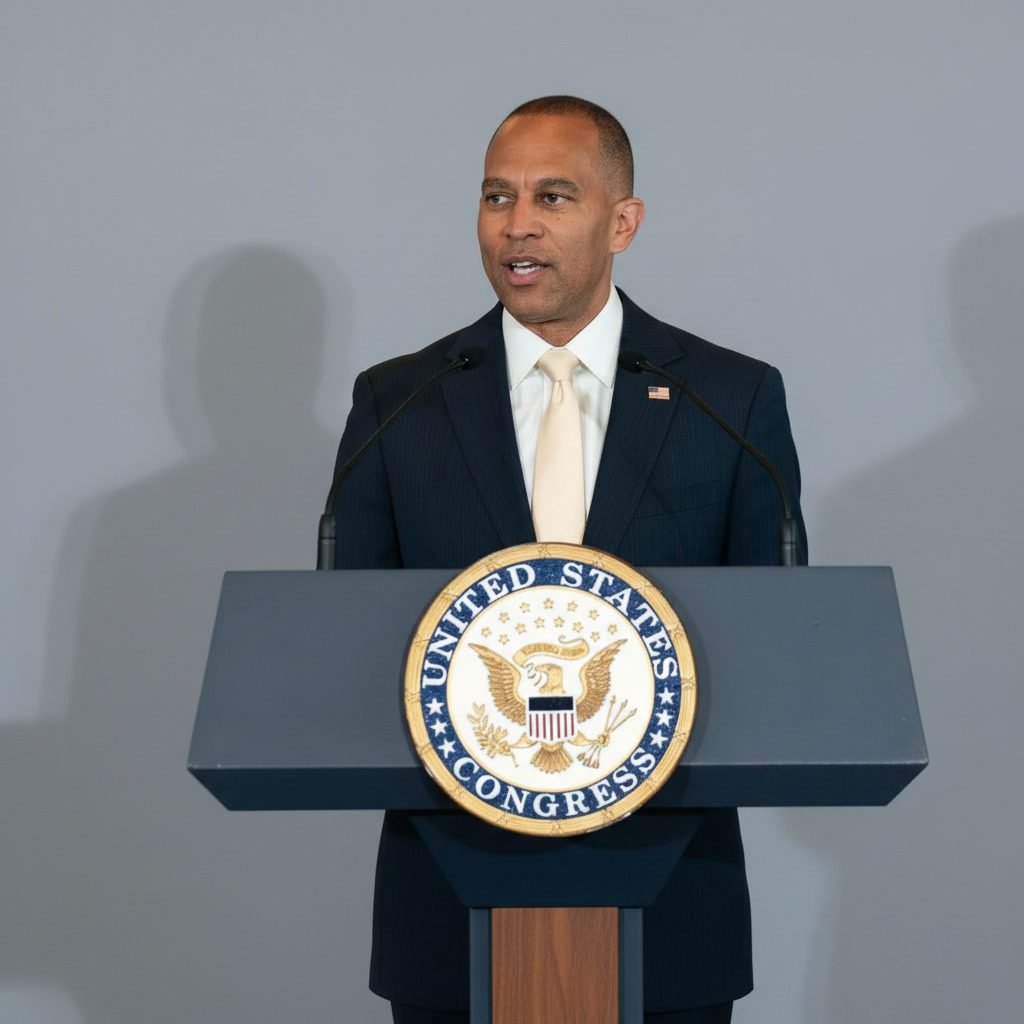
A new challenge for Hakeem Jeffries has emerged in the form of Darializa Avila Chevalier, a 32-year-old Democratic Socialist who secured a surprise primary victory this week over one of Jeffries’ long-standing allies in New York. Her rise has made her a prominent figure among a new generation of progressive lawmakers whose growing influence is beginning to reshape the Democratic caucus in the House and could complicate leadership dynamics.
Since taking over leadership of House Democrats in 2022, Hakeem Jeffries has remained the party’s leading candidate to become House speaker — a role that would make him the first Black person to hold the position. With no major Democratic rival currently emerging, the growing bloc of anti-establishment progressives is not expected to prevent his rise to the post.
However, their growing influence could complicate his leadership, potentially creating the kind of internal disputes and ideological clashes that have contributed to instability within the House Republican majority in recent years.