China has reportedly changed the transliteration of U.S. Secretary of State Marco Rubio’s name, a move described as a bureaucratic workaround that enabled him to travel for a high-level meeting between President Donald Trump and Chinese President Xi Jinping this week.
Rubio was placed under Chinese sanctions in 2020 while serving as a U.S. senator, following his criticism of Beijing’s treatment of Uyghur Muslims in Xinjiang and other alleged human rights violations. The sanctions included a travel ban preventing him from entering China.
The restrictions could have complicated his participation in the delegation accompanying Trump aboard Air Force One. However, a Chinese Embassy spokesperson told Agence France-Presse (AFP) that the sanctions would not prevent his visit.
“The sanctions target Mr. Rubio’s words and deeds when he served as a US senator concerning China,” spokesperson Liu Pengyu said.
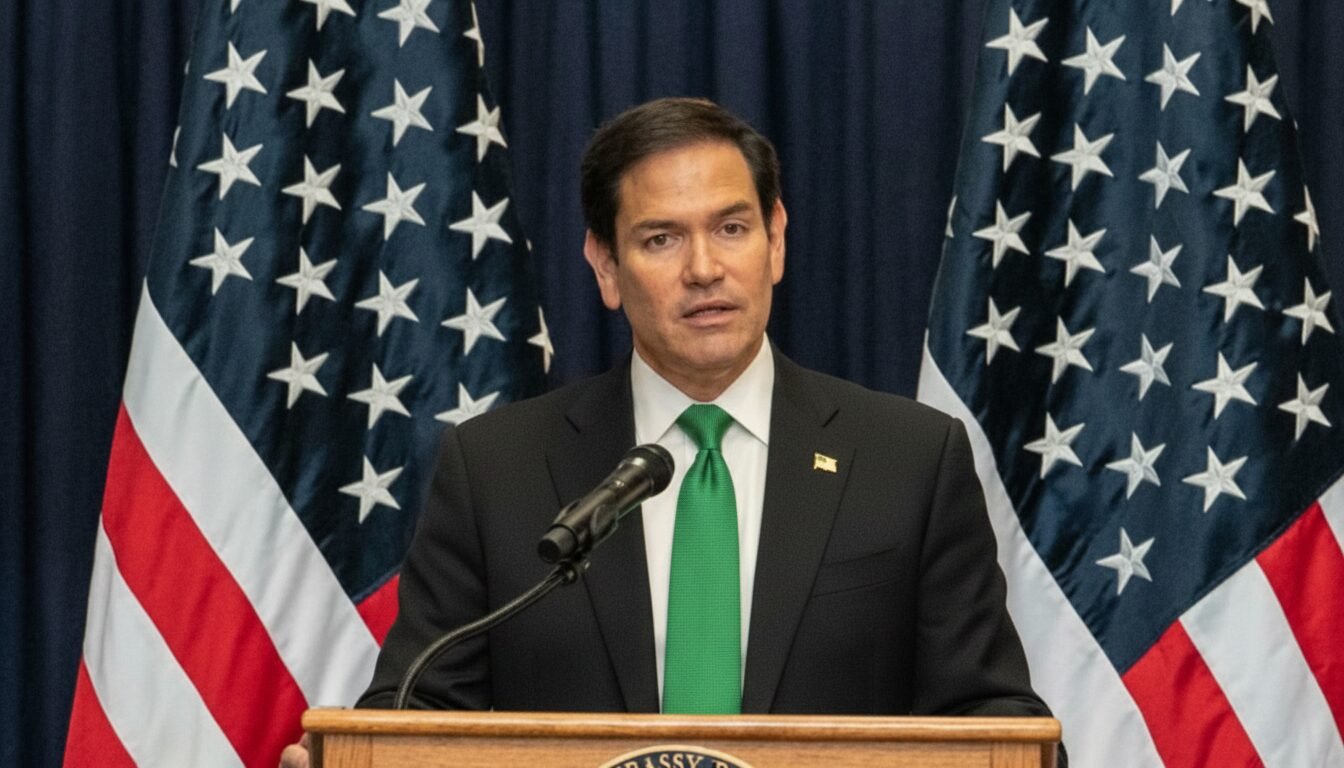
According to AFP, Chinese authorities and state media began using a modified character for the “lu” sound in Rubio’s surname shortly after he assumed office, effectively altering the rendering of his name in official usage.
Two diplomats told AFP they viewed the change as a linguistic workaround that may have helped Beijing navigate the existing sanctions linked to the earlier spelling of his name.
The Guardian also reported that Chinese Foreign Ministry spokesperson Mao Ning previously said she “had not noticed it but would look into it” when questioned about the revised transliteration, citing Chinese state media.
Rubio has remained a vocal critic of China, describing the country during his Senate confirmation hearing last year as the “most potent and dangerous” strategic competitor facing the United States.
He has also consistently supported stronger U.S. ties with Taiwan, a self-governing island that is expected to feature prominently in discussions during the ongoing summit.
“I’m sure Taiwan will be a topic of conversation; it always is,” Rubio told reporters last week. “I think both countries understand that it is in neither one of our interests to see anything destabilizing happen in that part of the world. We don’t need any destabilizing events to occur with regards to Taiwan or anywhere in the Indo-Pacific.”