
Oil prices surged on Friday after Qatar’s energy minister warned that all Gulf oil and gas production could grind to a halt within days, delivering a potentially catastrophic blow to the global economy.
Brent crude jumped 6.7%, topping $91 a barrel, after Saad al-Kaabi told the Financial Times that the escalating conflict could “bring down the economies of the world.” He warned that if the Iran war continues for weeks, oil could hit $150 a barrel.
“If this war continues for a few weeks, GDP growth around the world will be impacted,” Kaabi said. “Everybody’s energy price is going to go higher. There will be shortages of some products and there will be a chain reaction of factories that can’t supply.”
The Strait Is Shut
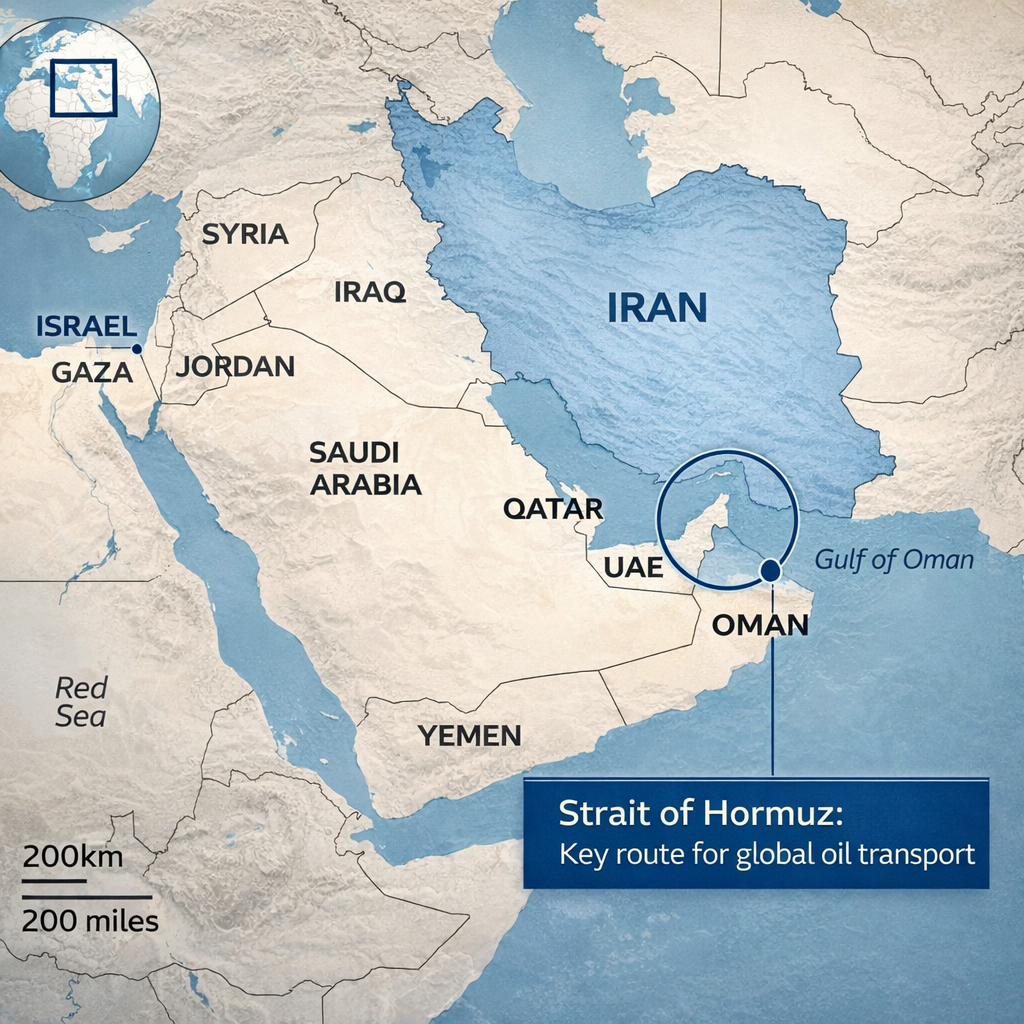
About a fifth of the world’s oil supply is usually shipped through the Strait of Hormuz each day. But traffic through the narrow passage has all but halted since the U.S.-Israel war with Iran began last weekend.
Iran has declared the Strait closed and vowed to attack any ship attempting passage. The U.S. Navy has not yet moved to reopen it.
The result: Gulf oil is trapped. Tankers sit idle. Export terminals are quiet. And the world’s most vital energy artery has become a battlefield.
QatarEnergy announced this week it had stopped production of liquefied natural gas following “military attacks” on its facilities. The company declared “force majeure” — a clause freeing it from liability for failure to supply due to events outside its control.
Kaabi said he believes all other energy exporters in the Gulf will have to do the same in the next few days if the war continues. Even if the conflict stopped now, he warned, it would take “weeks to months” to resume normal output.
The Economic Shock
Rising oil prices ripple through every corner of the global economy — not just at the pump, but in heating costs, food prices, and the cost of imported goods.
UK consumers are already seeing higher petrol and diesel prices. Household energy bills could rise, though the impact may not be felt until July, when Ofgem’s energy price cap is next adjusted.
There are fears the current crisis could mirror the shock of Russia’s invasion of Ukraine in 2022, though prices remain below those peaks — for now.
Jorge Leon, an analyst at Rystad Energy, told the BBC the situation poses a “real risk to the global economy.”
“I think we’re on the edge of trying to understand if this is a very short energy crisis with limited implications, or if we’re at the beginning of a massive economic and energy crisis,” he said.
“If this lasts for more than two weeks, then the likelihood of seeing very significant implications for the energy system and the global macroeconomic outlook are much higher.”
Who’s Most at Risk
Some of the world’s biggest economies — China, India, Japan — are among the top importers of crude oil that passes through the Strait of Hormuz. A prolonged shutdown would hit them hardest.
The UAE and Saudi Arabia both have pipelines that can transport oil without using the strait, offering some buffer. But analysts warn that the longer threats persist, the higher shipping costs will climb.
Leon said Gulf countries facing export shutdowns will need to store oil, and when storage runs out, production stops. Depending on storage capacity, they have between days and a few weeks before reaching that point.
Oil prices exceeding $100 a barrel are a “realistic scenario,” he said. The key question is how long they stay there.
Governments would likely release strategic oil reserves, as happened after Russia’s invasion of Ukraine. But that would only offer temporary relief.
How Bad Could It Get?
Lindsay James, investment strategist at Quilter, said a prolonged halt to all Gulf oil and gas production is an “extreme scenario” — but one that grows more likely with each passing day.
Market moves suggest investors expect disruption through the Strait to be resolved quickly, she said. But the risk grows daily that the conflict will last longer than anticipated.
“For households, the pressure will be felt primarily in energy prices, rather than a broad inflation shock,” James said.
“UK food inflation, for example, is unlikely to be significantly affected because much of the food imported into the UK does not rely on Gulf shipping routes.”
“The bigger economic risk comes from persistently higher energy costs, which can weigh heavily on growth.”
What Comes Next
The war entered its eighth day on Friday. The Strait of Hormuz remains closed. Gulf oil production is at risk. And the world is watching, waiting to see whether this is a temporary disruption or the beginning of a global economic crisis.
“If this war continues for a few weeks, GDP growth around the world will be impacted,” Kaabi warned.
For now, oil prices are rising, tankers are idle, and the world holds its breath.