
The Super Falcons could have lost touch with their African challengers after missing out on qualification to the 2027 Women’s World Cup in Brazil, a competition which would have offered more money and more chances for growth.
A 2-1 loss to South Africa at an August play-off disqualified Nigeria, who had competed at every Women’s World Cup since the tournament was first held in 1991.
This came after their quarter-final exit to Cameroon at the 2026 Women’s Africa Cup of Nations (WAFCON) in which only the four semi-finalists earned automatic qualification to the global showpiece.

Its non-participation is especially damaging as FIFA continues to pour money into women’s football. President Gianni Infantino has promised to equalise the prize money for the men’s and women’s World Cups by 2027, but FIFA is unlikely to hit that target, is said to be unlikely to hit that target.
Preparation and administration under scrutiny
Janine Anthony, a journalist who covers women’s football in Nigeria, agrees Nigeria’s exit highlights the failures of the football authorities.
She noted that the World Cup would be a good business opportunity for women’s football and claimed that the Super Falcons were under-prepared ahead of WAFCON.
Nigeria played two pre-tournament friendlies versus Senegal, compared to three build-up games before the last World Cup against France, Cameroon and Portugal.
Anthony also pointed to how the team was inconsistent under the previous coach Justine Madugu, due to having too many changes to the starting line-up.
The Super Falcons have also suffered endless rows over unpaid allowances and bonuses, leading to protests and training boycotts at numerous major tournaments.
The NFF is said to be under investigation regarding alleged misappropriation of a N17 billion government fund meant to clear up backlog of unpaid dues to national team players and technical and administrative staff. The federation declined to comment.
Demands for immediate reform
The men’s senior team have failed to qualify for the last two World Cups, raising fresh worries over Nigeria’s wider football failures.
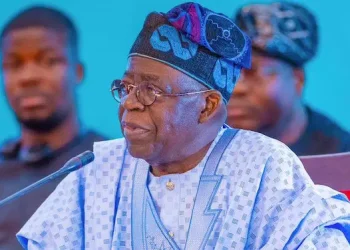
In August, President Bola Tinubu revealed plans to overhaul football administration, management, and talent development.
Anthony says more investment, accountability and support to the national team will have to be given to help bring the Super Falcons back to the top.
If we do not have a serious look at our development programmes and reforms are not affected, Nigeria will also continue to fall behind as other countries are investing in their women’s game.