
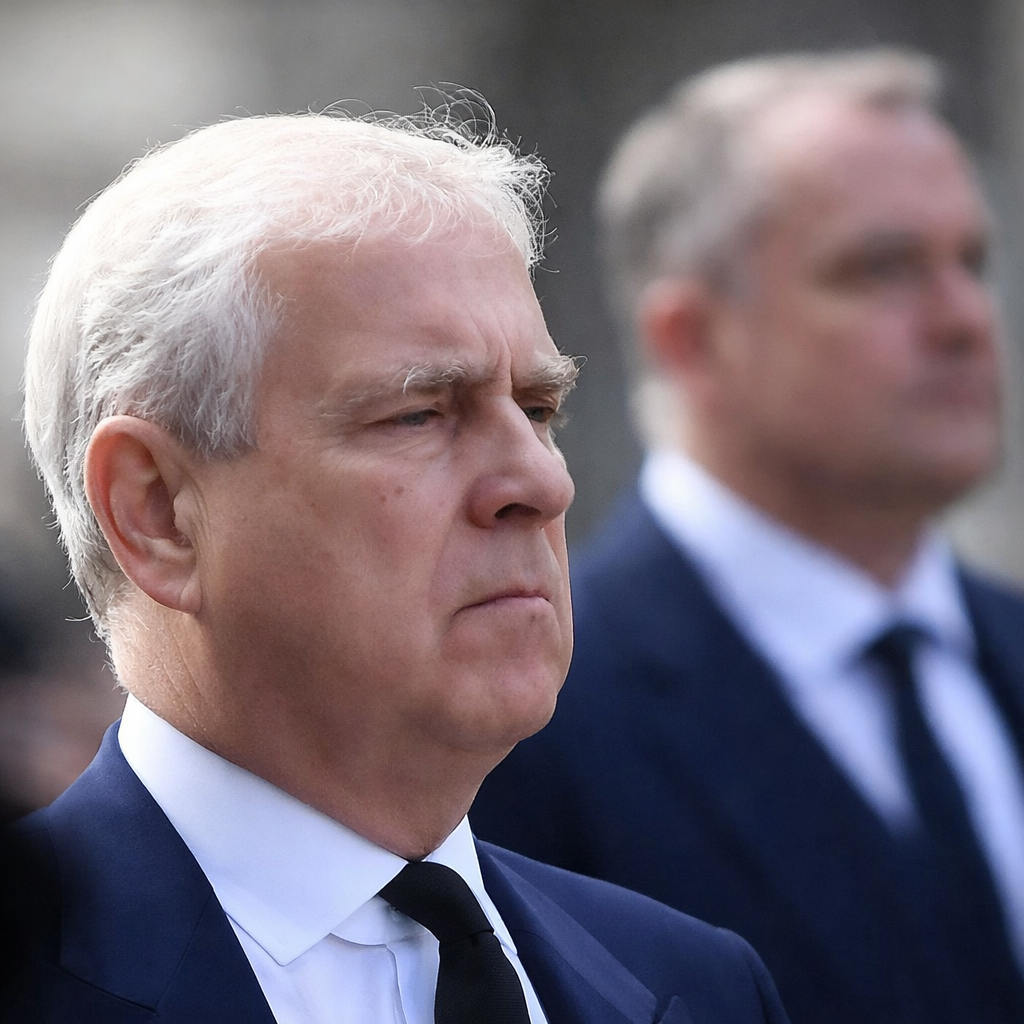
At 8:00 AM on his 66th birthday, Andrew Mountbatten-Windsor—a man the world once knew simply as Prince Andrew—opened the door of his residence at Sandringham Estate to find Thames Valley Police waiting on the other side. Within hours, the former prince was under arrest, his name stripped of its royal prefix, his freedom suddenly uncertain. (He was later released on bail, but the message this sent was: no one, not even royalty, is beyond the reach of the law.)
The charge isn’t what many expected. It’s not the sexual allegations that have shadowed him for years, the ones connected to convicted sex offender Jeffrey Epstein. Instead, Andrew Mountbatten-Windsor was arrested on suspicion of misconduct in public office—specifically, whether he shared confidential government documents with Epstein while serving as the UK’s trade envoy.
The Name That Changed Everything
The shift from “Prince Andrew” to “Andrew Mountbatten-Windsor” is more than a formality. Last October, King Charles III completed what his mother never could: he stripped his disgraced brother of his remaining royal titles and military affiliations. The name change in every news report today is a quiet acknowledgment that Andrew now faces justice not as royalty, but as a private citizen.
And remarkably, the royal family is letting it happen. King Charles issued a rare personal statement, expressing “deepest concern” but insisting that “the law must take its course.” Buckingham Palace received no advance warning of the arrest. The Prince and Princess of Wales have publicly supported the King’s stance. Even Virginia Giuffre’s family, long at the center of this saga, issued a statement: “Finally, our broken hearts have been made lighter by the news that no one is above the law—not even members of royalty.”
The Accountability Gap
But as Britain moves forward with an unprecedented criminal investigation—complete with searches of Royal Lodge and Norfolk properties—an uncomfortable question lingers across the Atlantic: Where is America’s equivalent?
The same Epstein files that triggered Andrew’s arrest name numerous high-profile American figures. Yet the U.S. Department of Justice, under Attorney General Pam Bondi, has made no arrests, launched no visible investigations, and released redacted documents that critics say raise more questions than they answer. Democrats have accused the DOJ of obstruction and intimidation. Victims’ advocates express frustration. And President Trump, himself mentioned extensively in the files, has remained silent on the question of domestic accountability.
A Tale of Two Systems
What we’re witnessing is a study in contrasts. The British monarchy—an institution often criticized as outdated and self-protecting—has chosen to sacrifice one of its own to preserve the whole. It’s a ruthless calculation, but it’s a calculation nonetheless. The law is moving forward.
In America, the machinery has stalled. The files are out. The names are known. But the arrests? The investigations? The accountability? Those are still waiting.
Andrew Mountbatten-Windsor may have lost his title, his freedom (however temporarily), and his birthday. But at least his country is treating him like any other citizen accused of a crime. In America, the elite are still waiting for the same treatment.