


In a bombshell legal indictment that threatens to shatter Nigeria’s judicial system, the family of Nnamdi Kanu has broken its silence to expose how a federal judge committed a “judicial ambush,” illegally convicting the IPOB leader on repealed, “dead” laws in a shocking act they describe as a constitutional coup.
In an explosive official statement, the family accused Justice James Omotosho of deploying an “illegal tactic” to seal Kanu’s fate: invoking a secret legal clause “that nobody argued, nobody raised, and nobody addressed” to resurrect a repealed terrorism statute and convict him after the trial had officially ended.
The family declared this “ambush jurisprudence” a direct violation of the Constitution and a brazen defiance of multiple Supreme Court rulings, making the entire conviction “unlawful, unconstitutional, and void.”
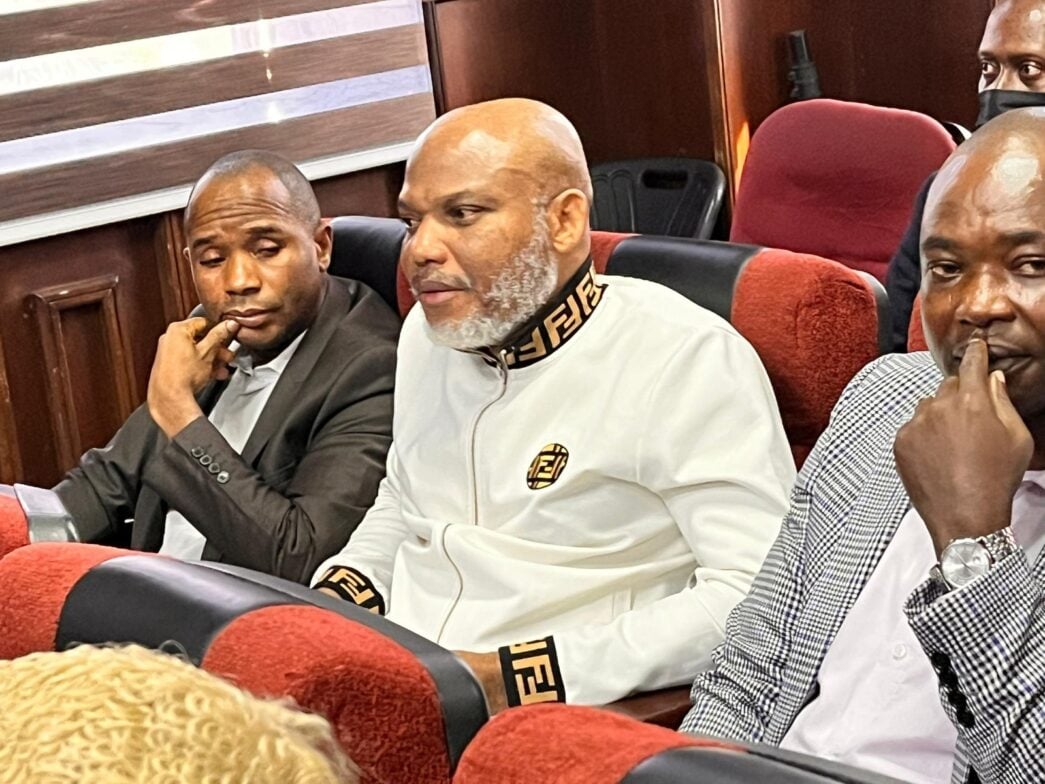
“This was not justice—it was an ambush,” the statement read, revealing that the judge acknowledged binding legal precedent that a “repealed statute is dead” before deliberately violating it. The family has now issued a defiant ultimatum, demanding the immediate nullification of a conviction they argue was “achieved through ambush” and threatens to establish a “constitutionally dangerous” precedent where judges can simply invent laws to lock away their enemies.
Why It Matters
This isn’t just a legal challenge; it’s an accusation of judicial terrorism. The family’s statement paints a picture of a courtroom so corrupt that the judge acted as both prosecutor and executioner, inventing a legal theory in secret to ensure a predetermined guilty verdict.
By using a “savings clause” like a hidden trapdoor, Justice Omotosho didn’t just misinterpret the law—he weaponized it, proving that in today’s Nigeria, the constitution is merely a suggestion when it comes to silencing dissent.
If this conviction stands, it means every Nigerian citizen is now vulnerable to the same “judicial ambush.” The government has sent a clear message: we don’t need evidence or valid laws to imprison you; we only need a compliant judge willing to break the very system he swore to uphold. This case is no longer about Nnamdi Kanu—it’s about whether Nigeria is a constitutional republic or a lawless jungle where judges are the most dangerous predators.