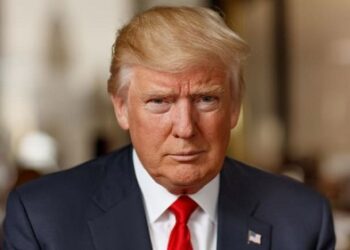
The Donald Trump administration is set to raise concerns with Australia over proposed legislation that would require digital platforms to remove harmful online material and give users greater control over algorithm-driven content feeds.
Under the proposed digital duty of care laws, major technology companies could face fines exceeding $100m for violations. There are also growing calls in Australia for the penalties to be increased further.
White House spokesperson Kush Desai said the US would raise the issue with its “trading partners” following Australia’s announcement of the proposed rules on Tuesday.
“President Trump has unequivocally warned trading partners against imposing digital services taxes, fines, and other forms of extortion on America’s leading technology sector,” Desai said.
Australian Communications Minister Anika Wells described the statement as “broad” and said she had not received a direct warning from a US representative.
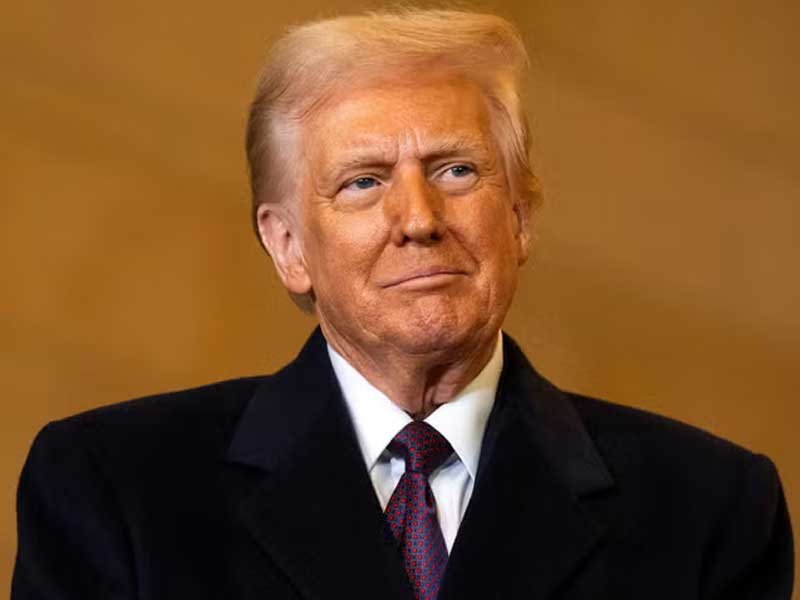
“We’re a sovereign nation,” Wells said. “We have the right to defend Australian parents and kids and we’ll do that.”
If approved, the legislation would oblige online platforms to take measures to protect children from harmful material involving eating disorders, misogyny, pornography, the glorification of crime, abuse and cyberbullying.
The rules would also require platforms to protect both adults and children from illegal content.
Another major provision would give users a choice over how content is presented to them. Platforms would have to provide a notification or “pop-up” allowing users to choose between a personalised feed based on algorithmic recommendations and a feed containing only posts shared by people they follow or have connected with.
The Greens have called for the non-personalised option to become the default, with users required to actively choose to receive algorithmically generated feeds.
Greens senator Sarah Hanson-Young has also renewed demands for significantly higher penalties, arguing that fines should be linked to the global revenue of technology companies.
“Big tech is going to spend a lot of money fighting these laws in the first place and finding every which way to get around them,” Hanson-Young told ABC radio.
“You need to hit them really where it hurts, and that’s their revenue.”
Meta, Google and TikTok have yet to publicly respond to the proposed legislation. However, Digi, which represents major technology companies, said the definitions of harmful content and the potential effect of the rules on users’ online experience would be particularly important.
OpenAI, the company behind ChatGPT, said it intended to work with the Australian government on the legislation.
The company said it wanted to ensure the rules were “protecting Australians while enabling them to benefit from AI”.
Australian businesses have also raised concerns about the potential economic consequences of the proposals.
Businesses that rely on social media and other online platforms for advertising and sales could see their reach reduced if users choose to turn off personalised recommendations. Some businesses fear this could result in fewer advertisements being displayed to consumers and fewer purchases through digital platforms.
The Council of Small Business Organisations Australia has called on the government to assess the potential effect of the proposed rules on small businesses and their visibility online.
The legislation has also triggered opposition from conservative politicians, with the Coalition accusing the Labor government of using the proposed regulations as a means of restricting free speech.
Under the proposal, the communications minister would have the authority to establish new definitions of harmful content that platforms would be required to remove.
Nationals leader Matt Canavan warned that the power could potentially be used against political opinions critical of the government.
“I don’t trust big tech, but I trust the Labor party a lot less,” Canavan said.
Prime Minister Anthony Albanese rejected the criticism as “disingenuous”, pointing out that the Senate would have the ability to reject definitions introduced by the minister.
Wells has repeatedly said political content and misinformation would not be covered by the proposed rules.
“Your right to be wrong on the internet remains preserved in the digital duty of care,” Wells said. “If you want to believe that the moon landing was fake, it is in no way impacted by the digital duty of care.”