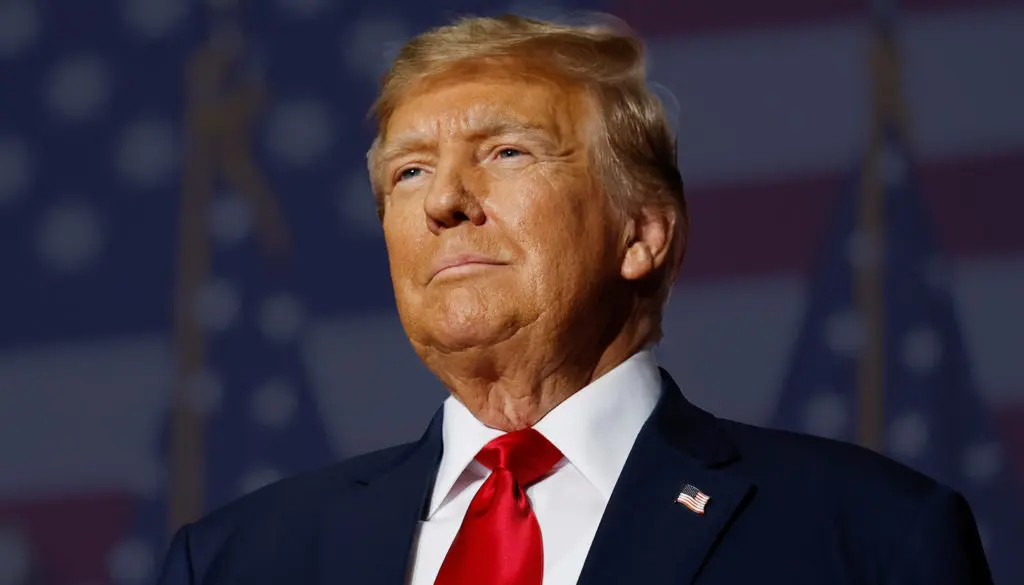
President Donald Trump has reportedly requested revisions to a draft agreement being negotiated between the United States and Iran, as discussions over Tehran’s nuclear programme continue.
According to reports, Trump made the request during a Situation Room meeting on Friday, asking negotiators to make changes to provisions dealing with Iran’s enriched uranium stockpile, future nuclear activities and language concerning the Strait of Hormuz.
The proposed agreement reportedly includes a 60-day negotiation framework and outlines measures related to Iran’s nuclear programme. However, Trump is said to be seeking clearer terms regarding the handling and transfer of Iran’s nuclear materials.
Negotiations remain ongoing, with officials expecting further responses from Tehran in the coming days. No final agreement has been reached.
Meanwhile, Iranian officials have insisted that sanctions have not stopped the country’s oil exports.
Gholam Reza Dehghan Naserabadi, a member of Iran’s parliament and its Energy Committee, said the country continues to sell crude oil through various channels despite international restrictions.
“Countries purchasing Iranian oil have, to some extent, been able to benefit from sanctions exemptions, while Iran continues to export its oil through different methods,” he said.
The political atmosphere in Iran has also been stirred by comments from hardline lawmaker Hamid Rasaei, whose recent social media post sparked speculation about the country’s leadership.
Rasaei shared a message titled “Who is Qualified for Leadership?” on his Telegram channel, referencing a Quranic passage about Prophet Noah and his son. The post triggered criticism from political figures and commentators who interpreted it as an indirect reference to Iran’s new Supreme Leader, Mojtaba Khamenei.
Several critics accused the lawmaker of implying that Mojtaba Khamenei was unworthy of leadership.
One commentator questioned the timing of the post, asking: “What is the relevance of bringing up the issue of leadership under the current circumstances—when the late martyr-leader’s righteous son has succeeded him, and especially at a time when enemies are manufacturing rumors about this every single day—and then referencing the verse about Noah’s son? What on earth was Rasaei’s motive for spinning such a ridiculous, convoluted narrative?”
Others also demanded explanations, with conservative activist Mohammad-Hossein Chavoshi writing: “What is the meaning of Mr. Rasaei’s message? No matter how we look at it, it leaves a bad impression.”
The controversy intensified because the post appeared on the same day Mojtaba Khamenei publicly praised parliament speaker Mohammad Bagher Ghalibaf and called for unity within the country’s political establishment.
Rasaei later rejected the allegations, saying he had merely reposted an older article and stressing that he had previously supported Mojtaba Khamenei’s qualifications for leadership.
The lawmaker maintained that he was among the first figures to publicly endorse Khamenei as a potential successor following reports of Ali Khamenei’s death.
As political tensions continue, analysts remain focused on Iran’s missile and nuclear capabilities.
Mark Dubowitz, Chief Executive Officer of the Foundation for Defence of Democracies (FDD), argued that both programmes should be viewed as a single strategic challenge.
According to him, recent military and diplomatic developments have slowed Tehran’s progress in both areas.
“The missile threat has been severely blunted, the nuclear timeline has been pushed back, and Tehran’s path to a deployable nuclear arsenal has become far more complicated and perilous,” Dubowitz said.
The remarks come as Washington and Tehran continue efforts to reach a broader agreement while regional and international observers closely monitor developments surrounding Iran’s nuclear ambitions, missile programme and internal political landscape.