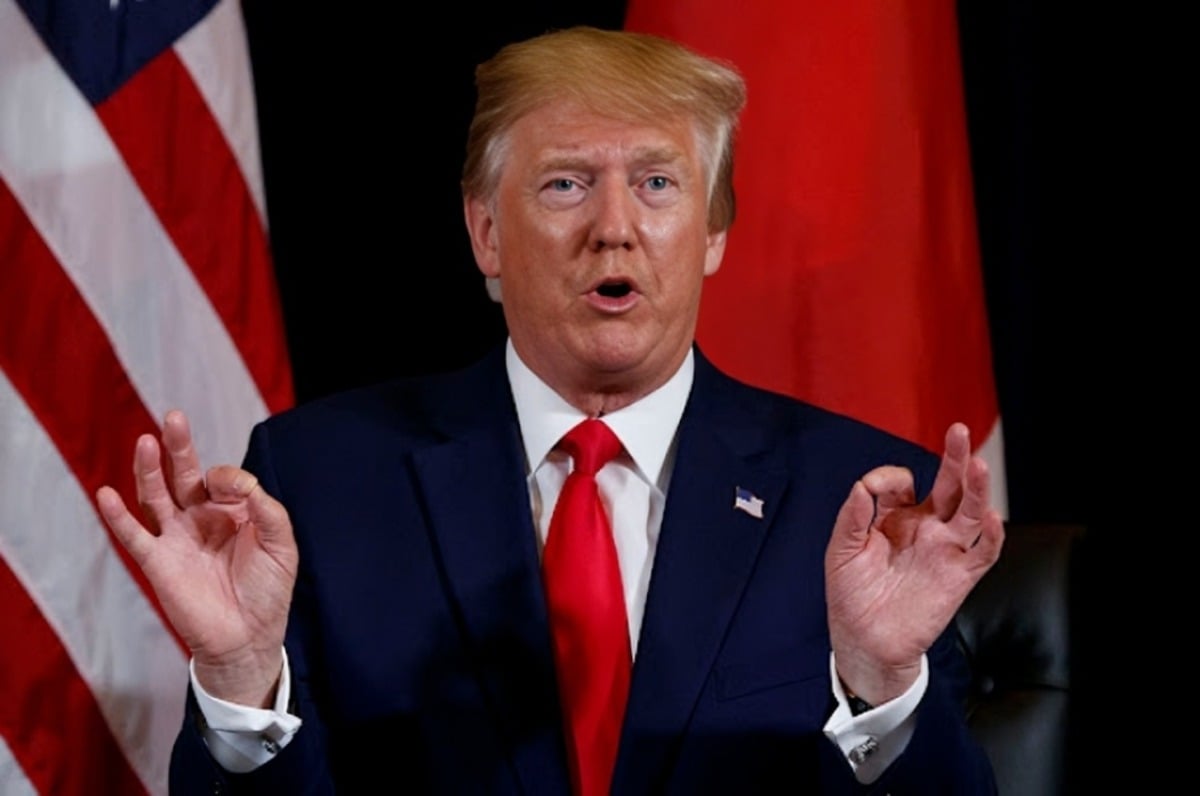
President Donald Trump signed an executive order on Tuesday that asks technology companies to voluntarily give the federal government access to new artificial intelligence models for up to a month before they are released to the public.
The order marks a significant shift for an administration that had previously promoted a hands-off approach to the powerful technology, prioritizing American competitiveness over regulatory oversight. It establishes a framework for the government to vet the national security risks of the most advanced AI systems, participation in which would be voluntary.
“Advanced AI capabilities make our Nation stronger, but also introduce new national security considerations that require coordinated action across executive departments and agencies,” the order states.
A Reversal After Last Month’s Cancellation
The signing follows a dramatic about-face just two weeks earlier. Trump abruptly canceled an Oval Office event with tech industry executives on May 21 because he was concerned that an earlier draft of the order was too restrictive.
“We’re leading China, we’re leading everybody, and I don’t want to do anything that’s going to get in the way of that lead,” Trump told reporters at the time.
The initial draft would have given the government 90 days to review new models. That proposal drew opposition from key figures, including former White House AI czar David Sacks, a Silicon Valley venture capitalist who has been skeptical of AI regulation.
On Monday, the day before the signing, Trump convened a high-level meeting at the White House with Treasury Secretary Scott Bessent, Defense Secretary Pete Hegseth, and Sacks, who joined by phone. Sacks, who had opposed the earlier version, supported the revised plan after the review window was cut to 30 days, according to people familiar with the matter.
The White House said in a social media post that the executive order “creates a process for frontier labs to voluntarily share cutting-edge cyber models in order to secure critical infrastructure and strengthen the government’s own cyber defenses. We are NOT conducting oversight of all new models, as that level of government overreach would have chilling effects on free speech and innovation”.
Sacks called the shorter 30-day review period “a game changer” in a post on X, because it would not slow down tech companies too much. “It allows our AI labs to comply with the voluntary framework without delaying new model releases,” he wrote.
What the Order Does
The order explicitly prohibits the creation of a mandatory licensing regime for AI. “Nothing in this section shall be construed to authorize the creation of a mandatory governmental licensing, preclearance, or permitting requirement for the development, publication, release, or distribution of new AI models,” the order reads.
Under the framework, companies that choose to participate would give the government up to 30 days to review a new model before its public release. The order also directs the Treasury Secretary to form an AI “cybersecurity clearinghouse” to review security vulnerabilities discovered by AI models.
The order follows months of internal debate over how to balance national security concerns with the desire to avoid slowing technological development. Concerns about AI’s potential dangers were heightened in April, when Anthropic announced its most advanced AI model, Claude Mythos, which the company said could find software vulnerabilities at an unprecedented scale.
Treasury Secretary Bessent and outgoing Federal Reserve Chair Jerome Powell convened an urgent meeting with Wall Street CEOs, warning them about the risks posed by Mythos’ apparent ability to find cybersecurity vulnerabilities in the world’s software. Anthropic has since limited access to Mythos to a small group of trusted partners, including big tech companies and banks.
Juan Londoño, a policy analyst at the libertarian-leaning Cato Institute, said the order is imperfect but “a step in the right direction to prepare the nation for the release of advanced AI systems”. He applauded the voluntary nature of the process but expressed concern about the vagueness of how the government, led by the National Security Agency, will decide which models qualify for scrutiny.
“This was a dangerous precedent,” Londoño said, adding that giving so much discretion to the NSA director could enable the government to “weaponize” the policy against companies it is clashing with.
Industry Reaction
OpenAI, the maker of ChatGPT, described the policy as an important step. “As AI capabilities continue to advance, we believe effective safety frameworks should continue to be developed through democratic institutions, informed by technical expertise and broad stakeholder input, to promote accountability and public trust,” said Chris Lehane, OpenAI’s chief global affairs officer, in a statement.
The order gives agencies 60 days to fill in the details about how the system would work. The White House and the departments of Defense, Homeland Security, Commerce, and the Treasury will write a set of classified standards to help determine which new AI models could pose security risks. Responsibility for making the final call about which ones should be subject to additional government scrutiny will fall to the National Security Agency.
The Bottom Line
Trump signed an executive order creating a voluntary framework for the federal government to review the most advanced AI models for up to 30 days before public release. The order follows the abrupt cancellation of a stricter 90-day version last month and represents a balancing act between national security concerns and the administration’s desire to maintain America’s competitive edge in AI. The policy is voluntary, not mandatory, and explicitly prohibits the creation of a licensing regime for AI models.