
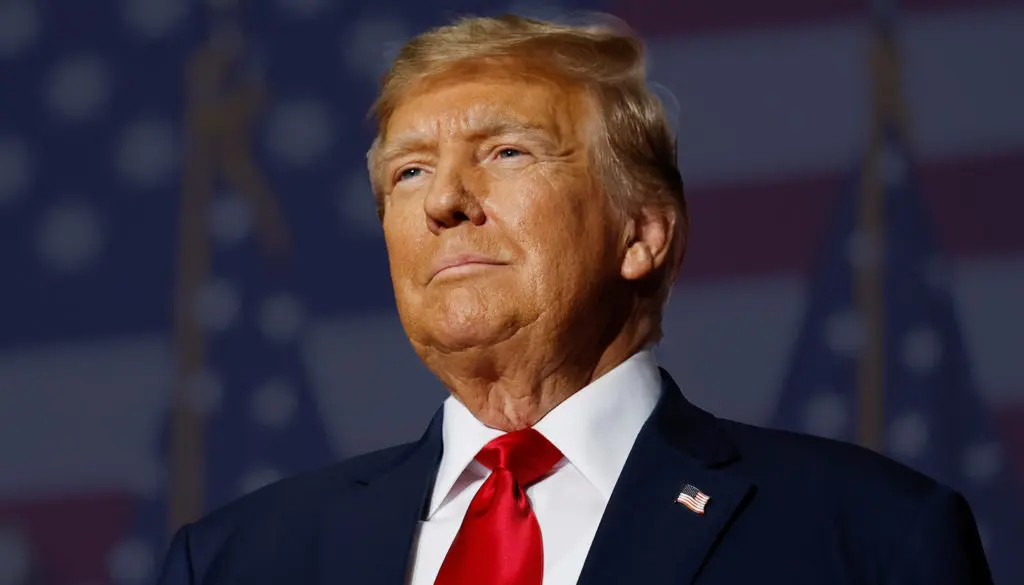
President Donald Trump delivered a stark twin warning Thursday: Israel will launch no further attacks on Iran’s South Pars gas field unless Iran retaliates — but if Tehran hits Qatar again, the United States will “massively blow up the entirety” of the field with power “Iran has never seen or witnessed before.”
The ultimatum came after a dramatic 24 hours that saw Israel strike the world’s largest natural gas deposit, Iran fire missiles at Qatar’s Ras Laffan Industrial City — which processes about a fifth of global gas supply — and Saudi Arabia intercept ballistic missiles headed for Riyadh.
“Israel, out of anger for what has taken place in the Middle East, has violently lashed out at a major facility known as South Pars Gas Field in Iran,” Trump posted on X Wednesday. “Unfortunately, Iran did not know this, or any of the pertinent facts pertaining to the South Pars attack, and unjustifiably and unfairly attacked a portion of Qatar’s LNG Gas facility.”
Then came the red line.
“NO MORE ATTACKS WILL BE MADE BY ISRAEL pertaining to this extremely important and valuable South Pars Field unless Iran unwisely decides to attack a very innocent, in this case, Qatar.
“In which instance the United States of America, with or without the help or consent of Israel, will massively blow up the entirety of the South Pars Gas Field at an amount of strength and power that Iran has never seen or witnessed before.”

The Strikes That Triggered the Warning
Wednesday’s Israeli strike on South Pars marked a significant escalation in the nearly four-week-old conflict. The field, which Iran shares with Qatar, is the crown jewel of Iran’s energy sector — and a symbol of its economic lifeline.
Iran retaliated by targeting Qatar’s Ras Laffan Industrial City, home to the world’s largest liquefied natural gas export facilities. QatarEnergy reported “extensive damage” and “sizeable fires” at multiple LNG facilities following Thursday’s missile attacks.
Saudi Arabia said it intercepted four ballistic missiles launched toward Riyadh on Wednesday and repelled an attempted drone attack on a gas facility in the east. On Thursday, Iran again targeted the Saudi capital and Qatar’s gas facilities.
The UAE shut down its Habshan gas facility after intercepting missiles in what its foreign ministry called a “terrorist attack” by Iran.
The Diplomatic Fallout
The attacks on Gulf energy infrastructure have united the region against Tehran as never before.
Foreign ministers of 12 Muslim-majority countries meeting in Riyadh issued a joint statement Thursday denouncing Iran’s strikes and calling for an immediate halt. Iran’s targeting of residential areas and civilian infrastructure — oil facilities, airports, desalination plants — could not be justified “under any circumstances,” they said.
Saudi Foreign Minister Prince Faisal bin Farhan went further. “This pressure from Iran will backfire politically and morally, and certainly we reserve the right to take military actions, if deemed necessary”.
Interceptors were seen firing near the Riyadh hotel where the conference was held as ministers gathered.’
The Energy War
Since the conflict began on February 28, Iran has systematically targeted Gulf energy infrastructure:
· Qatar: Ras Laffan Industrial City struck twice, causing extensive damage
· Saudi Arabia: Multiple missile and drone attacks on gas facilities and Riyadh
· UAE: Habshan gas facility shut down after missile strikes
· Kuwait: Oil infrastructure hit, U.S. warplanes crashed
· Bahrain: Salman Port targeted
The attacks have disrupted global energy supplies and sent prices soaring. Trump is now considering sending thousands more U.S. troops to the Middle East to restore safe passage of oil tankers through the Strait of Hormuz, a chokepoint for a fifth of the world’s oil trade.
The Human Toll
More than 3,000 people have been killed in Iran since the U.S.-Israeli attacks began, according to the U.S.-based Iran human rights group HRANA. In Lebanon, authorities say 900 have been killed and 800,000 forced to flee their homes. Iranian attacks have killed people in Iraq and across the Gulf states, and at least 13 U.S. military service members have died in the war.
What Comes Next
Trump’s warning creates a clear framework: Israel will not strike South Pars again unless Iran attacks Qatar. But Iran has already attacked Qatar twice. The condition for Israeli restraint has been met, but the condition for massive U.S. retaliation has also been triggered.
Whether Trump’s red line holds depends on whether Iran launches another strike on Qatari infrastructure. Tehran has shown no sign of backing down, and the Gulf states are now openly discussing military options against Iran.
For the first time in the conflict, a unified regional front is forming against Tehran. And Trump has made clear that if Iran crosses his line again, the South Pars field — and with it, a significant portion of Iran’s economic future — will cease to exist.