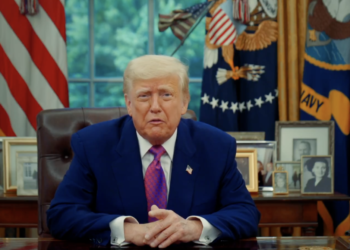


President Donald Trump has announced a plan that could give the federal government almost total authority over AI, sidelining states from regulating the technology. The move is meant to present the United States as a global leader in artificial intelligence, but it also raises serious concerns about centralization of power and political overreach. Many see this as Trump trying to act like the ultimate boss, controlling everything himself, while ignoring local governments and democratic processes.
Big Play, Bigger Problems
Trump claims that a single set of rules is needed to keep the U.S. ahead in AI development. On the surface, it sounds strategic. But when you look closer, it’s clear he is trying to micromanage an entire industry from the top, without giving states any room to set rules that protect their citizens. This “one rulebook” approach might seem efficient, but it risks ignoring local issues, safety concerns, and economic fairness.

By insisting on total control, Trump is almost treating AI as if it were a fragile toy that cannot be handled by anyone else. Instead of trusting innovation to grow in a balanced environment, he treats it like a pet that only he can feed and guide. This attitude is dangerous because it puts too much responsibility in the hands of a single person whose judgment is often inconsistent and politically motivated.
Congress and State Pushback
Trump’s plan is already facing pushback from Congress. Democrats, and even some Republicans, are skeptical about letting one executive decide how AI should operate nationwide. States, which are supposed to have a say in regulating technology affecting their residents, see this as an attempt to strip them of power. Legal battles are likely, and it could slow down AI development rather than accelerate it.
The Risks of Centralization
Centralizing control over AI may sound like leadership, but in reality, it creates vulnerabilities. Decisions made at the top may ignore local conditions or emerging threats. If a single rule fails, the consequences could be massive, affecting the economy, security, and everyday life. Trump’s approach shows a preference for flashy authority over thoughtful governance.
Who Benefits?
Trump positions himself as the protector of U.S. dominance in AI, but the truth is this move benefits political optics more than practical results. He gets to appear strong and in control, while the real work of safely regulating AI, ensuring ethical use, and fostering innovation falls behind. Meanwhile, states and tech experts are left trying to clean up the mess if problems arise.
Looking Ahead
This plan will likely trigger lawsuits and political battles. Federal control may not be as smooth as Trump hopes, and the AI industry may face delays, uncertainty, and confusion. Citizens and businesses that rely on clear, local rules could end up paying the price. The question remains whether this centralization will help the U.S. in the AI race or simply give Trump another platform to showcase personal authority at the expense of proper governance.