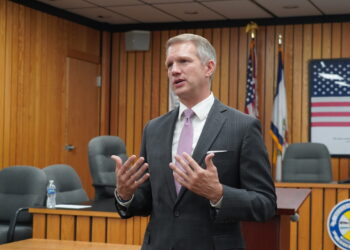
The United States has unveiled plans to rebuild Gaza from scratch, calling it a “New Gaza,” even as violence continues in the enclave. The ambitious project was presented by Jared Kushner, U.S. President Donald Trump’s son-in-law, at the World Economic Forum in Davos on Thursday. The plan proposes residential towers, data centres, industrial parks, and seaside resorts.
While the Trump administration portrays it as a pathway to peace and modernization, many question how practical it is amid ongoing conflict and political uncertainty.
A Vision for Gaza That Ignores Reality
Kushner described the plan as a “master plan” for catastrophic success, showing slides with shiny towers and clean streets along the Mediterranean, resembling Dubai or Singapore. But the plan raises serious questions. There was no mention of who would fund it, how displaced Palestinians would be compensated, or where they would live during the reconstruction. Clearing war rubble, estimated at 68 million tons, would be an enormous task.

Despite the flashy visuals, many believe that the plan seems to prioritize optics over the real needs of Gaza’s population. Palestinians who have lost homes, businesses, and livelihoods remain uncertain about the most basic issues: security, shelter, and jobs.
Rafah Border Opening Offers a Glimmer of Hope
One of the few concrete updates came from Palestinian technocrat Ali Shaath, who announced that Gaza’s Rafah border crossing with Egypt would reopen next week. This is a key lifeline for residents, many of whom remain cut off from essential goods and mobility.
However, Israel continues to control the Gaza side of the crossing and has made the reopening conditional on Hamas returning the remains of the last hostage. The move highlights the ongoing political and logistical hurdles that could undermine Trump’s vision.
Violence Persists Despite Diplomatic Efforts
Even as plans for reconstruction were announced, Israeli forces continued attacks in Gaza. On Thursday alone, five Palestinians were killed—four in Gaza City from tank shelling and another in Khan Younis. Earlier, Israeli fire killed 11 more people, including two boys and three journalists documenting conditions in the territory.
This juxtaposition of peace plans and ongoing bloodshed underscores the fragility of any reconstruction effort. Rebuilding cannot happen while war continues, yet U.S. officials push forward as if it can.
A Peace Plan or a Publicity Campaign?
Trump has framed the “New Gaza” project as part of his broader Board of Peace initiative, aimed at resolving conflicts globally. But the plan’s feasibility remains doubtful. It does not tackle property rights, governance, or the real political divisions between Israel and Hamas.
To Palestinians and observers, the plan risks looking more like a public relations exercise than a practical roadmap to peace. Without a ceasefire that is fully enforced and guarantees for residents, the shiny towers on slides are just dreams.
What This Really Means
The “New Gaza” announcement highlights the contradictions in U.S. diplomacy. While offering a vision of reconstruction, it occurs alongside continued violence and contested sovereignty. It shows a willingness to invest politically and financially, but questions remain: who truly benefits, and will Palestinians ever see these promises realized? Peace and development remain far from guaranteed.