Trade negotiations between the United States and Canada have broken down, triggering a new round of tariffs as Washington imposed 50% duties on a broad range of Canadian goods from midnight Saturday.
The collapse followed nearly two weeks of intense negotiations aimed at preventing the new tariffs. Canadian Prime Minister Mark Carney said the discussions had produced progress but failed to deliver an agreement that met Ottawa’s objectives.
“As a result, this evening, I have decided to suspend trade negotiations with the U.S. and have directed Canada’s negotiators to return to Ottawa,” Carney said in a statement issued shortly before the deadline.
The new duties affect about $20 billion worth of Canadian imports, according to the US Trade Representative’s office. Products affected include some building materials, alcoholic beverages, clothing and hockey equipment.
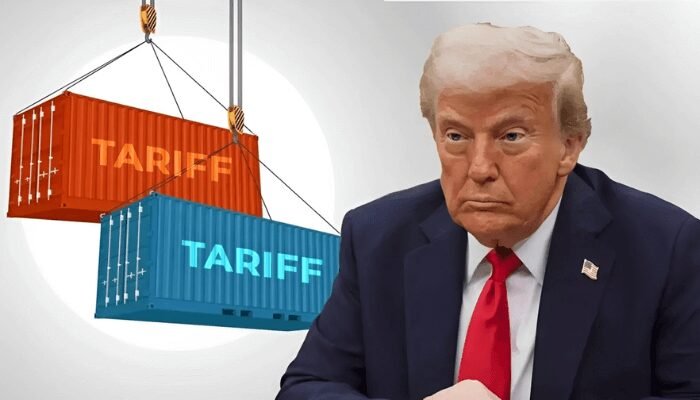
Carney immediately announced retaliatory action, saying Canada would respond in equal measure.
“Canada will match those tariffs dollar for dollar to protect our workers and businesses,” he said.
The breakdown marked a sharp reversal from Tuesday, when President Donald Trump paused the planned tariffs for three days and claimed on social media that the two countries “have a DEAL!”
Negotiators remained engaged until late Friday, with Canadian officials holding discussions with their US counterparts at the Office of the US Trade Representative. However, the talks ended without an agreement.
Carney blamed last-minute changes proposed by Washington for the failure.
“Last-minute changes in the U.S. proposed terms were unfair, uneconomic, and called into question the reliability of any deal,” he said.
He added: “We have recognised from the beginning that America has changed, and that we will not return to our old relationship.”
“Canada has what the world wants. And we will not allow any nation to determine our future,” Carney said.
US Trade Representative Jamieson Greer offered a different account, accusing Canada of backing away from commitments reached earlier in the week.
Greer said Canada “declined to finalize the trade deal under the terms agreed earlier this week.”
“Despite the U.S. offer to Canada to receive the best treatment of any major exporter to our market, new demands and walk backs of other commitments by Canada have upended the careful balance reached in the past days,” he said.
A major disagreement involved Canadian retaliatory measures against US products, including restrictions on American alcoholic beverages imposed by several Canadian provinces.
Greer said Canada was still maintaining retaliation against the US, including “flat-out prohibitions on certain American goods and services.”
The issue had also created tensions within Canada, with some provincial leaders reluctant to lift restrictions on US alcohol despite requests from Carney.
Ontario Premier Doug Ford backed the federal government’s decision to retaliate after the talks collapsed.
“The prime minister has my full support for a strong response—tariff for tariff, dollar for dollar,” Ford wrote on X, adding that Canada “needs to stand together more united than ever before.”
The new US tariffs were imposed under Section 338 of the Tariff Act of 1930, a provision that allows the White House to impose duties of up to 50% on countries deemed to discriminate against American commerce. The provision has never previously been used.
The measures are expected to face legal challenges, while Canadian officials had sought to have the Section 338 tariffs removed entirely.
Ottawa had also pushed for reductions in existing US duties on Canadian steel, aluminium, automobiles and lumber. Greer said Washington had offered “significant tariff reductions on steel, aluminum, autos, and lumber,” although he did not provide specific rates.
The trade dispute has raised concerns about the economic consequences for both countries, whose supply chains are deeply interconnected.
The US Chamber of Commerce warned that “higher tariffs would damage both economies, drive up costs for U.S. families, further disrupt critical supply chains, and risk the 13 million American jobs that depend on” the North American trade pact.
The Canadian Chamber of Commerce described the latest development as “a body blow to North American competitiveness in this self-defeating trade saga.”
Its president and CEO, Candace Laing, said: “Americans will see their costs go up, and Canadians will see customers, investment and small businesses disappear.”
The latest escalation comes after repeated tariff disputes between Washington and Ottawa, raising the prospect of further retaliation and renewed pressure on the economic relationship between the two North American neighbours.