A US federal judge has dismissed a criminal case against a Jamaican national accused of illegally voting in a federal election, ruling that the federal law used to prosecute her is unconstitutional.
Miami-based US District Judge David S. Leibowitz issued the ruling on Thursday in the case involving Chelsea Cox, who was charged in October 2025 with a misdemeanor for allegedly voting illegally in the 2020 election.
In his 31-page decision, Leibowitz held that Congress lacked the constitutional authority to establish voter qualifications for federal elections through 18 U.S.C. § 611, the law under which Cox was charged.
The judge said the US Constitution gives states, rather than Congress, the authority to determine who is qualified to vote.
Leibowitz ruled that while Florida authorities could prosecute Cox under state law if they believed she unlawfully voted, the federal government could not rely on the statute in question to bring the criminal case against her.
“This is an unusual criminal case. It rests upon a forty-year-old federal statute, 18 U.S.C. § 611, that prohibits the act of voting in a federal election by a non-U.S. citizen. Until very recently, no federal court has been presented with the following question about that statute: Did Congress have Constitutional authority to enact it? That’s unusual, all by itself,” Leibowitz wrote.
The ruling is limited to Cox’s case and does not invalidate the law nationwide. However, it appears to be the first time a court has found the statute unconstitutional.
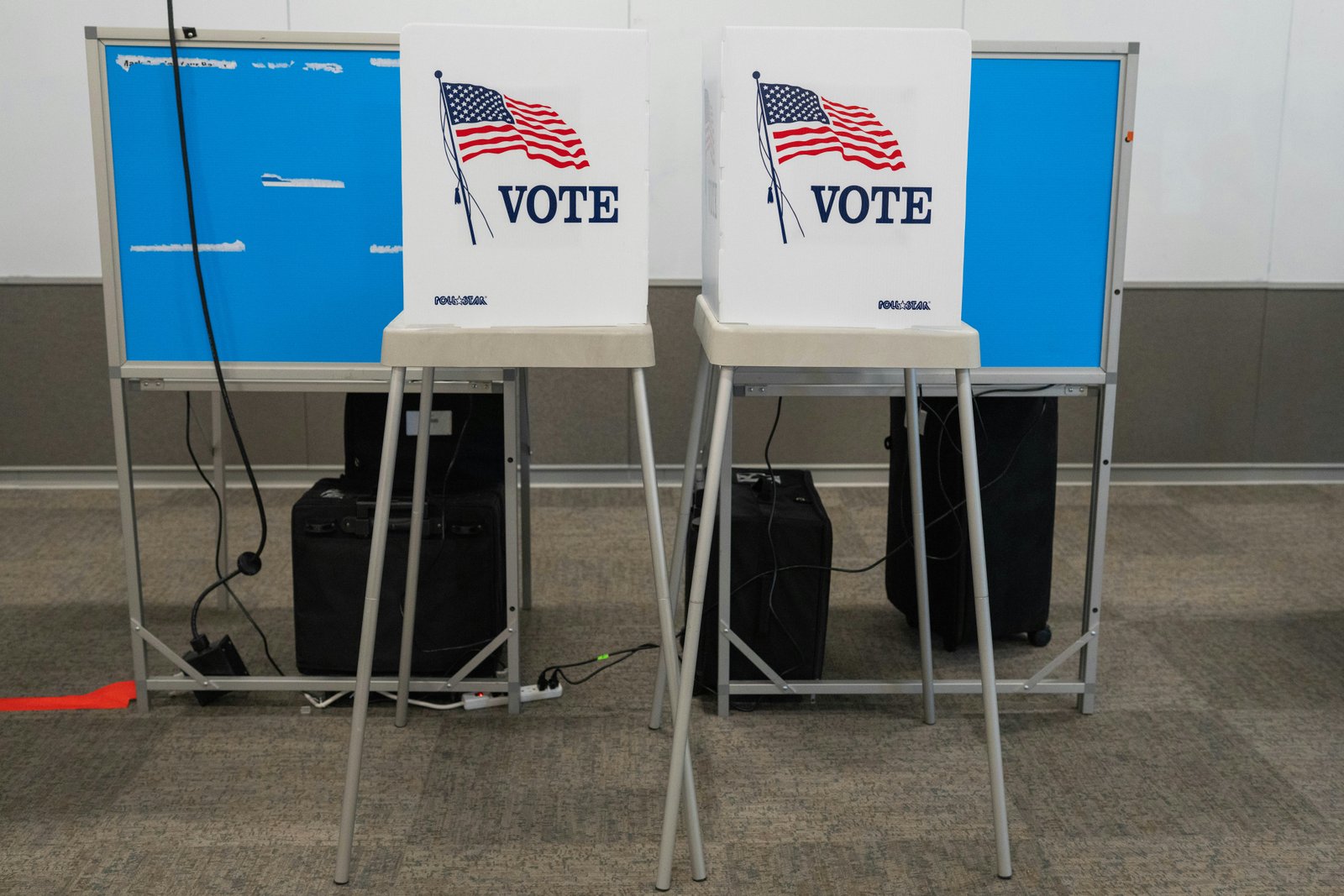
The decision comes as the administration of President Donald Trump has increased efforts to investigate and prosecute allegations of noncitizens voting in US elections.
The Justice Department has already moved to appeal Leibowitz’s ruling.
The case centres on allegations that Cox, who had overstayed a US tourist visa by more than two decades, obtained a Florida driver’s licence using a fraudulent US Virgin Islands birth certificate.
Federal prosecutors alleged that she voted in several federal elections beginning in 2012, with her participation in the 2020 general election ultimately resulting in the charges filed against her.
Cox’s defence team argued that the federal statute exceeded Congress’ constitutional powers and interfered with authority reserved for individual states.
Prosecutors disagreed, maintaining that the Constitution gives the federal government an important role in regulating federal elections.
“Whether it is to regulate the manner of federal elections or to preserve a distinct privilege of federal citizenship, surely the United States has the right to exclude non-citizens from voting in federal elections,” Justice Department attorneys argued in court filings.
Leibowitz also sought the opinion of Paul Clement, a prominent conservative lawyer who served as US solicitor general under former President George W. Bush.
In an amicus brief filed during the summer, Clement concluded that Congress had likely “overstepped constitutional bounds in enacting §611.”
He pointed to historical examples in which some states had permitted noncitizens to vote, despite the fact that no state currently allows noncitizens to participate in federal elections.
Clement wrote that “states, not the federal government, determine voter qualifications.”
Following the ruling, Cox’s lawyer, Bruce Udolf, said his client was relieved by the outcome.
Udolf said Cox was “gratified” by the judge’s decision and described the ruling as a “huge relief to her.”
He added that Cox recently underwent a medical procedure and that he was in discussions with the government over the next steps, including whether the Trump administration would seek to deport her.
The judge’s ruling does not affect another federal law that criminalises making false claims of US citizenship for the purpose of voting. That separate statute has also been used by federal prosecutors in recent cases involving alleged noncitizen voting.
Leibowitz was appointed to the federal bench by former President Joe Biden. In his ruling, he sharply questioned the Justice Department’s constitutional defence of the voting statute.
“The Biden-appointed judge went on to say the Justice Department’s ‘principal defense of the statute’s constitutionality invokes a single Supreme Court case that is very, very weak,’” the ruling stated.
“So why does the Government lead with such a weak hand? Because it’s the best hand it can play,” Leibowitz wrote. “And why is that? Because the text, structure, and original public meaning of the Constitution show that Congress does not have the constitutional power to enact this statute.”
The Justice Department’s appeal will now determine whether a higher court agrees with Leibowitz’s interpretation of Congress’ authority over voter qualifications.