The US military has launched a new wave of attacks against Iran amid the escalating standoff over the Strait of Hormuz, with Tehran saying the latest strikes had “rendered futile” all the diplomatic efforts of the past few months.
The US military began launching more strikes against Iran at 9 pm GMT on Sunday, US Central Command said on X, “to continue degrading their ability to attack civilian mariners and commercial ships freely transiting the Strait of Hormuz.”
President Donald Trump “has directed the strikes to hold Iranian forces accountable,” CENTCOM added. Trump, referring to the weekend strikes on Iran, said: “We’re beating them up.”
Iran retaliated by attacking nations in the region hosting US military forces. Jordan’s army said it had shot down four Iranian missiles. Kuwait’s armed forces said they were responding to “hostile aerial targets” on Monday as Iran carried out strikes on US interests in the Gulf.
Escalation in Pace and Range
The strikes were the latest in a cycle of attacks and counterattacks as Iran seeks to assert control over shipping through the vital energy route, but the barrage marked an escalation in pace and range. Centcom said it carried out about 140 strikes on Saturday night.
Iranian media reported missile attacks and explosions around the port cities of Sirik and Bandar Abbas, home to military facilities on the Hormuz Strait, and nearby Qeshm Island.
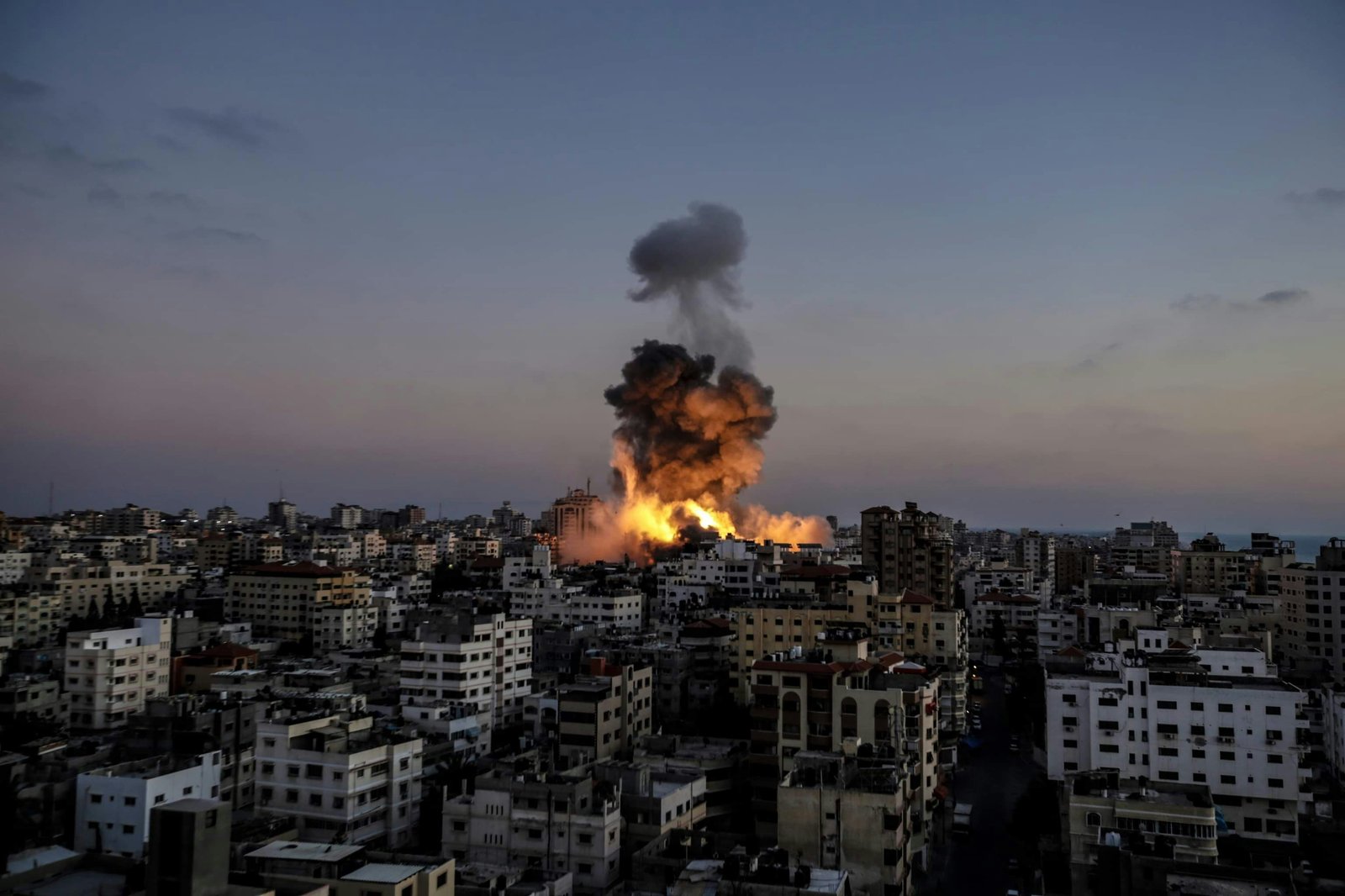
Iran’s strikes on Sunday extended to Qatar, a mediator in ceasefire talks that had not come under attack since April. The United Arab Emirates, which had not been targeted since early May, said its air defences had engaged missiles and drones from Iran.
Diplomacy ‘Futile’
Iran condemned the latest wave of US attacks, with the foreign ministry saying they had “rendered futile all efforts of the past few months to reduce tension and establish peace in the West Asian region.”
The ministry also said that talks between Iran and Oman on Saturday in Muscat – focused on arrangements for managing the strait and transit routes – were unable to reach a result because of “overt and covert” US pressure on Oman.
Iran’s top negotiator, Mohammad Bagher Ghalibaf, posted on X: “The era of one-sided deals is OVER. We told you: keep your word or pay the price. Reality is knocking.”
Oil Prices Surge
Oil prices, which had tumbled since the announcement of a ceasefire agreement, rose more than 3.5% when futures trading opened on Monday in Tokyo, with the US benchmark WTI jumping above $74 a barrel.
The conflict has caused global economic shockwaves since it began in late February, driving energy prices higher and fuelling global inflation. Higher prices – especially for petrol – are politically sensitive for Trump ahead of November’s US congressional elections.
The Strait Standoff
Iran has sought to establish a permanent system for collecting fees in the strait, which carried a fifth of the world’s oil and liquefied natural gas shipments before the war, and has warned vessels not to sail without its authorisation.
Iran’s recently created Persian Gulf Strait Authority said on Sunday that passage through the strait was not currently possible due to what it called recent illegal US military movements in the region. Permits would be issued “as soon as stability and calm are restored,” it said.
The US, which revoked the licence authorising the sale of Iranian crude oil on Tuesday after earlier attacks on shipping, said its forces were positioned to safeguard freedom of navigation.
The Bottom Line
The US has launched a new wave of strikes against Iran as Tehran says diplomacy has proven “futile.” The strikes mark an escalation in the standoff over the Strait of Hormuz, with Iran retaliating against nations hosting US forces. Oil prices surged more than 3.5% as the ceasefire agreement appears to be collapsing. Iran’s top negotiator declared that “the era of one-sided deals is OVER.” The renewed violence casts further doubt on the future of the interim truce signed last month.