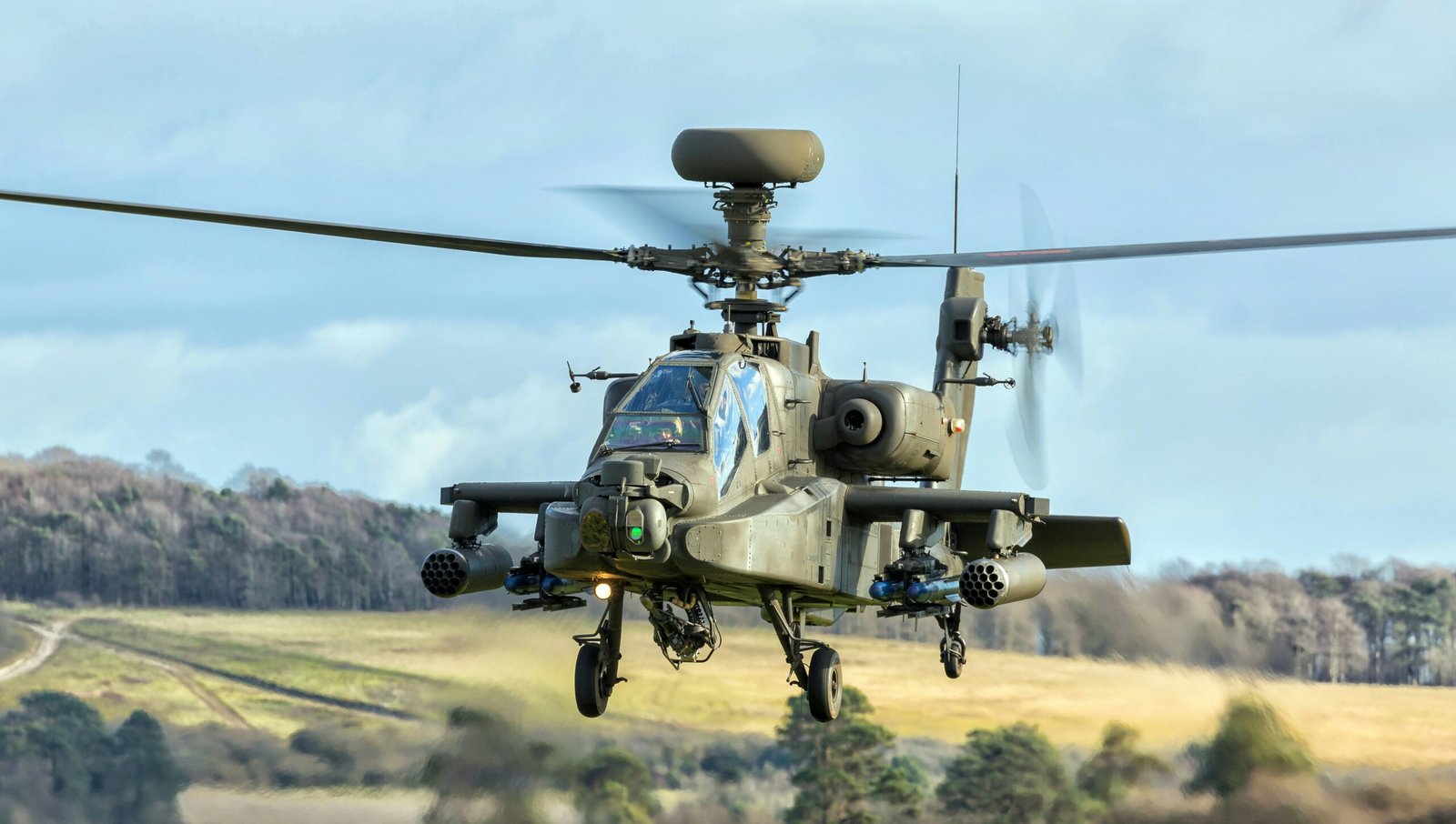
A US Army Apache helicopter is believed to have been struck by an Iranian Shahed drone before crashing near the Strait of Hormuz, according to multiple US officials, though it remains unclear whether the drone attack was intentional or accidental.
Axios correspondent Barak Ravid first reported that an unnamed US government official said an Iranian drone made contact with the AH-64 Apache helicopter before it went down on June 8. The report was later confirmed by the New York Times, which cited additional anonymous officials noting that investigators are still assessing whether the strike was deliberate or the result of miscalculation.
Iran has deployed large numbers of Shahed drones across the Gulf region since the escalation of hostilities between the United States and Israel and Iran in early 2026. The drones have been used against both military and infrastructure targets, including energy facilities and surveillance sites, though they are generally considered more effective against stationary targets.
Security analysts say the Shahed system typically relies on preprogrammed GPS coordinates rather than real-time targeting, making precision strikes on moving aircraft less likely. However, experts also suggest that modified versions—possibly enhanced with foreign assistance—may now allow limited remote targeting capabilities.
Mark Cancian of the Center for Strategic and International Studies said the original Shahed models were not designed for dynamic targeting, but newer variants could potentially increase their effectiveness against mobile assets.
The incident highlights the asymmetry of modern warfare, with reports indicating that a relatively inexpensive drone, valued at roughly $35,000, may have contributed to the loss of a US military helicopter worth around $25 million. Both crew members were rescued following the crash, reportedly with the assistance of a drone boat used in an unconventional recovery operation.
The downing of the Apache marks what would be the first confirmed loss of such a helicopter in the ongoing conflict, adding to a growing list of US military equipment losses in the region. Previous incidents reportedly include the downing of fighter jets, surveillance drones, and damage to other aircraft during strikes and counterstrikes across the Gulf.
US President Donald Trump became the first official to publicly attribute the Apache crash to Iran, warning that “the United States must, of necessity, respond to this attack.” The US Central Command later confirmed retaliatory strikes targeting Iranian air defence systems, radar installations, and ground control infrastructure near the Strait of Hormuz.
Iran, however, claimed the US strikes also caused civilian infrastructure damage, including water facilities, while launching counterattacks on US-linked bases in Bahrain, Kuwait, and Jordan. The Islamic Revolutionary Guard Corps also said it had struck multiple regional targets and claimed further drone interceptions.
The latest escalation underscores the fragility of the already tense situation in the Gulf, where intermittent clashes, drone warfare, and naval disruptions continue to threaten stability around the strategic Strait of Hormuz shipping route.