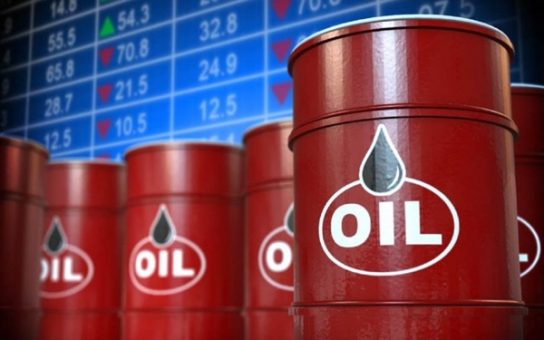
The United States’ Strategic Petroleum Reserve (SPR) has fallen to its lowest level in about four decades, raising concerns among some energy experts about the condition of the underground facilities that store the emergency oil supply.
Data from the Department of Energy shows that the reserve dropped below 300 million barrels last week for the first time since the 1980s. The stockpile could decline further to about 243 million barrels as the US releases roughly 172 million barrels in response to major supply disruptions and higher energy costs linked to the Iran war.
The SPR is stored in 60 underground salt caverns located at four sites across Texas and Louisiana. Together, the facilities can hold up to 714 million barrels of crude oil.
Some energy specialists have warned that drawing the reserves down too far could place additional stress on the caverns.
Amos Hochstein, a senior energy adviser to former President Joe Biden, questioned whether the reserve could safely fall much further.
“I don’t know anyone who believes we can go below 300,” Hochstein told CNBC on Saturday.
He added, “I know plenty of people who think we can’t get near 300 because physically you will damage the caverns where the oil is stored.”
The Department of Energy, however, rejected the suggestion that lower oil levels would threaten the caverns.
Ben Dietderich, the department’s chief spokesperson, said the underground storage sites remain filled, with water replacing some of the oil as crude is withdrawn.
“The caverns are always full. All that changes is the ratio of oil and water that is filling them,” Dietderich said in a statement.
He added that President Donald Trump and Energy Secretary Chris Wright were “responsibly managing the SPR as the critical national security asset it was designed to be, helping stabilize oil markets and protect Americans from supply disruptions.”
The condition of the reserve has also become a political issue in Washington, with both Republicans and Democrats debating how quickly the SPR should be restored.
In 2025, Wright told a House Energy and Commerce Subcommittee hearing that efforts to rebuild the reserve were being complicated by more than $100 million in required repairs.
Wright attributed some of the infrastructure problems to the rapid withdrawal of crude under the Biden administration, when nearly 200 million barrels were sold in 2022 and 2023 as the government sought to ease pressure on global oil prices following Russia’s invasion of Ukraine.
“The immediate thing we need to do is finish the repairs on the Strategic Petroleum Reserve,” Wright said at the time.
“It was drawn down so quickly, and that causes some damage to the infrastructure itself. Those repairs are ongoing, and it costs a nontrivial amount of money to repair the SPR,” he added.
The latest drawdown has renewed the debate over how far the US can safely reduce its emergency oil stockpile while maintaining the long-term integrity of the facilities.