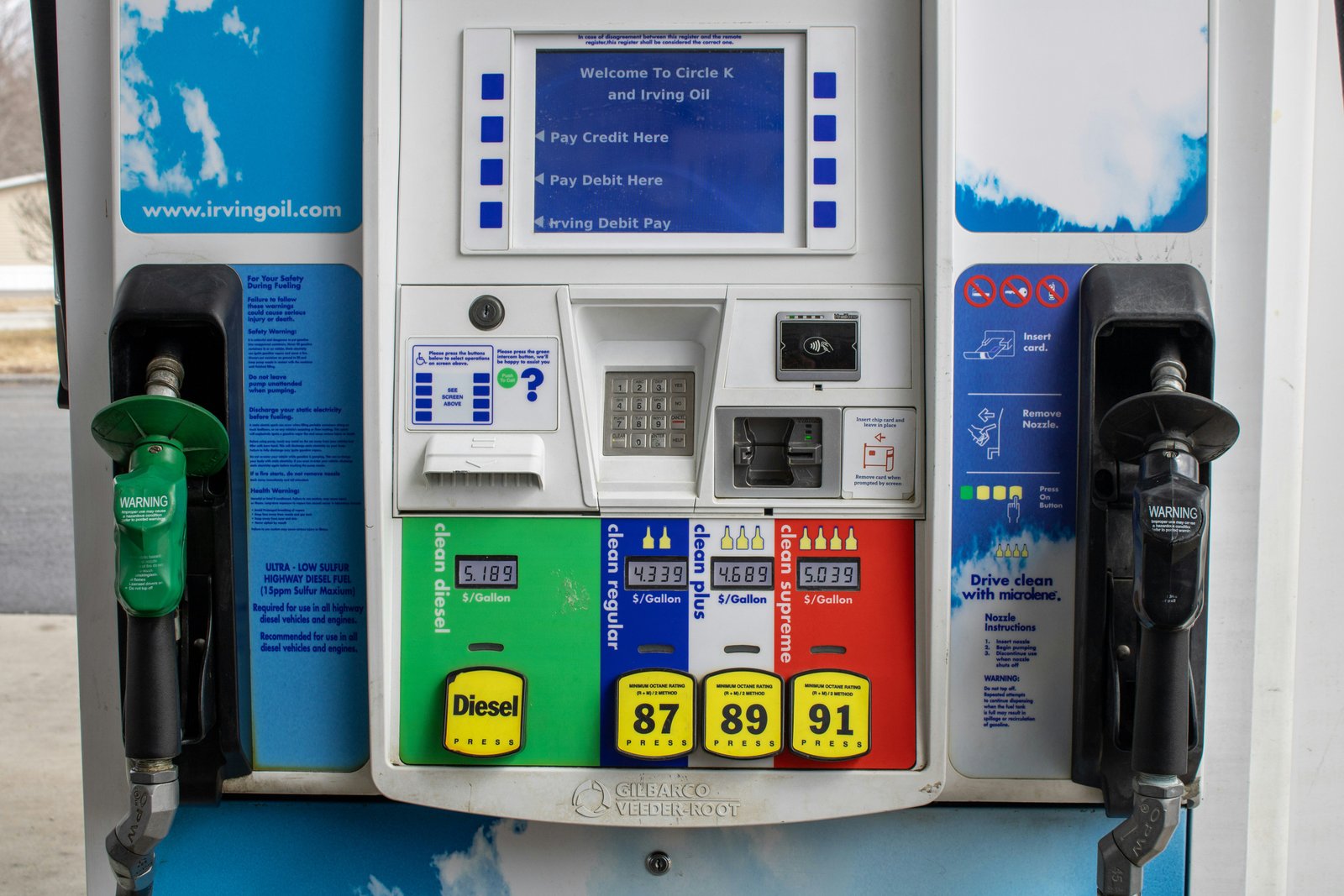

President Donald Trump has ordered an investigation into major energy companies, alleging that they continued charging high petrol prices despite falling wholesale oil costs on global markets.
In a post on social media, Trump said he had instructed the Department of Justice to “immediately start looking into this,” adding that he expected petrol prices to drop “a lot faster than what I’m seeing.” He did not identify any specific oil companies in the statement.
Trump’s comments followed a decline in oil prices from the highs recorded during the US-Israel conflict with Iran, although fuel costs remain above the levels seen before the war began.
“The big Oil Companies are not dropping their price at the pump commensurate with the sharply lower prices they are paying for Oil,” Trump said in the post.
“Those prices are dropping like a rock! In other words, customers are being ‘gouged.'”
Oil prices surged after Iran responded to US-Israeli strikes launched on 28 February by effectively closing the strategically important Strait of Hormuz, disrupting global oil and gas shipments, and triggering a sharp rise in energy costs.
As the conflict continued, Brent crude — the global benchmark for wholesale oil prices — climbed to nearly $120 (£91) per barrel in May.
However, oil prices have eased in recent weeks as peace negotiations advanced. On Wednesday, Brent crude fell below $76 per barrel, although it remained higher than the approximately $70 per barrel level recorded before the conflict began.
A similar trend has been seen with West Texas Intermediate (WTI) crude, the US benchmark for wholesale oil prices, which dropped below $72 per barrel on Wednesday but still remained above its pre-war level of about $60 per barrel.
Meanwhile, the average price of regular petrol in the United States has declined to about $3.93 per gallon after rising above $4 per gallon in April — its highest level since 2022 — though prices remain significantly higher than they were before the conflict began.
Trump’s remarks come amid similar criticism previously directed at oil companies in the United Kingdom, where firms faced accusations of unfairly raising petrol prices following the outbreak of the Iran war.
In May, the UK competition regulator said there was no widespread evidence that oil companies had unfairly increased petrol prices, adding that average profit margins had remained “broadly unchanged” between February and March.