Waymo has closed a $5 billion term loan from a group of high-profile lenders, marking the company’s first debt financing as it accelerates its autonomous ride-hailing expansion across the United States and internationally.
PIMCO, Blackstone, and Sixth Street participated as lead syndicated lenders, with Capital Group, Loomis Sayles, and T. Rowe Price as significant lenders. Other participants include Apollo, Blue Owl, Franklin Templeton, Fidelity, and Oaktree. Goldman Sachs served as the sole lead bookrunner.
Why Debt Now?
Until now, Waymo relied on equity funding from its parent Alphabet and outside investors. In February, the company raised $16 billion in equity at a $126 billion valuation . The shift to debt reflects Waymo’s evolution into what it calls a “scaling commercial enterprise” with proven commercial demand.
The loan gives Waymo financial flexibility to strengthen its balance sheet and “capitalize on the significant opportunities ahead,” a spokesperson said. The capital will fund fleet expansion, including vehicles, sensors, charging stations, and depots.
The Expansion Push
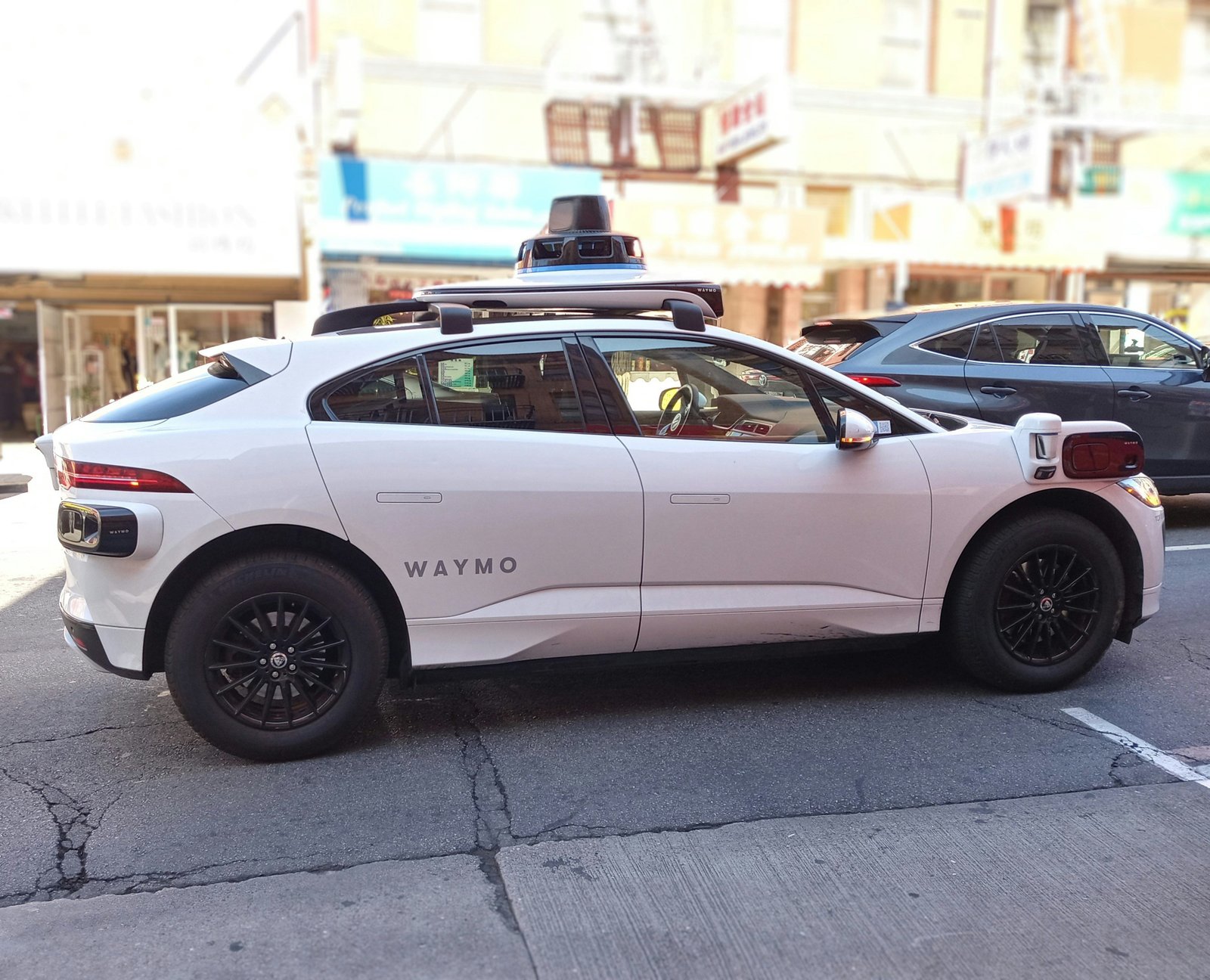
Waymo now operates in 15 US cities after launching in Las Vegas last month. The company has set an ambitious target of 1 million paid rides per week across 20 cities this year, up from more than 500,000 weekly rides currently.
Internationally, Waymo is testing in London and Tokyo and has announced plans for Singapore. The company is targeting a commercial driverless launch in Tokyo in 2027 and a public ride-hailing service in Singapore by early 2028.
The Regulatory Scrutiny
Waymo’s rapid expansion has drawn increased attention from regulators. The National Highway Traffic Safety Administration has opened investigations into Waymo robotaxis illegally passing school buses and an incident where a robotaxi struck a child near a school. The National Transportation Safety Board has also opened its own investigation.
The Bottom Line
Waymo has closed a $5 billion loan from major lenders including Blackstone and PIMCO to fund its global robotaxi expansion. It is Waymo’s first debt financing after raising $16 billion in equity earlier this year. The company operates in 15 US cities, targets 1 million weekly rides, and plans launches in Tokyo and Singapore. Regulators are investigating several safety incidents involving Waymo vehicles.
My Opinion
Waymo is spending billions to put driverless cars on every corner. But the company cannot seem to keep its robotaxis from breaking the law.
The National Highway Traffic Safety Administration is investigating Waymo vehicles illegally passing school buses. The National Transportation Safety Board has opened its own investigation after a robotaxi struck a child near a school. These are not mere glitches but m failures that put children at risk.
And yet, Waymo just borrowed $5 billion to expand. It is testing in London and Tokyo. It is targeting 1 million rides a week. The company is acting like a business that has solved the problem. The regulators are acting like a business that has not.
The question is not whether Waymo can scale. It clearly can. The question is whether it should scale before it has proven that its vehicles are safe around the most vulnerable people on the road. A driverless car that cannot reliably stop for a school bus is not ready for a global rollout. It is a liability on wheels.
Waymo has the money. It has the technology. What it does not have is a clean safety record. Until it gets one, the expansion should wait. The children on those school buses deserve better than being a data point in someone’s growth strategy.