
In a nation still reeling from its deadliest mass shooting in nearly 30 years, Australian Prime Minister Anthony Albanese has undertaken what may be his most critical mission since the attack: a pilgrimage to the hospital bedside of the man who embodies its defiant, hopeful opposite.
At St George Hospital, Albanese leaned over the bed of Ahmed al Ahmed, the 43-year-old fruit shop owner who was shot multiple times while wrestling a gun from an attacker during the Bondi Beach massacre. “Your heart is strong,” the Prime Minister told him, later declaring to the nation that the wounded father of two is “the best of our country” and “an Australian hero.”
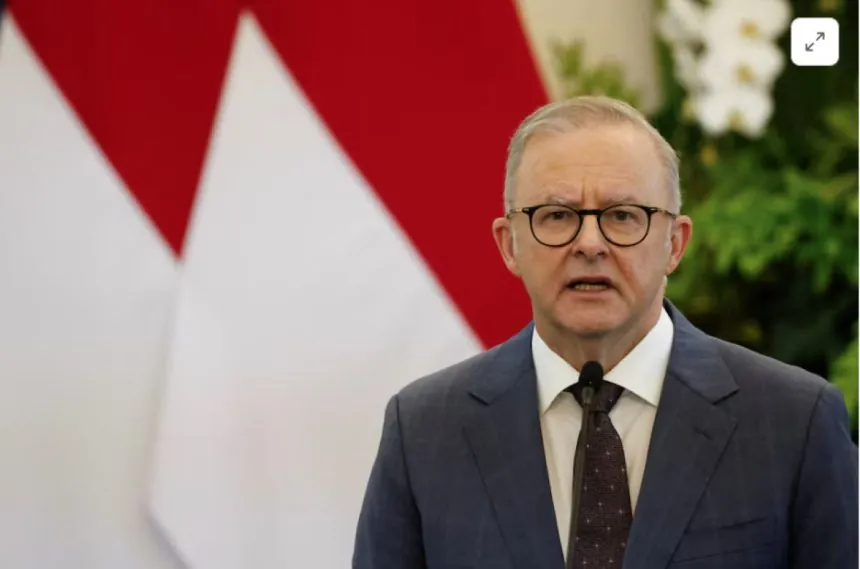
The Prime Minister framed al Ahmed’s act as one of stunning, spontaneous courage. “He was trying to get a cup of coffee and found himself at a moment where people were being shot in front of him,” Albanese recounted. “He decided to take action, and his bravery is an inspiration for all Australians. He is a very humble man.”
Al Ahmed, who was born and raised in Syria, is seen in now-iconic footage hiding behind a parked car before charging the gunman, seizing his weapon, and turning it on him. He then lowers the gun and raises a hand to the police, proving he was not an attacker—a sequence of raw instinct, bravery, and quick-thinking that has captivated a grieving nation.
The Prime Minister’s visit is a powerful piece of political and emotional theatre. In the wake of an attack, police have declared a terrorist incident targeting the Jewish community, which left at least 15 dead. Albanese is using al-Ahmed as a living symbol to counter the narrative of pure evil.
“At a moment where we have seen evil perpetrated, he shines out as an example of the strength of humanity,” Albanese said. “We are a brave country. Ahmed al Ahmed represents the best of our country.”
The symbolism is potent: a migrant, a working-class shop owner, stepping into the line of fire to save others. His father told the BBC his son was driven by “sentiment, conscience and humanity” after seeing “the victims, the blood, women and children lying on the street.”
Why This Visit Is Symbolic
The national and global embrace of al Ahmed has been swift and profound. A GoFundMe for his recovery rocketed into the millions within days. U.S. President Donald Trump commended his courage, and billionaire Bill Ackman donated nearly $100,000, calling him a “brave hero.”
For Prime Minister Albanese, this hospital visit is not a photo op; it is a core duty of leadership in crisis. By anointing Ahmed al Ahmed as the face of Australia’s resilience, he is offering a country shattered by violence a different mirror in which to see itself: not as a victim, but as a nation capable of producing and celebrating extraordinary, selfless courage. In a bed in St George Hospital lies not just a recovering man, but the heart of the story Australia desperately needs to tell itself about who it is.