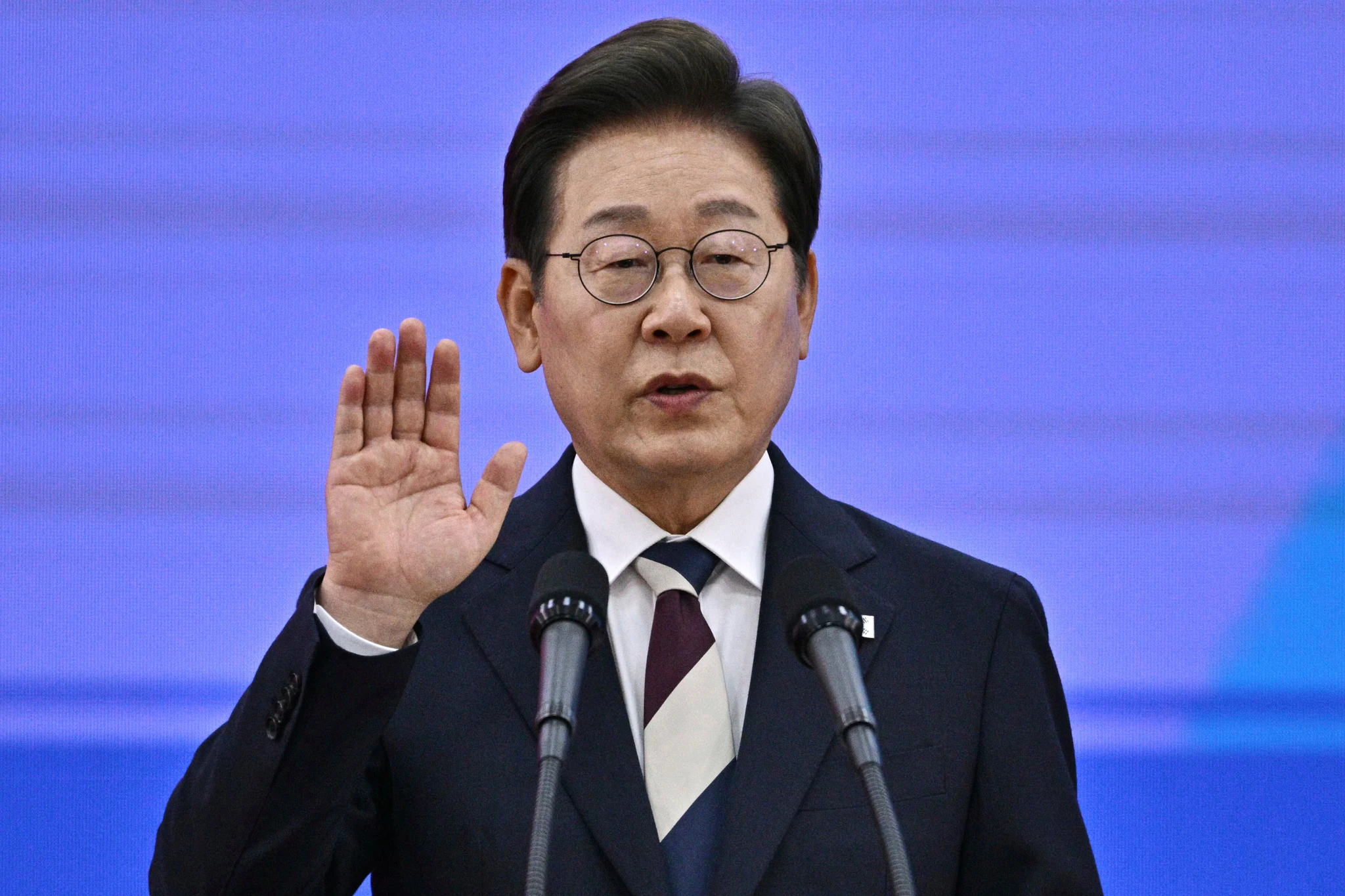
On the somber, rain-swept anniversary of South Korea’s deadliest air disaster, President Lee Jae Myung bowed before a nation in mourning and issued a vow that cut through a year of bureaucratic silence: to finally reveal the full, unvarnished truth behind the Jeju Air crash that claimed 179 lives.
In a message charged with political gravity, President Lee offered his “deepest apologies” to the grieving families, directly accepting his responsibility as the leader who failed to protect them. “As the president who has the responsibility to protect the lives and safety of the people, I offer my deepest apologies,” Lee stated, framing the catastrophe not as a freak accident, but as a “systematic” failure of the nation itself.
A Year of Agony and Unanswered Questions
The disaster unfolded in a nightmarish 90 seconds on December 29, 2024. A Jeju Air jet, carrying 181 souls, crash-landed at Muan International Airport, hurtled off the runway, slammed into an embankment, and erupted into a catastrophic fireball. Only two people survived. For the families of the 179 lost, the ensuing year has been a torturous wait for answers, met only with delays from the government-led investigation board.
An initial report in January pointed to dual bird strikes crippling both engines. But this technical finding did nothing to quell the rising public fury over deeper, more disturbing questions. Relatives and aviation experts have demanded to know: Were there critical safety lapses or design flaws on the runway? What happened in the cockpit in those final, desperate minutes? Why has the final report been shrouded in delay?
Why It Matters
President Lee’s statement was a direct acknowledgment of this national crisis of confidence. “The disaster clearly revealed the systematic problems and limitations of our society,” he declared. “What’s needed now is not perfunctory promises or empty words but rather real change and action.”
This pledge for transparency and reform comes as parliament reviews a plan to overhaul the accident investigation board, aiming to strip it of political influence and inject it with independent expertise. The promise is aimed towards dismantling the very system that may have contributed to the tragedy and obscured its cause.
As families gather at the crash site at Muan International Airport for a tearful memorial, the nation watches. The president has placed his own credibility on the line, promising to excavate a truth buried under a year of official obfuscation. The question hanging in the cold air is no longer just about what caused the crash, but whether the powerful forces that may have enabled it will ever truly be held to account. Lee has vowed to deliver that reckoning. A nation of mourners is waiting to see if this promise, unlike so many before it, will finally be kept.