When one country is allowed to build weapons without limits while others are bullied to disarm, people will ask questions, that is why Iran accuses Israel of playing nuclear god in the Middle East, calling out what it sees as a dangerous double standard that keeps the region on edge. This is not just Iran talking. This is frustration boiling over after years of pressure, wars, and selective rules.
A Doctrine Iran Calls Domination
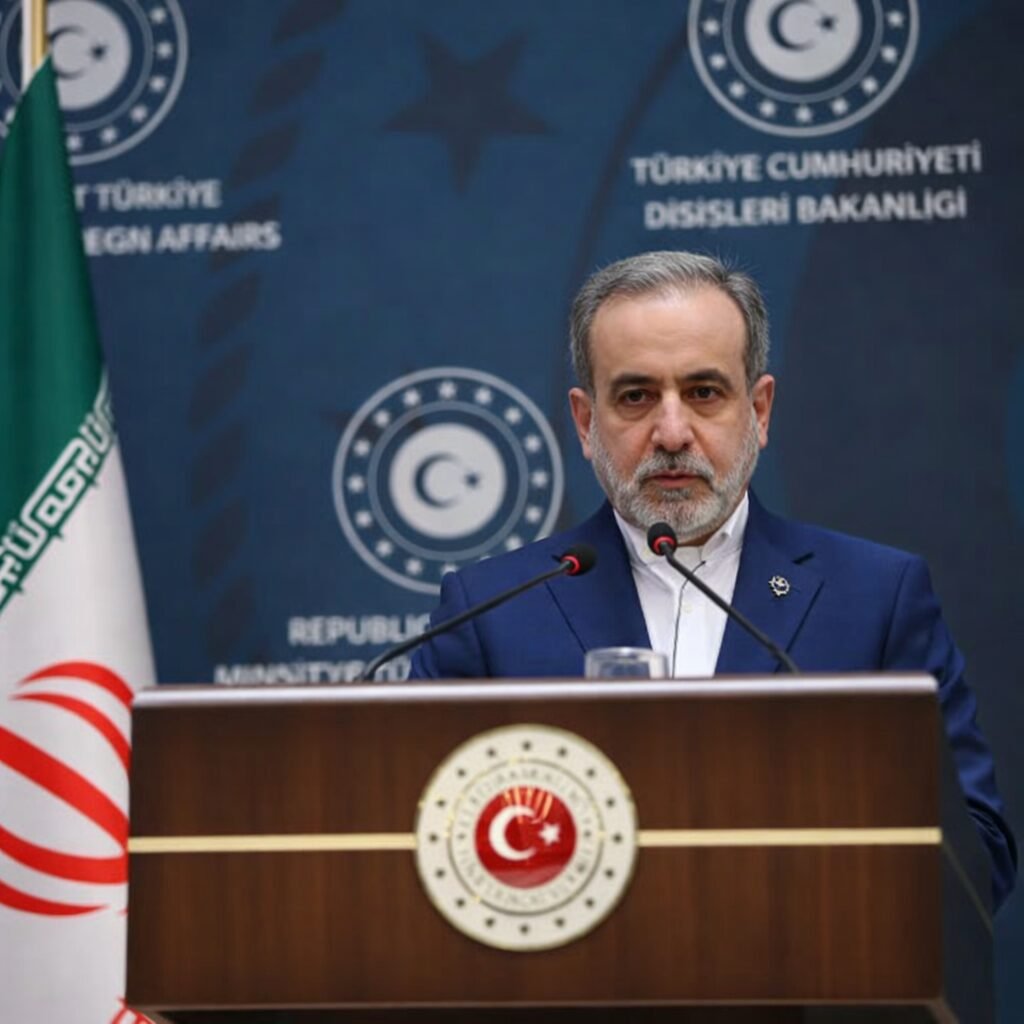
Iran’s Foreign Minister, Abbas Araghchi, did not hide his anger. Speaking in Qatar, he said Israel operates under what he called a “doctrine of domination.” According to him, Israel is free to expand its military strength without limits, while nearby countries are forced to weaken themselves.
Araghchi said other nations are pressured to disarm, punished for scientific progress, or forced to reduce their defensive power, all while Israel faces no such demands.
The War That Changed Everything
These comments did not come from nowhere. They follow last year’s 12-day war that started after Israel launched a heavy bombing campaign against Iran. During that war, Israel targeted Iranian military leaders, nuclear scientists, nuclear sites, and even residential areas.
The United States later joined in by striking key Iranian nuclear facilities. Iran responded with drone and missile attacks on Israel and also hit the largest US military base in the Middle East, located in Qatar.
Talks With the US, But No Trust
Just a day before Araghchi’s speech, Iran had resumed indirect nuclear talks with the United States in Muscat. He led Iran’s delegation, while the US was represented by Middle East envoy Steve Witkoff.
Both sides described the talks as positive. US President Donald Trump even said they were “very good,” and more negotiations are expected.
But here is the problem: talks are happening while war threats remain. The US recently sent an aircraft carrier group to the region after Iran’s crackdown on protests. Trust is thin, and history has taught Iran to be careful.
Israel’s Shadow Over the Talks
The United States says it wants to discuss Iran’s missile programme and its support for militant groups. Media reports say Israel has pushed hard for those issues to be included.
Iran has refused. Tehran insists the talks must stay focused only on the nuclear issue.
One country influences what others are allowed to discuss, while staying outside the rules itself.
A Region Held Hostage by Power Games
When powerful countries fight over dominance, it is never their children who suffer first. It is ordinary people. Homes get destroyed. Economies crash. Fear becomes normal.
Iran says Israel’s project depends on weakening its neighbours militarily, economically, and socially. Whether people agree or not, the region’s history makes this claim hard to ignore.
Other parts of the world have seen similar patterns: one power sets the rules, others resist, and conflict follows. The Middle East is not special in this sense, only more explosive.
Where This Leaves the Middle East
Iran accuses Israel of playing nuclear god in the Middle East because the balance feels broken. One side builds freely, the other is threatened, sanctioned, and attacked.
As talks continue and armies stay ready, the fear is simple: one mistake, one strike too far, and the whole region burns again. Until the rules apply to everyone equally, this accusation will not go away. And ordinary people will keep paying the price for decisions made far above their heads.