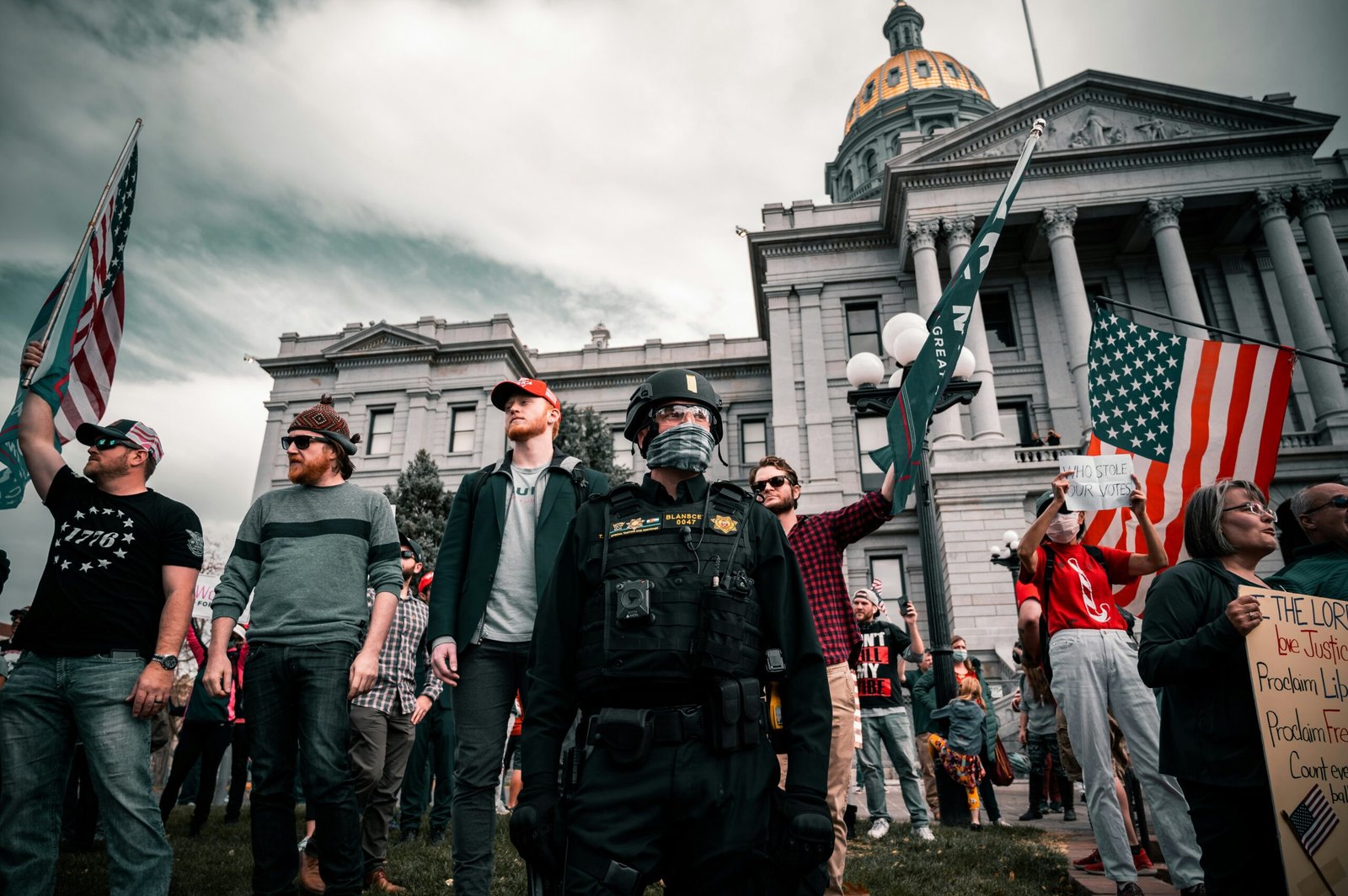

President Trump pardoned more than a thousand people for their roles in the January 6 Capitol riots. But for a dozen members of the Proud Boys and Oath Keepers, he did something different. He commuted their sentences. They walked free. But their convictions remained on their records — a permanent stain of seditious conspiracy.
Now the Department of Justice is trying to erase even that.
The DOJ has asked a federal appeals court to throw out the convictions of 12 people who were found guilty of seditious conspiracy related to the January 6, 2021, riots. In a filing on Tuesday, the US Attorney’s Office in Washington, DC, made a stunning admission: “The United States has determined in its prosecutorial discretion that dismissal of this criminal case is in the interests of justice.”
Not because they are innocent. Not because the evidence was flawed. But because the government now says it is in the “interests of justice” to let them off the hook entirely.
The Pardons That Weren’t Enough
When Trump returned to the White House, he fulfilled a central campaign promise. On his first day back in office, he issued pardons or commutations for more than 1,500 people connected to the January 6 riot. But the dozen members of the Proud Boys and Oath Keepers fell into a peculiar legal limbo. Their sentences were commuted, meaning they could leave prison. Their convictions, however, remained on the books.
That distinction matters. A conviction for seditious conspiracy — attempting to overthrow the government — follows a person for life. It bars them from certain jobs. It strips them of certain rights. It is a permanent public record of an attempt to subvert American democracy.
The DOJ is now asking the US Court of Appeals for the District of Columbia to wipe that record clean. If the court approves, these 12 individuals will have no conviction at all. Not just released. Not just pardoned. Legally exonerated.
The Names Behind the Request
Among those seeking to expunge their records is Stewart Rhodes, the founder of the Oath Keepers. Rhodes, a former US Army paratrooper and Yale-educated lawyer, led a contingent of his militia members to Washington on January 6. They stashed weapons in a hotel room across the Potomac River in Virginia while participating in the melee. Rhodes did not enter the Capitol himself but directed his members from outside. In 2023, he was sentenced to 18 years in prison after being found guilty of seditious conspiracy.
He walked free after Trump commuted his sentence. Now he wants the conviction gone entirely.
Henry “Enrique” Tarrio, the former Proud Boys leader, was also convicted of seditious conspiracy. He was sentenced to 22 years in prison before Trump pardoned him. Unlike Rhodes, Tarrio received a full pardon rather than a commutation. But the DOJ’s new filing could still affect how his case is viewed historically.
The court has set an April 17 deadline for the requests to be filed. If the court throws out the convictions, the Trump administration’s Justice Department will be spared from having to argue for keeping them in that process. That is not an accident. It is a strategy.
What “Interests of Justice” Really Means
The DOJ’s filing uses a remarkable phrase: “dismissal of this criminal case is in the interests of justice.” But what does that actually mean in this context? The department is not arguing that the convictions were wrongful. It does not present new evidence of innocence. It is simply stating that continuing to treat these individuals as convicted seditious conspirators no longer serves the government’s purposes.
Critics will see this as the final step in Trump’s campaign to rewrite the history of January 6. First came the pardons. Then came the commutations. Now comes the erasure. If the court agrees, there will be no public record that these 12 people were ever found guilty of trying to overthrow the United States government.
Supporters will argue that if the president has the power to pardon, and if those pardoned have served their time or had their sentences commuted, then the convictions themselves are a pointless punishment. Why should a man who has been released by the president’s own act continue to carry the label of felon?
The court will have to decide.
The Bottom Line
So what did the DOJ just do? It asked a federal appeals court to throw out the seditious conspiracy convictions of 12 members of the Proud Boys and Oath Keepers. These individuals had their sentences commuted by President Trump, but still carried the legal weight of a conviction. Now the Justice Department says dismissing the cases entirely is in the “interests of justice.”
The court has an April 17 deadline to consider the requests. If approved, the convictions will be erased. Not pardoned. Not commuted. But gone.