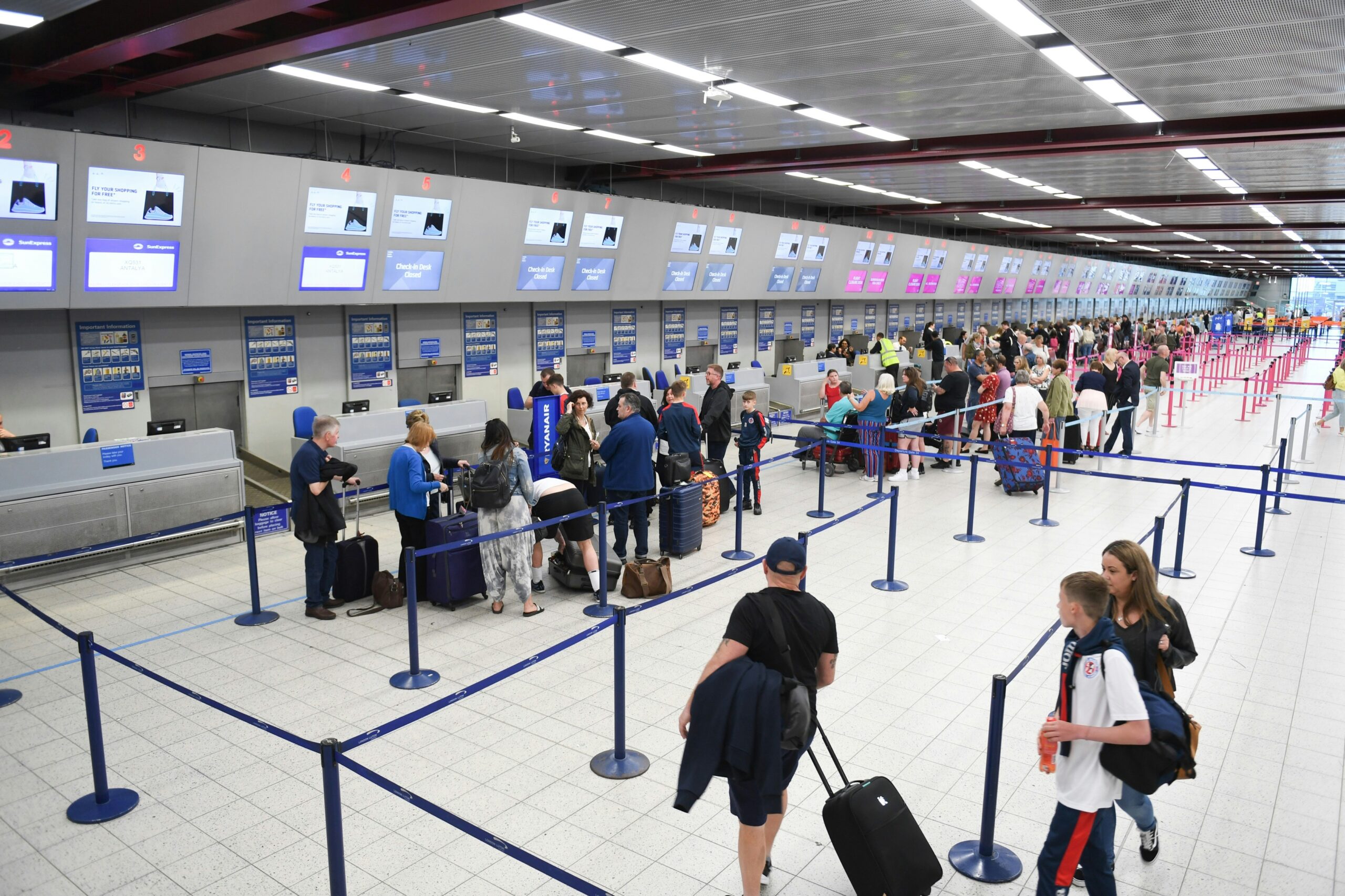

Overnight, El Paso’s air traffic came to a halt, while the official explanation initially pointed to a Mexican cartel drone crossing into U.S. airspace. Later reports suggest a military testing system nearby may have been the real reason for the extended closure
The unusual closure of the El Paso airport has put border security and cartel activity in the spotlight, showing how unmanned technology is quietly reshaping threats in ways that governments are still trying to understand. Regardless, the incident has amplified debates about drone technology, border security, and political posturing in the region.
Drones and the Changing Nature of Border Threats
Mexican cartels have increasingly turned to drones for smuggling and surveillance. These are not sophisticated military machines; they are often commercially available models adapted to carry drugs or scout U.S. border activity. Though there have been deadly attacks using drones within Mexico itself, experts note that there has been no confirmed cartel attack on U.S. soil.
Still, the potential for misuse has authorities on edge. The Pentagon reports more than a thousand drone incursions along the U.S.-Mexico border every month. Even if many of these are minor, the sheer number highlights how technology is changing criminal strategies.
Conflicting Accounts of the Airport Closure
Initially, U.S. Transportation Secretary Sean Duffy stated that a cartel drone prompted the El Paso airspace ban. He even indicated the closure would last up to ten days, though it ended after seven hours. Later, anonymous sources from government and airlines contradicted this, suggesting the FAA’s concern came from a nearby Army counter-drone system being tested, which could have interfered with air traffic.
Mexican President Claudia Sheinbaum also cast doubt on U.S. claims, stating there was no evidence of drones near the border and no effects on the Mexican side. She warned that unilateral U.S. action on Mexican soil would violate sovereignty, referencing the historic conflicts between the two nations.
Political Stakes and Military Pressure
The incident is not occurring in isolation. U.S. President Donald Trump has repeatedly criticized Mexican cartels and suggested military intervention. The airport closure feeds into narratives that some analysts say could justify such action.
Security expert Scott Brown, a former Homeland Security agent, emphasized the distinction between actual attacks and simple incursions. He suggested the closure may have been more about optics than immediate danger: “It’s an incursion, not an attack,” he said. Still, the incident raises serious questions about border enforcement strategies and the role of drones in criminal operations.
Drones in Cartel Hands: Danger or Pretext?
While drones in Mexico have been used to drop explosives in attacks on law enforcement, along the border, they are primarily employed to deliver drugs or monitor U.S. authorities to evade capture. Carlos Perez Ricart, a Mexican security analyst, noted that a U.S. attack based solely on drone activity would be unjustified: “There’s no evidence that the cartels would attack the U.S. with drones,” he said. Yet, such narratives serve political purposes, giving leaders reasons to emphasize military readiness.
Implications for Border Security
The El Paso closure demonstrates a modern tension: technology can be used for both surveillance and threat, but its presence alone does not necessarily indicate an attack. The FAA and U.S. Army must now balance testing advanced counter-drone systems with the practicalities of managing civilian air traffic.
Meanwhile, the U.S. and Mexican authorities are working together to address drone use along the border. Meetings between New Mexico officials and the Mexican state of Chihuahua show that collaboration, rather than unilateral action, may be the most effective path forward.