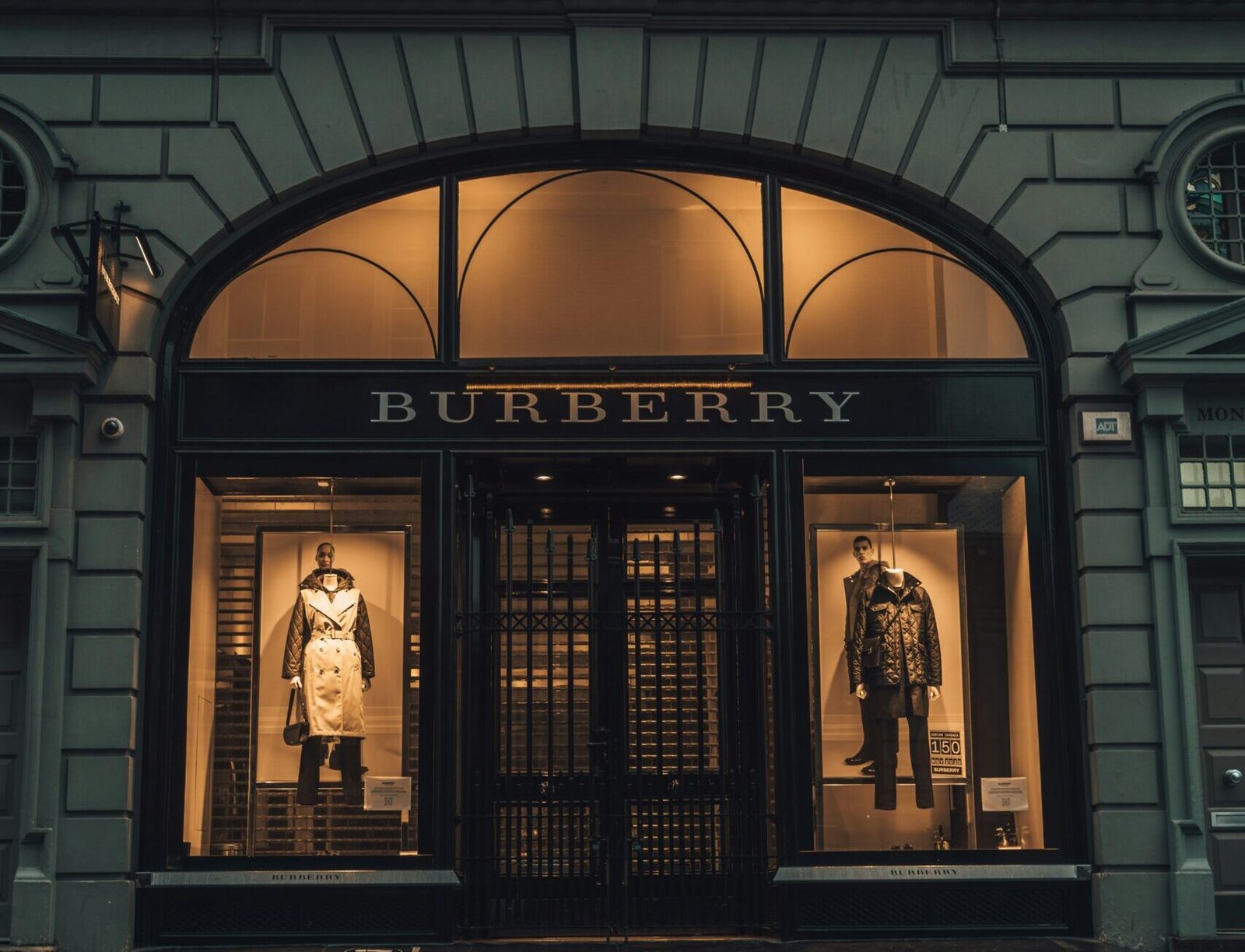

The trench coat maker is trimming its footprint. Quietly. Without fanfare. Without press releases announcing the closures.
Burberry, the 170-year-old British luxury fashion house, closed 21 stores while opening nine new locations during fiscal 2026, ending the year with 410 stores globally as of March 28, 2026, according to the company’s latest earnings report.
The retailer said it expects the overall store count to remain “broadly stable” in fiscal 2027 as it focuses on improving in-store experiences, increasing productivity, and strengthening cross-category merchandising.
The net reduction of 12 locations might seem modest for a brand of Burberry’s stature. But the decision to close nearly twice as many stores as it opened — while saying little about it publicly — signals a strategic shift.
Why the Closures Are Happening
“We are exiting stores, which are either in locations that are no longer appropriate or have profitability challenges,” said Burberry CEO Joshua Schulman in the company’s 2026 earnings call. “When it’s a center location where we just want to exit, we’ll exit. But in other cases, we will find a more profitable alternative to showcase the product”.
The restructuring is already contributing to improved profitability. Burberry reported adjusted operating profit of £160 million (approximately $213 million) for fiscal 2026. The company said its cost-cutting initiatives generated £80 million (about $107 million) in savings during the year and remain on track to deliver £100 million (roughly $133 million) of annualized savings by 2027.
However, executives also warned that geopolitical tensions and ongoing macroeconomic instability could continue to pressure consumer confidence across key luxury markets.
A Strategic Pivot, Not a Retreat
The store closures are part of a broader shift. Burberry has been investing more heavily in wholesale and department store partnerships to strengthen brand visibility and improve sales performance without relying exclusively on directly operated locations.
The company said upgraded in-store environments at retailers, including Saks Global, Bloomingdale’s, Nordstrom, and Galeries Lafayette, are generating stronger sell-through rates than some standalone Burberry locations.
That is a significant admission. A luxury brand that once prized its own flagship stores is now acknowledging that a department store corner can outperform a branded boutique.
The strategy reflects a broader shift underway across retail, where brands are increasingly prioritizing operational efficiency, curated physical presence, and omnichannel distribution over aggressive store expansion.
The Financial Picture
Burberry’s latest results are a mixed bag. The company swung to a pre-tax profit of £49 million from a loss of £66 million a year earlier. Full-year revenue came in largely in line with expectations at £2.4 billion, flat at constant exchange rates.
Comparable store sales rose 2% over the 52 weeks, reversing a 12% decline the previous year. The pace accelerated through the period, with the fourth quarter up 5% group-wide, led by double-digit growth in Greater China and the Americas, both up 10%.
But despite the strong fourth quarter, Burberry shares fell sharply. The company declared no dividend — against market expectations — and issued first-half wholesale growth guidance below consensus.
Executives acknowledged they are “mindful of the uncertain geopolitical and macro-economic environment and its potential impact on consumer confidence”.
The Bottom Line
Burberry closed 21 stores while opening just nine during fiscal 2026, a net reduction of 12 locations. The company says it is exiting unprofitable or poorly located stores and focusing on productivity and in-store experience. The restructuring is already paying off, with £80 million in cost savings and a swing back to profit.
But the luxury market remains volatile. Geopolitical tensions, the Middle East conflict, and pressure on consumer confidence all pose risks. Burberry is trimming its physical footprint while betting on wholesale partnerships and e-commerce to drive growth.