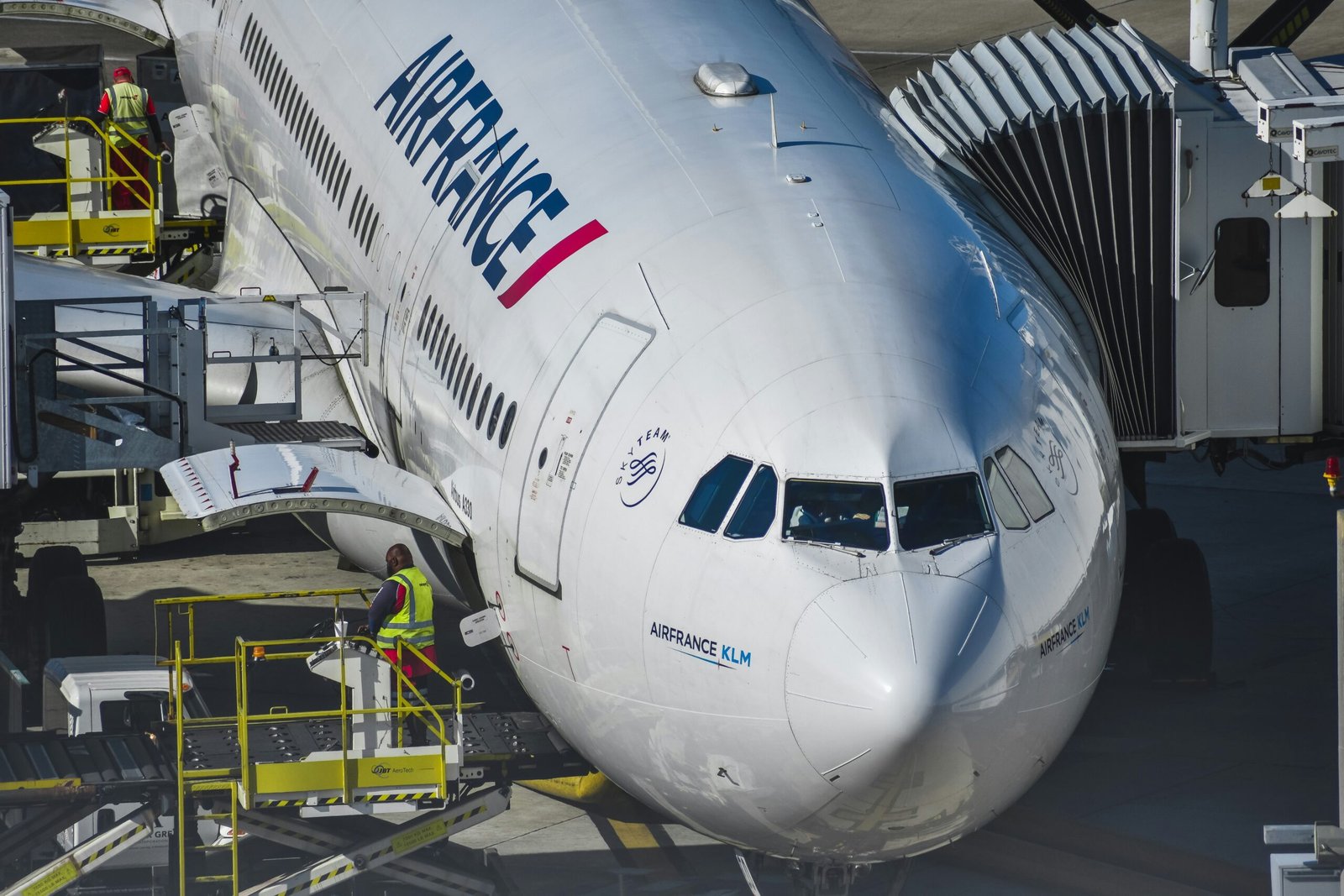

An Air France flight bound for Detroit was redirected to Canada on Wednesday after a passenger from the Democratic Republic of Congo boarded “in error” amid a worsening Ebola outbreak in central Africa.
The passenger should not have been on the aircraft because of “entry restrictions put in place to reduce the risk of the Ebola virus,” a U.S. Customs and Border Protection spokesperson said. The agency took “decisive action” by prohibiting the flight from landing at Detroit Metropolitan Wayne County Airport.
Flight 378 departed from Paris and was headed to Detroit when U.S. authorities requested the diversion. The plane landed in Montreal shortly after 5 p.m. ET.
“There was no medical emergency on board,” an Air France spokesperson confirmed. “Like all airlines, Air France is required to comply with the entry requirements of the countries it serves.”
New U.S. Restrictions Take Effect
The diversion comes just days after the Centers for Disease Control and Prevention announced that the U.S. will restrict entry for people without U.S. passports who were in Congo, South Sudan, or Uganda in the previous three weeks. The restriction is in effect for the next 30 days.
A new notice submitted to the Federal Register also directs all flights to the U.S. with passengers who have recently traveled to those three countries to land at Washington-Dulles International Airport in Virginia. Dulles was described as the airport “where the U.S. government is focusing public health resources to implement enhanced public health measures.”
Those restrictions begin Thursday — one day after the Air France diversion.
The Ebola Outbreak
The suspected death toll from the Ebola outbreak now totals more than 139, with more than 600 suspected cases, most of them in Congo, according to the World Health Organization. The outbreak is being driven by the Bundibugyo strain of the virus.
In a sobering assessment, the WHO said Wednesday that a vaccine for this strain is most likely months away from human trials — and there is no guarantee it would work.
The timing of the outbreak, combined with the new U.S. travel restrictions, has created confusion for airlines and passengers alike. The Congolese passenger who boarded the Detroit-bound flight “in error” appears to be a symptom of that confusion.
What Happens Next
The passenger was not identified. It is unclear whether the individual was detained in Canada or returned to Europe. Air France has not disclosed what protocols were followed after landing.
U.S. Customs and Border Protection did not say whether any other passengers or crew members were at risk. The agency’s statement emphasized only that the passenger “should not have boarded the plane” and that the diversion was a “decisive action” to enforce entry restrictions.
The new rules requiring flights with recent travelers from Congo, South Sudan, or Uganda to land at Dulles take effect Thursday. It remains unclear how airlines will be expected to screen passengers for recent travel history before departure — and what penalties they may face for another “error.”
The Bottom Line
An Air France flight from Paris to Detroit was diverted to Montreal on Wednesday after a passenger from Congo boarded “in error” amid new U.S. entry restrictions aimed at preventing the spread of Ebola. The passenger should not have been allowed on the plane, according to U.S. Customs and Border Protection.
The Ebola outbreak in central Africa has killed more than 139 people, with more than 600 suspected cases. A vaccine for the strain driving the outbreak is months away from human trials. New U.S. restrictions taking effect Thursday will require flights carrying recent travelers from Congo, South Sudan, or Uganda to land at Washington-Dulles International Airport.
The passenger was removed. The flight continued. But the “error” has raised urgent questions about how airlines are screening passengers — and whether U.S. entry restrictions can be enforced before passengers ever board the plane.