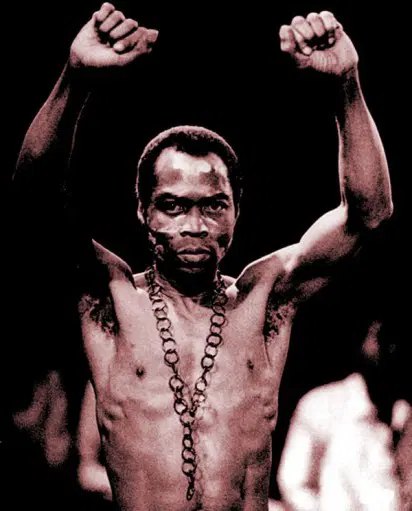

Nearly five decades after its release, Fela Anikulapo Kuti’s iconic song Zombie remains one of the most powerful musical attacks on military oppression in Nigeria, cementing the late Afrobeat legend’s reputation as a fearless critic of authority.
Released in 1976, the song emerged during a period when Nigeria was under military rule. At the time, soldiers had been deployed to schools and other institutions to enforce discipline, while military governments dominated the country’s political landscape following years of coups and a devastating civil war.
For many young Nigerians, including political activist Yunusa Yau, the song became an anthem of resistance.
“In a way, we saw him as a symbol of our own nascent attempt to protect our limited horizon of freedom,” Yau, now 66, said.
According to him, students adopted the song as a form of protest not only against military officers but also against teachers they considered overly strict.
In Zombie, Fela mocked soldiers for blindly obeying orders, comparing them to mindless beings incapable of independent thought.

“Zombie no go turn, unless you tell ’em to turn (Zombie) / Zombie no go think, unless you tell ’em to think,” he sang, while mimicking military commands through his distinctive Afrobeat sound.
The song quickly escalated tensions between the musician and Nigeria’s military authorities.
Born in 1938 during British colonial rule, Fela built a career that stretched across more than four decades. He is widely credited, alongside drummer Tony Allen, with creating Afrobeat, a genre that fused traditional African rhythms with jazz, funk and other Black American musical influences.
Beyond music, Fela became known for chronicling the realities of military governance in Nigeria. His songs frequently challenged corruption, oppression and abuse of power.
Music artist and designer Lemi Ghariokwu, who worked closely with Fela and created the Zombie album cover, recalled the musician’s determination while making the project.
“It was his definitive album. It was one of his boldest moments on record,” Ghariokwu said.
“He was very much vexed by the actions of the military government. When he was composing the song, we asked him if it was going to be a direct attack song, and he said yes.”
The album featured two tracks, Zombie and Mister Follow Follow, both of which criticised blind loyalty to authority and conformity.
Analysts say the themes explored in the songs remain relevant decades later, as Nigeria continues to battle poverty, unemployment, insecurity and governance challenges.
Music critic Dami Ajayi believes Fela accurately predicted the long-term consequences of military rule.
“Fela was actually ahead of his time, because he seemed to have foreseen the kind of rot and decay that the military class would leave Nigeria in,” Ajayi said.
“Fela was already saying to everyone that these guys who are here are going to ruin your country; you cannot allow a zombie to be in charge of everything around you.”
The backlash against the song was swift and severe. Following its release, soldiers reportedly stormed Fela’s residence, known as the Kalakuta Republic, destroying the property and assaulting its occupants.
The attack left Fela seriously injured, while his mother, renowned activist Funmilayo Ransome-Kuti, suffered injuries that later contributed to her death.
The military government subsequently banned Zombie from radio stations, and reports at the time suggested that some individuals were arrested for publicly playing the song.
Although other Nigerian musicians have criticised government policies through genres such as reggae, fuji and pop, critics argue that none have matched the scale of Fela’s confrontation with authority.
Reflecting on the song’s enduring influence, music commentator Ayomide Tayo said its impact remains unmatched.
“The consequences of that record are well-documented, and I don’t think anybody is that brave to critically criticize the government like that,” Tayo said.
“The epic scale at which Fela did it has not been replicated.”
Fela, who died in 1997, continues to be celebrated globally for both his musical innovation and political activism. Earlier this year, the Afrobeat pioneer received a posthumous Lifetime Achievement Award at the Grammy Awards, further solidifying his legacy as one of Africa’s most influential cultural figures.